When a room has too many doorways, creating a sense of order starts with consistent color schemes and strategic furniture placement. Use neutral tones on walls and large furniture to establish calmness, then add pops of color with accessories to tie everything together. Arrange larger furniture to define zones and keep pathways clear. Incorporate mirrors or art to improve visual flow, and choose multi-functional pieces to maximize utility. For more ideas on balancing aesthetics and functionality, keep exploring these tips.

Get furniture and decor delivered free with Prime
- Fast, free delivery on millions of items
- Prime Video, Amazon Music and more included
- Member-only deals all year
Key Takeaways
- Use color coordination and accessories to unify the space and create visual harmony across multiple doorways.
- Arrange furniture to define zones and guide movement, minimizing congestion and clutter.
- Incorporate rugs and strategic furniture placement to subtly delineate areas and improve flow.
- Keep doorways unobstructed and use taller furniture near entrances to direct traffic efficiently.
- Minimize clutter and employ mirrors or wall art to enhance aesthetics and draw focus away from numerous doorways.
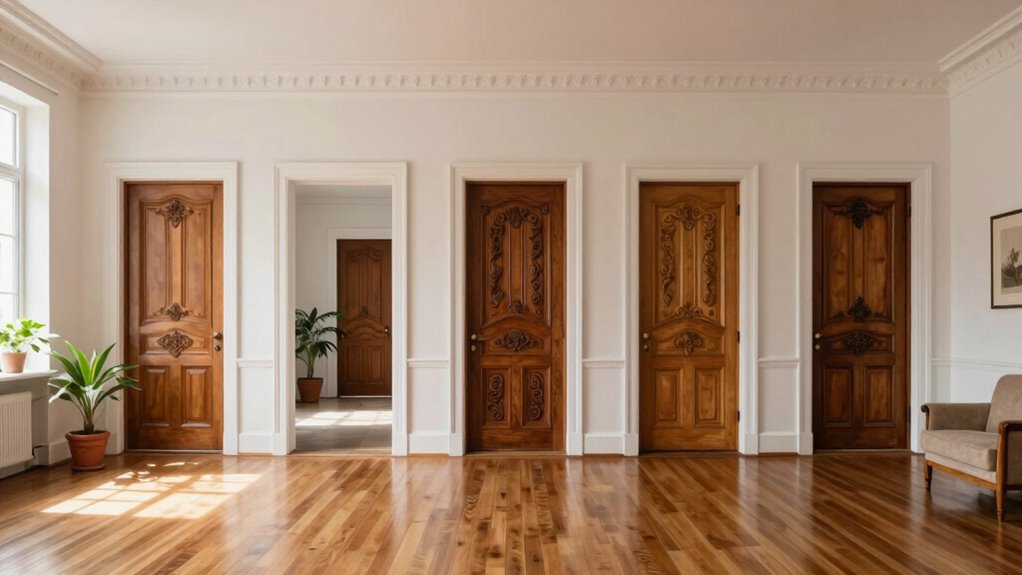
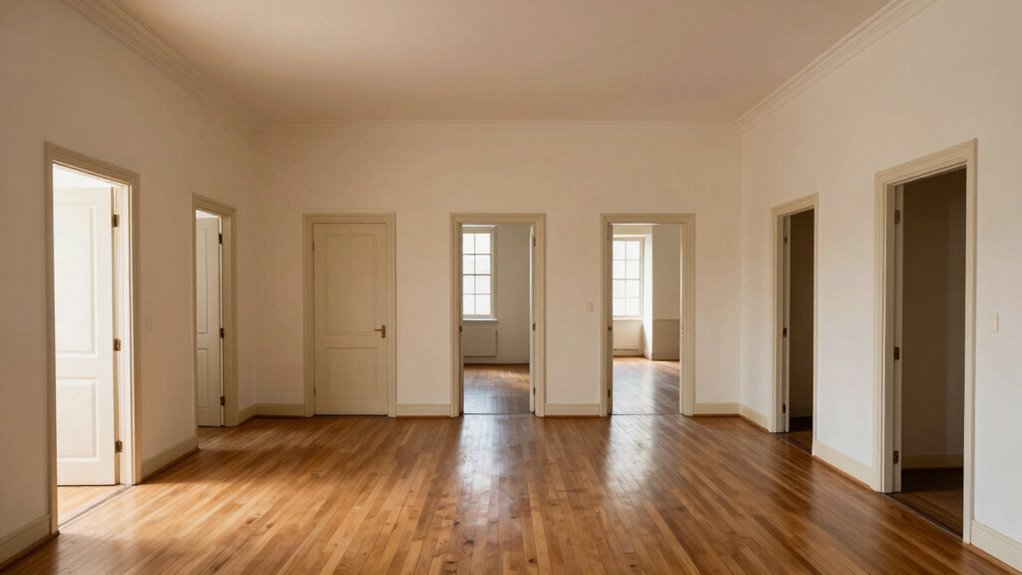
When a room has too many doorways, it can feel chaotic and difficult to organize or decorate effectively. Multiple openings can break up the space, making it hard to create a cohesive look. To tackle this, you need a strategic approach that balances functionality with aesthetics. One of the most impactful steps is focusing on color coordination. Use a consistent color scheme throughout the room to unify the space, regardless of the multiple entry points. Neutral tones work well for walls and larger furniture pieces, helping to create a calm background that doesn’t compete with the doors. Add pops of color through accessories like cushions, rugs, or artwork to bring personality to the room without overwhelming it. This visual harmony helps your eye move smoothly across the space, making the room feel more organized and intentional despite the numerous doorways.
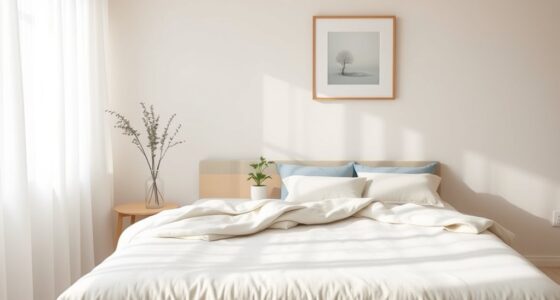
Using a cohesive color scheme unites rooms with multiple doorways for a calm, organized look.
Next, pay careful attention to furniture arrangement. Your goal should be to define separate zones within the room, even when the layout is disrupted by too many doorways. Place larger furniture pieces, such as sofas or beds, in a way that creates natural boundaries, anchoring each zone. Avoid blocking doorways or leaving pathways cluttered—clear walkways are essential for a functional flow. Instead, position furniture at angles or use low-profile pieces to maintain openness. Consider using rugs strategically to delineate different areas, making the space feel more structured despite the multiple doorways. Additionally, incorporating visual balance can help create a more harmonious environment by distributing weight visually across the room. Incorporating furniture placement thoughtfully can also enhance the room’s flow and functionality. Furthermore, paying attention to spatial awareness can help optimize the layout and improve movement within the space.
You can also use furniture placement to direct movement within the room. For example, positioning a bookshelf or a tall plant near an entrance can subtly guide people through the space and reduce congestion. When choosing pieces, opt for multi-functional furniture—like ottomans with storage or side tables that can double as display surfaces—so you maximize utility while keeping the room uncluttered. Implementing space planning techniques can further improve how the room functions and feels inviting.
Finally, think about the visual impact of your arrangements. Keep the eye moving smoothly by avoiding cluttered corners or overly busy decor. Use mirrors or wall-mounted art to draw attention upward or across the room, helping to distract from the chaos of multiple doorways. With thoughtful color coordination and a smart furniture arrangement, you can transform a room with many doorways into a well-organized, inviting space that feels both functional and aesthetically pleasing.
multi-functional furniture for small spaces
As an affiliate, we earn on qualifying purchases.
As an affiliate, we earn on qualifying purchases.
Frequently Asked Questions
How Can I Improve Room Privacy With Multiple Doorways?
To improve room privacy with multiple doorways, focus on privacy enhancement and doorway organization. You can add curtains or sliding panels to each doorway for quick privacy, or use room dividers strategically to block sightlines. Installing door sweeps or weatherstripping can reduce noise and visual gaps. Keep doorways well-organized by labeling or grouping them with consistent decor, making the space feel more cohesive and private while maintaining easy access.
What Are Budget-Friendly Solutions for Door Clutter?
You can tackle door clutter with budget-friendly solutions like doorway organization. Use inexpensive over-the-door hooks or racks to hang items and keep surfaces clear. Consider adding temporary or foldable partitions to create visual separation without permanent changes. Repurposing curtains or fabric panels as budget partitioning helps define space and hide clutter. These quick fixes help manage doorways effectively, maintaining a tidy look without breaking the bank.
Can Door Placement Affect Room Temperature?
Door placement acts like a silent conductor, guiding airflow management and door insulation. If doors are positioned poorly, they can create drafts or trap warm air, affecting your room’s temperature. Strategic placement minimizes unwanted airflow, keeping your space cozy or cool as needed. Properly placed doors act like barriers, controlling temperature flow, and ensuring comfort. So, think of your doors as essential players in your room’s climate orchestra.
How Do I Prevent Doorways From Causing Traffic Jams?
To prevent doorway traffic jams, you should optimize doorway feng shui by arranging furniture to create clear pathways. Use doorway color schemes that subtly guide movement and delineate spaces. Consider installing sliding or pocket doors to minimize obstructions. Keep doorways well-lit and clutter-free, encouraging smooth flow. These strategies help manage foot traffic efficiently, making your space more functional and harmonious, while maintaining aesthetic appeal.
Are There Creative Ways to Decorate Multiple Doorframes?
You can turn multiple doorways into stunning focal points by using creative decor like doorway curtains or decorative doorframes. Think beyond traditional options—install bold, patterned curtains that swing dramatically with every step, or customize decorative frames with intricate carvings or vibrant paint. These touches add personality and style, transforming busy doorways into eye-catching design elements that elevate your space and make each passageway uniquely yours.
Conclusion
When your room feels like a maze, remember that clever solutions can turn chaos into charm. Use furniture to create subtle dividers, or hang curtains to section off spaces without losing the open feel. Think like a good Victorian architect—embrace the room’s character while adding your own touch. Soon, your space will feel cozy and inviting, not like the Tower of Babel. With a bit of ingenuity, you’ll tame those doorways and reclaim your sanctuary.
Halloween Picks
halloween
As an affiliate, we earn on qualifying purchases.