
TL;DR
Designer throw pillow covers are removable fabric sleeves that refresh a room without replacing the pillow insert or larger furnishings. Choose them by checking fabric, exact dimensions, stitching, closure, and care instructions, then repeat colors already in your room to make patterns and textures feel connected.
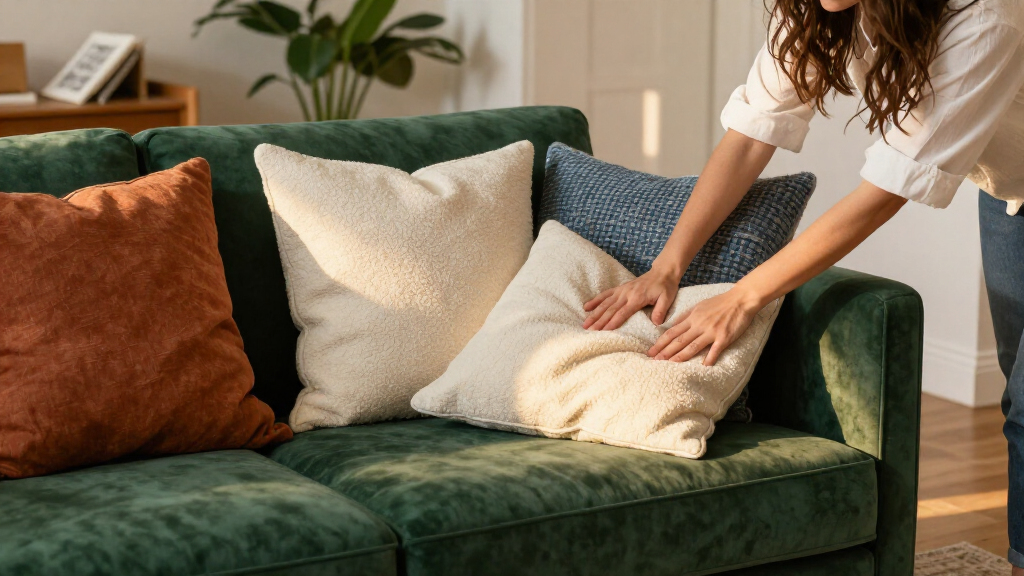
A new pillow cover can change the feel of a sofa in one small, satisfying move: a velvet square catches the afternoon light, or a rust-colored linen cover warms up a room of cool neutrals. You can get that change without replacing the insert or hauling home a new piece of furniture.

Get furniture and decor delivered free with Prime
- Fast, free delivery on millions of items
- Prime Video, Amazon Music and more included
- Member-only deals all year
Designer throw pillow covers are removable fabric sleeves made to dress up decorative pillows. But “designer” can describe a known brand, a distinctive pattern, a premium fiber, or simply a seller’s style language. That means you’ll get more value by looking closely at the details than by treating a high price as proof of quality.
This guide shows you how to choose fabric, size, color, and construction for the way you actually use a room. You’ll also learn what to check before ordering online, how to mix patterns without making the sofa feel noisy, and when a cover is worth the splurge. Think of it as a handful of key facts for making a small purchase feel considered.
Treat “designer” as a broad retail label; inspect fiber content, seams, closure, care notes, and return terms.
Measure your insert and confirm whether the listing includes it before ordering.
Choose fabric for the pillow’s actual location: a busy sofa needs different care and wear tolerance from a low-use accent.
Mix patterns by varying their scale and repeating a few colors already in the room.
Follow the seller’s cleaning directions; removable does not always mean machine washable.
What makes a pillow cover feel truly designer?
A designer throw pillow cover is a decorative, removable fabric sleeve whose appeal may come from its brand, material, pattern, finish, or construction. The label itself is broad retail language, not a regulated promise of quality. For you, the useful clues are the fabric description, seam quality, closure, care guidance, and return policy.
Those details matter because they affect different parts of ownership. Fiber content helps you anticipate feel and care; seams and closures show how the cover may handle repeated use; and return terms reduce the risk of being stuck with a size or color that looks different at home. No single clue guarantees quality, but together they make the listing easier to judge.
That distinction matters when two covers look similar in photos but feel very different at home. One might have a smooth concealed zipper and tidy seams; another might use a thin fabric that puckers around the corners. A familiar designer name can be meaningful if you value the design or provenance, but it doesn’t tell you how the cover will hold up to a dog’s paws or a sunny window.
Imagine you’re comparing two covers for the same reading chair. The first costs more and names its fiber content, gives washing guidance, and shows close-up stitching; the second relies on a stylish photograph and the word “luxury.” The detailed listing gives you more to judge, even if the cover is less expensive. A higher price may still reflect a maker or design you care about, but it is useful to know what that price is buying.
Before buying, look for fiber content, closure details, seam finish, and care instructions. Ask whether the price covers the insert or just the sleeve. When those facts are missing, you have less evidence about what you’re bringing into your home, and less ability to predict whether its upkeep will suit your routine.
Products Worth Considering

Google Nest Thermostat E Smart Thermostat with Temperature Sensor Bundle – White

Levoit Core 300S-P Smart WiFi Air Purifier

Levoit Core 400S-P Smart Air Purifier for Large Rooms
As an affiliate, we earn on qualifying purchases.
Pick a fabric that fits your room and your routine
The best pillow-cover fabric depends on where the pillow sits and how often you use it. Linen and cotton bring natural texture; velvet adds a plush, light-catching surface; wool and bouclé create a cozy, nubby feel; and polyester blends can be practical when colorfastness and easy upkeep matter. Delicate fibers such as silk suit lower-use settings if you’re prepared to handle them gently.
These choices involve tradeoffs. A textured or delicate surface may bring the depth you want but show wear, snag, or require special care sooner. A practical blend can simplify upkeep, though its hand and appearance may differ from natural fibers. The right choice is the one whose feel and maintenance you’ll still enjoy after the novelty wears off.
In a busy family room, a richly colored blended fabric may be easier to live with than pale silk. In a bedroom reading nook, by contrast, a soft bouclé cover can add warmth without facing quite as many spills and elbows. The room’s light matters too: a velvet in deep green can look almost black in a dim corner, then glow like a jewel when afternoon sun reaches it. Consider both the visual effect and exposure: direct sun can fade some colors, while frequent contact brings more friction and the need for cleaning.
When a friend tried a cream cover on the sofa, it looked beautiful until the family’s terrier claimed that seat every evening. Swapping it for a darker, sturdier fabric kept the same cozy look with less visible fur and fewer anxious glances. That small change made the pillow decorative and usable. It also shows why “easy to live with” depends on the household: a dark surface may hide some marks, but it can make light-colored fur more noticeable.
Match fabric, color, and cleaning needs to the spot. For a frequently used sofa, look for clear care instructions and construction suited to regular handling. A special-occasion accent can be more delicate; you don’t have to demand the same toughness from every pillow. Choosing different levels of durability lets you keep a room expressive without making every cover a maintenance project.
A removable cover gives you flexibility, but it doesn’t automatically make every fabric washable. Follow the seller’s care instructions before cleaning.
Get the fit right before the cover arrives
To choose the right pillow-cover size, measure your insert and compare that measurement with the seller’s sizing guidance. Listings commonly use square dimensions, but conventions can vary, and an insert sold separately can be easy to overlook. A snug cover can create a full shape; a strained zipper and bulging seams signal that the insert is too large.
Fit affects both appearance and wear. An insert that is too small leaves slack fabric and soft, underfilled corners; one that is too large puts tension on the seams and closure, which can make the pillow harder to use and may shorten the cover’s life. A fuller look is useful only when the fabric and construction can accommodate it.
Say your insert measures 20 inches on each side and you want a plump look. Some shoppers use a slightly smaller cover for fullness, but that only works if the fabric and construction can handle the tension. If you’re ordering from a small maker, read the listing carefully: a handmade cover’s finished dimensions, pattern placement, and fit may differ slightly from a factory-produced piece. A little variation may be part of handmade production, so check whether it affects the finished size you need.
Check the details before you click buy. Does the listing say “cover only”? Are the measurements for the cover laid flat or for a recommended insert? Can you return it if the corners don’t fill? These questions matter because a cover can look well-made and still feel disappointing when it droops over a small insert. They also help you compare listings that use different sizing conventions.
- Measure the insert from seam to seam while it lies flat.
- Read the seller’s sizing notes and check whether the insert comes with the cover.
- Choose the fit you want, keeping enough room for the closure to work without pulling the seams.
- Review the return terms in case the dimensions don’t produce the shape you expected.
A correctly fitted cover should fill the corners without a wrestling match. That’s the difference between a pillow that looks neat on the sofa and one that springs open at the zipper. It also gives the fabric a better chance of keeping its shape through everyday use.
Mix color, pattern, and texture without crowding the room
To make several pillows feel like a group, repeat a few colors already present in the room and vary the patterns’ scale and texture. A large botanical print, a small geometric motif, and a solid velvet can share the same palette without competing for attention. If every pillow has a bold pattern of similar size, your eye has nowhere to rest.
Scale and repetition give the arrangement a kind of visual order. A larger pattern can act as the focal point, a smaller one adds interest without demanding equal attention, and a solid cover creates breathing room. Repeating colors from a rug, artwork, or upholstery helps the different designs feel connected, even when their motifs do not match.
For example, you could start with a sand-colored sofa, then pull faded blue from a rug and rust from a framed print. Give one pillow the largest pattern, choose a smaller print for its neighbor, and let a plain linen cover bridge the two. The shared colors tie the arrangement together while the different surfaces keep it from feeling flat. If the result feels busy, removing one strong pattern or adding a solid is often more effective than introducing another accent color.
A designer throw pillow can also help you test a bolder idea before you commit to a large change. A vivid chartreuse cover may feel risky on an entire sofa, but one square among quieter neutrals lets you see how the color behaves in morning and evening light. If it works, repeat it elsewhere; if it doesn’t, swapping a sleeve is simple. The small scale makes experimentation reversible, while the room’s changing light helps you judge whether the color suits more than one moment of the day.
When choosing placement, leave room to sit or sleep comfortably. A row of pillows can dress up a bed, but if you have to move a dozen covers every night, the styling is working against you. Aim for a clear color link, varied pattern scales, and usable seating, then adjust by eye. The arrangement should support how you use the room, because a beautiful grouping that is constantly in the way is unlikely to stay in place.
Compare quality and care before you pay a premium
A higher price can make sense when it buys something you value, such as a distinctive design, a particular fiber, careful craftsmanship, or a maker whose work you follow. But price by itself doesn’t tell you that a cover will last longer. Compare the material and details with the needs of the room before you decide what the extra money means.
A pair of covers for the family sofa faces more wear than one accent in a guest room. Look for neat seams, reinforced stress points, a closure that sits flat, and instructions you can realistically follow. If you want to wash covers often, a dry-clean-only fabric may cost you more in time and care than the label suggests. The best value is therefore tied to use: a premium finish may matter on a pillow you handle daily, while an occasional accent may not need the same investment.
Use the table to compare what matters for your particular spot. The notes are general tendencies, not guarantees: blends vary, and each seller may use different finishes or construction. Treat them as prompts for questions, since the exact fiber blend and care method can change how a cover feels and performs.
| Cover detail | What it can offer | What to check |
|---|---|---|
| Linen or cotton | Natural texture and a relaxed look | Care guidance and possible shrinkage |
| Velvet | Soft pile and rich color | Cleaning needs and how light changes the shade |
| Polyester blend | Practical color and everyday versatility | Exact fiber content and finish |
| Handmade design | Distinctive pattern or small-batch character | Size variation, pattern placement, and return terms |
If sustainability matters to you, look for specifics about fibers, sourcing, or recognized certifications where relevant. Words like “artisan,” “organic,” and “eco-friendly” can mean different things across sellers. Clear details give you a firmer basis for comparison than a broad claim. That clarity helps you weigh what matters most, whether it is material origin, expected care, or how long you intend to keep the cover.
Refresh covers seasonally and keep them looking good
Changing pillow covers lets you adjust a room’s color and texture without buying whole pillows or replacing larger furnishings. A few fabric sleeves made for the inserts you already own can tuck away in a drawer and return when the season or your mood shifts. That flexibility makes a small home update easy to reverse. Keeping the same inserts also means you can change the look without needing extra storage for complete pillows.
Try a cool, crisp cotton or linen in summer, then bring out velvet, wool, or bouclé when the evenings turn cold. In a living room with a charcoal sofa, swapping pale blue covers for ochre and deep green can make the space feel warmer even before you touch the lamps or rug. You’ve changed the room’s accent, not its bones. Seasonal swaps work best when the covers still suit the room’s fixed colors, so the change feels intentional rather than like a separate palette arriving for a few months.
Care affects how long that refresh stays appealing. A removable zip cover may still shrink, distort, fade, or lose its finish if you wash it the wrong way. Check the care label or seller’s instructions first, and pay attention to sun exposure: a pillow left in a bright window can fade faster than one on a shaded chair. A little prevention matters because fading or a changed texture may be hard to reverse, even if the cover is technically clean.
For a simple routine, take covers off according to their care directions, deal with small marks promptly if the fabric allows spot treatment, and rotate pillows so the same face doesn’t take all the sunlight and wear. The goal is practical: keep favorite covers in circulation and store the others clean and dry. When one color no longer suits the room, you can swap the sleeve and keep the insert. Rotating also spreads exposure across the cover, though it cannot replace following the care instructions for the specific fabric.
Frequently Asked Questions
What size pillow cover should I buy?
Measure your insert from seam to seam and compare it with the seller’s sizing guidance. Some shoppers choose a slightly smaller cover for a fuller look, but the zipper and seams should not feel strained.
Are pillow inserts included with designer covers?
Often, the insert and cover are sold separately. Check for wording such as “cover only,” confirm the listed dimensions, and read any bundle details before you buy.
Can I wash removable pillow covers in a machine?
It depends on the fabric and finish. Follow the care label or seller’s instructions; washing a delicate cover the wrong way can shrink, distort, or fade it.
How do I mix patterns without making the sofa look busy?
Choose patterns in different scales and repeat a few colors already in the room. For example, pair one large floral print with a small geometric design and a solid textured cover so the eye gets a place to rest.
Are expensive designer pillow covers worth the price?
They can be if you value the particular design, materials, construction, or maker. Compare those details with the cover’s intended use and care needs; the price alone doesn’t prove quality.
How can I tell whether a pillow cover’s sustainability claim is meaningful?
Look for specific information about the fibers, sourcing, manufacturing, and recognized certifications where applicable. Broad terms such as “eco-friendly” or “sustainable” may not explain what the seller actually did.
Conclusion
Choose a cover by asking how it will feel, fit, and hold up in the place you plan to use it. A well-chosen sleeve can bring color to a quiet sofa, add a soft surface beside your bed, or test a bolder palette without asking you to replace the room around it.
Check the measurements, fabric, construction, and care notes before you order. Then let one small square of color do its work: the room may feel newly considered before you’ve moved a single chair.