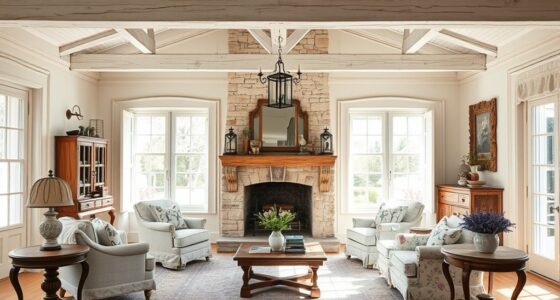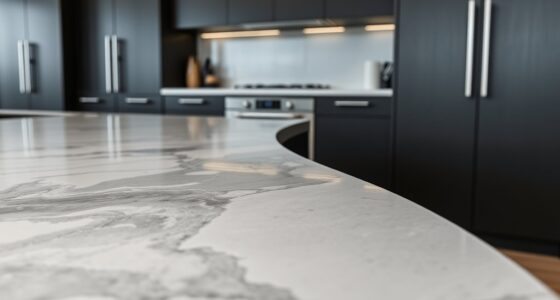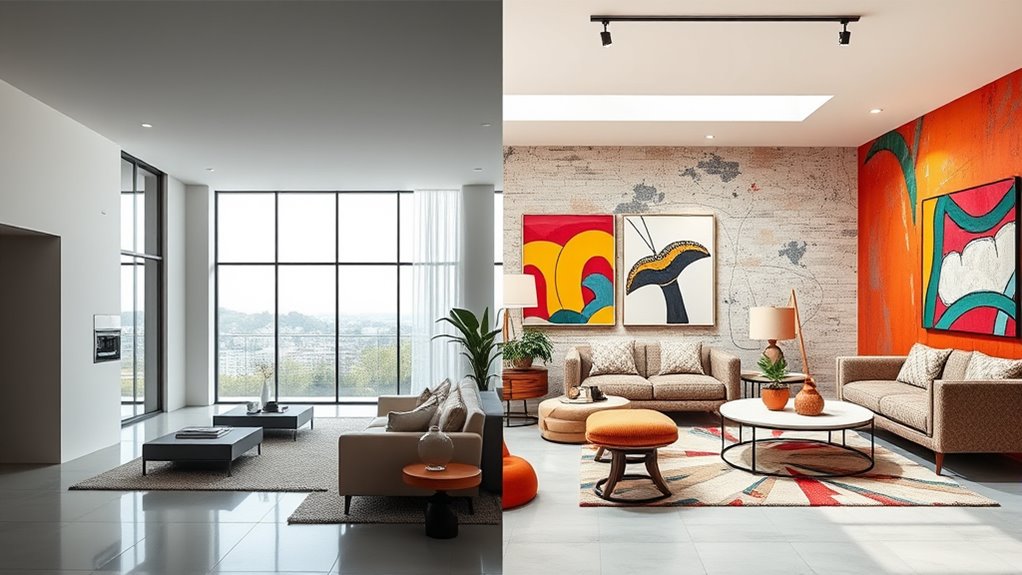

Modern and contemporary styles often get mixed up, but they have key differences. Modern design is rooted in the early to mid-20th century, emphasizing clean lines, minimalism, and functional forms. In contrast, contemporary style is more fluid, evolving with current trends and blending various influences. It’s more experimental and relaxed. Understanding these distinctions helps you create spaces that truly reflect your personal taste; if you keep exploring, you’ll uncover even more details.
Key Takeaways
- Modern design is rooted in early to mid-20th-century movements, emphasizing minimalism and functional forms, whereas contemporary style is fluid and incorporates current trends.
- Modern design features clean lines, neutral colors, and geometric shapes, while contemporary design blends various textures, colors, and experimental elements.
- Modern style maintains strict principles from its historical era; contemporary design is adaptable, evolving with new materials and ideas.
- Both styles value simplicity and understated elegance, but modern design avoids ornate details, focusing on form and function.
- Modern design is timeless and structured, whereas contemporary style is relaxed, eclectic, and ever-changing.
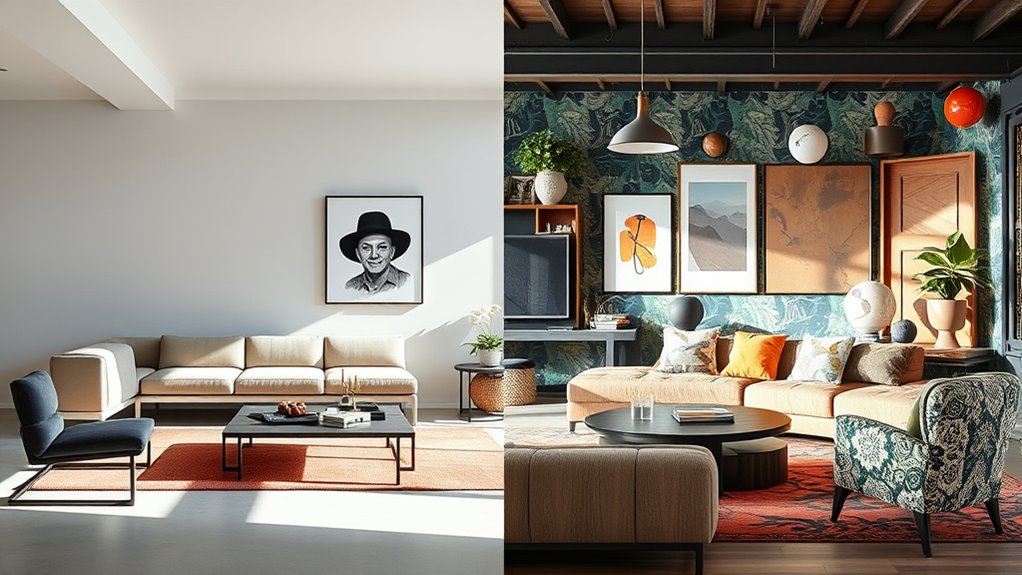
Have you ever wondered what sets modern and contemporary styles apart? It’s a common question, especially since both design approaches often share similar features. To start, modern design refers to a specific period rooted in the early to mid-20th century, influenced heavily by movements like mid-century design. This style emphasizes clean lines, functional forms, and an overall minimalist aesthetic. Think of sleek furniture with smooth surfaces, simple color palettes, and an absence of ornate details. It’s about creating spaces that are both practical and elegant, stripping away unnecessary embellishments to focus on form and function.
Contemporary style, on the other hand, is more fluid and ever-changing. It reflects current trends and can incorporate a variety of influences, often blending different eras and styles. Unlike modern design, which is defined by a specific historical period, contemporary design evolves with time. It tends to be more experimental, mixing textures, shapes, and colors to create an eclectic yet cohesive look. That said, contemporary spaces often prioritize open layouts, natural light, and a minimalist aesthetic that emphasizes simplicity, but with a more relaxed and adaptive vibe. This flexibility allows contemporary design to embrace new materials and innovative ideas, making it feel fresh and relevant.
Contemporary style is fluid, evolving, and experimental, blending eras with a relaxed, minimalist approach that feels fresh and adaptable.
While modern design is characterized by its roots in mid-century design, it’s also marked by a consistent approach: a focus on minimalist aesthetics. You’ll notice that both styles value simplicity, but modern design often adheres to strict principles established during its inception, with a preference for neutral color schemes and geometric shapes. Contemporary design, however, may incorporate bolder accents and more varied materials, but it still maintains an overall sense of clarity and pared-down elegance. It’s about creating spaces that feel open and uncluttered, allowing for a sense of calm and order. Additionally, both styles often emphasize minimalist aesthetics, which is a core principle shared by both modern and contemporary design. The use of neutral color palettes is also common, reinforcing their shared affinity for understated elegance. In essence, modern design is about honoring a specific historical movement that champions minimalism and functional beauty. Contemporary design, by contrast, is more about embracing what’s current and adaptable, often borrowing elements from multiple styles to suit individual tastes. Both styles share a love for clean lines and simplicity, but their origins and execution differ. If you’re trying to decide between them, consider whether you prefer the timeless, structured look of modern design or the fluid, ever-evolving nature of contemporary aesthetics. Either way, understanding these differences helps you create a space that truly reflects your personality and preferences. For a deeper understanding, exploring design principles can offer valuable insights into how these styles are constructed and distinguished.

OKD Modern 70" TV Stand, Entertainment Center for TVs Up to 80", Media Console with Large Open Storage & Side Cabinets, Thick Wood Design for Living Room, Antique White
Modern Natural Design for Any Home: Blending clean lines with authentic woodgrain textures, this TV stand captures a…
As an affiliate, we earn on qualifying purchases.
As an affiliate, we earn on qualifying purchases.
Frequently Asked Questions
Can Modern and Contemporary Styles Be Combined in One Space?
Yes, you can definitely combine modern and contemporary styles in one space. This fusion decor creates a unique, eclectic look by mixing styles intentionally. You might use sleek modern furniture alongside contemporary art pieces or accessories, blending clean lines with current trends. The key is balancing the two styles so they complement each other, resulting in a cohesive, stylish environment that reflects your personal taste through mixed styles and creative fusion decor.
Which Style Is More Affordable for Home Renovation Projects?
You might think contemporary styles are pricier, but surprise—modern designs often come with higher costs due to sleek, minimalist features and premium materials. For budget-friendly options, contemporary can be more affordable, especially if you stick to simple lines and neutral palettes. When considering cost considerations, choose styles that match your budget, and remember that both can be tailored to be cost-effective with smart selections.
How Do Color Palettes Differ Between Modern and Contemporary Designs?
You’ll notice that modern and contemporary designs have distinct color palettes. Modern styles often feature neutral tones with bold accents, emphasizing a clean, minimalist look. Contemporary palettes are more versatile, blending neutral shades with vibrant hues for a dynamic feel. The color scheme contrasts between the two help define each style’s vibe, giving you flexibility in choosing a palette that suits your space. This versatility allows for personalized, stylish interiors.
Are Modern and Contemporary Styles Suitable for Small Spaces?
Did you know that about 60% of homeowners prefer modern or contemporary styles for small spaces? Both styles work well because they emphasize clean lines and open layouts. Modern design offers minimalist solutions that maximize space, while contemporary style adapts easily to different needs. You’ll find these styles perfect for small spaces, creating a sleek, uncluttered look. They’re excellent choices for achieving a minimalist vibe and making your space feel larger.
What Are Common Misconceptions About Modern and Contemporary Aesthetics?
You might think modern and contemporary aesthetics are just about minimalism, but many believe they lack timeless elegance. In reality, these styles emphasize functional minimalism, focusing on clean lines and simplicity that can be both stylish and lasting. A common misconception is that they’re cold or impersonal, but with the right touches, they create inviting spaces. Embracing these styles means appreciating their balance of form and function, not sacrificing warmth or character.

COLAMY Modern Velvet Accent Chairs Set of 2, Upholstered Barrel Chairs, Comfy Side Arm Chairs with 3 Legs for Living Room, Bedroom, Reading, Khaki
Comfortable Velvet Upholstery: COLAMY velvet accent chairs feature with soft, high-quality velvet fabric that offers smooth and skin-friendly…
As an affiliate, we earn on qualifying purchases.
As an affiliate, we earn on qualifying purchases.
Conclusion
Understanding the differences between modern and contemporary styles helps you appreciate each look’s unique charm. While modern design is rooted in clean lines and minimalism of the early 20th century, contemporary style is ever-evolving, reflecting current trends. Knowing these distinctions lets you make informed choices that match your taste. Remember, it’s all about finding what suits you best—so don’t be afraid to mix and match until you hit the sweet spot. After all, beauty is in the eye of the beholder.
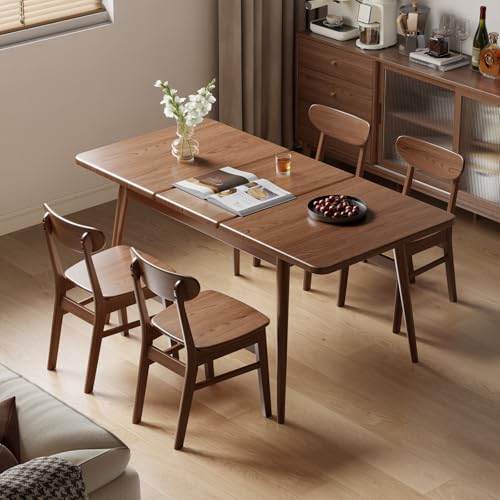
Muwuele Solid Wood Extendable Dining Table for 4-8 People with Seamless Extension from 47.2 to 63 Inches, Easy Assembly, Expandable Tables for Small Spaces, Dining Room, Kitchen, Living Room, Walnut
【TABLE ONLY & NO CHAIRS】This purchase includes the extendable dining room table only. Chairs shown are for display…
As an affiliate, we earn on qualifying purchases.
As an affiliate, we earn on qualifying purchases.

97 Decor Vintage Eclectic Wall Art Collage – Abstract Modern Art Prints For Wall Decor, Cool Funky Pictures Maximalist Paintings Retro Bauhaus Posters Set For Dorm Bedroom Home Decorations (Unframed)
Eclectic Decor: Elevate your living space with gallery wall art set, a perfect blend of retro wall art…
As an affiliate, we earn on qualifying purchases.
As an affiliate, we earn on qualifying purchases.