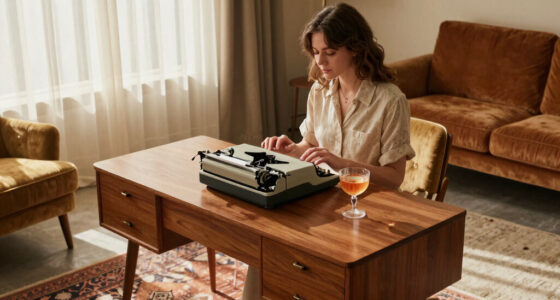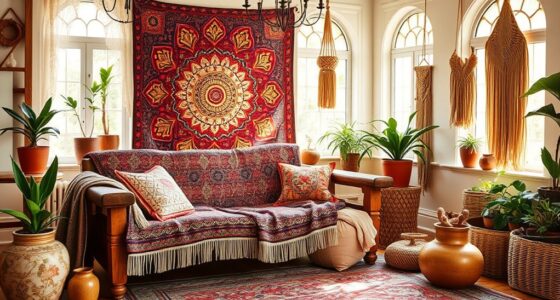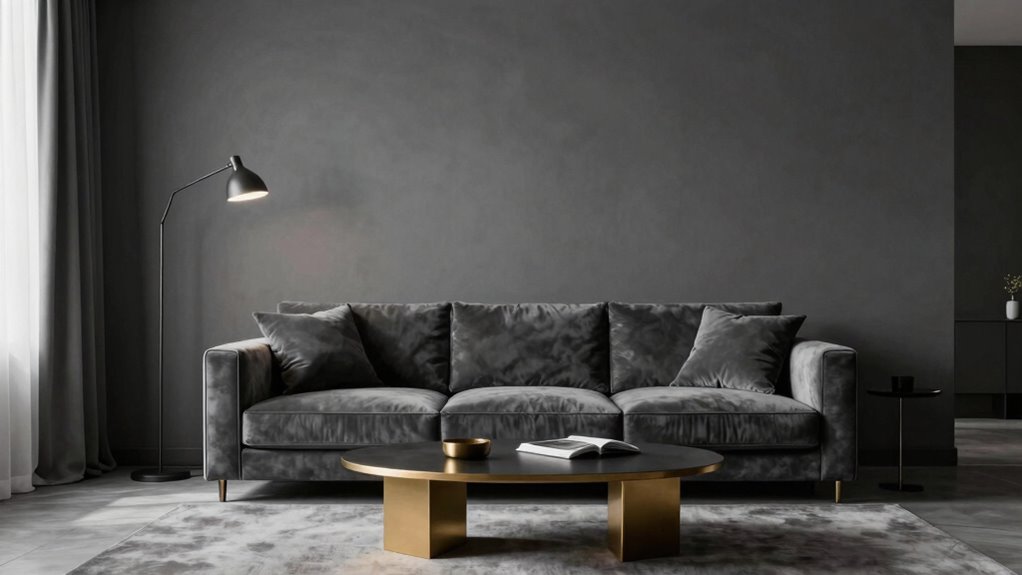

To achieve a sophisticated look with a one-color decorating approach, focus on choosing a rich, cohesive hue and emphasizing texture, finishes, and material variety. Use lighting strategically to enhance the mood, with natural light making shades softer and artificial lighting deepening tones. Play with different materials like plush rugs or matte walls for visual interest, creating depth without losing harmony. If you continue exploring, you’ll discover how to turn a simple color palette into a refined and inviting space.

Get furniture and decor delivered free with Prime
- Fast, free delivery on millions of items
- Prime Video, Amazon Music and more included
- Member-only deals all year
Key Takeaways
- Use a cohesive monochromatic color palette to create a refined and unified look.
- Incorporate varied textures and finishes to add depth and visual interest.
- Optimize lighting to enhance the chosen hue’s mood and perception.
- Select shades based on color psychology to evoke sophistication and desired emotions.
- Maintain consistent design elements for a polished, elegant atmosphere.
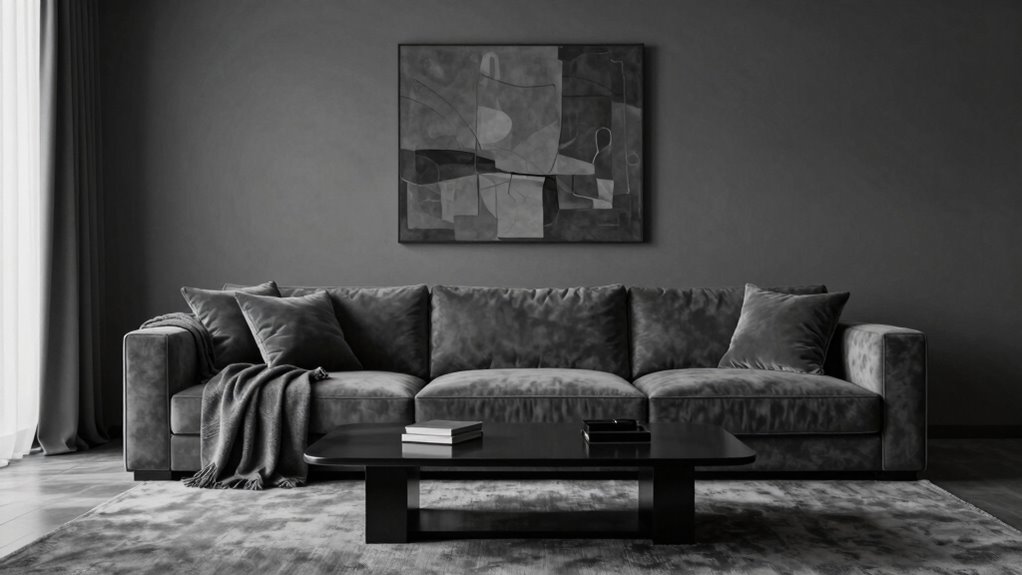
Have you ever considered transforming a space with just a single hue? It’s a powerful approach that can create a sophisticated atmosphere without overwhelming the senses. The one-color decorating approach relies on the strategic use of color psychology to evoke specific feelings and moods, making your space feel intentional and harmonious. When you choose one dominant hue, you set the tone for the entire environment. For example, deep blues can foster calmness and focus, while warm terracottas evoke comfort and warmth. By sticking to a single color, you simplify your palette, allowing you to play with shades, textures, and finishes within that hue to add depth and interest. This approach isn’t about monotony but about creating a layered, cohesive look that feels curated and refined. Incorporating material variety within the same color palette enhances visual interest and emphasizes the depth of your chosen hue. Maintaining design consistency is essential when you opt for a monochromatic scheme. It guarantees that every element, from wall paint to accessories, complements rather than clashes. When you select your base color, consider how different materials and finishes interact with it. Matte, gloss, and satin surfaces can all influence how the color appears under various lighting conditions. Mixing textures—like plush rugs, smooth ceramics, and matte walls—adds dimension without disrupting the overall unity. To further elevate your design, paying attention to lighting effects can significantly influence how your chosen hue is perceived and felt. Additionally, understanding the perception of space can help you manipulate the room’s size and intimacy through color choices. Exploring color contrast techniques can also help highlight specific areas or features within your space, even within a monochromatic scheme. As you build your space, pay attention to how the chosen hue influences the perception of size and light. Lighter shades can make a room feel more open, while darker tones add intimacy and sophistication. The key is consistency; if you introduce contrasting colors, they should be subtle and deliberate, supporting the overall monochromatic theme rather than breaking it apart. Using color psychology wisely allows you to craft a space that feels both sophisticated and welcoming. When you understand the emotional impact of your chosen hue, you can tailor the environment to suit your needs—whether that’s energizing a creative workspace or creating a serene retreat. The power of a single color lies in its ability to unify your design and create a seamless flow throughout the space. Keep in mind that lighting plays a significant role in how the color appears and feels; natural light enhances softer shades, while warmer artificial lighting can deepen darker tones. Incorporating lighting techniques can also help you optimize the ambiance created by your monochromatic palette. Ultimately, the one-color decorating approach, when executed with attention to detail and a clear understanding of color psychology and design consistency, results in a space that exudes elegance and intentionality. It’s a strategy that proves you don’t need complexity to achieve sophistication.
As an affiliate, we earn on qualifying purchases.
Frequently Asked Questions
Can One-Color Decorating Work in Small Spaces?
Yes, one-color decorating works well in small spaces. You can use monochrome accessories to add depth and interest without overwhelming the room. Focus on color accentuation by choosing shades that complement each other, creating a cohesive look. This approach makes the space feel larger and more sophisticated, as it avoids clutter and maintains a streamlined aesthetic. Stick to a single color palette for a stylish, unified feel in your small space.
How Do I Add Texture With One Color?
Did you know that textured wall finishes can increase a room’s perceived depth by up to 30%? To add texture with one color, incorporate monochrome accessories like cushions, vases, or throws. Use textured wall finishes such as stucco, wallpaper, or wood paneling to create visual interest. Mix smooth and textured surfaces to add dimension while keeping the color palette unified, making your space feel sophisticated and cohesive.
What Are the Best Color Options for Sophistication?
For sophistication, opt for deep, rich hues like navy, charcoal, or emerald, which align with color psychology to evoke calm and elegance. Monochrome contrast enhances depth, so pair lighter shades with darker ones to create visual interest without clutter. These colors foster a refined atmosphere, and their versatility allows you to experiment with textures and finishes, making your space feel both cohesive and luxurious.
How Do I Incorporate Patterns Into a Monochromatic Scheme?
You can incorporate patterns into a monochromatic scheme by mixing different textures and subtle pattern variations. Use monochromatic accessories with varying patterns, such as stripes, florals, or geometrics, to add visual interest. Balance is key—combine bold patterns with more delicate designs to create depth. Keep the color consistent across all patterns, allowing the textures and pattern mixing to bring sophistication without overwhelming the space.
Can One-Color Decorating Suit All Interior Styles?
Yes, one-color decorating can suit all interior styles if you choose carefully. You’ll want to incorporate monochrome accessories to add texture and interest, and consider color psychology to evoke the mood you desire. For example, calming blues work well in tranquil spaces, while vibrant reds energize a room. This approach creates a cohesive, sophisticated look that easily adapts to modern, traditional, or eclectic styles, making your space feel intentional and stylish.
Conclusion
Embracing a one-color decorating approach is like painting a blank canvas—you create a sophisticated masterpiece with just one hue. When I tried it in my living room, I was surprised how a single shade transformed the space into a calming oasis. Studies show that monochromatic schemes can boost a room’s harmony and style. So, don’t be afraid to pick one color and let it speak volumes—your space will feel both elegant and effortlessly put together.
Fall Picks
fall essentials
As an affiliate, we earn on qualifying purchases.