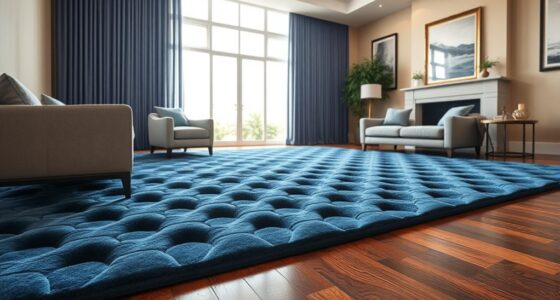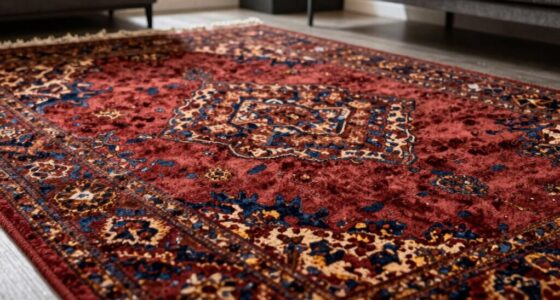
Choosing large, linear patterns like wide planks or big tiles makes your room look bigger by emphasizing length and width. Small, intricate patterns such as mosaic tiles or detailed parquet create a cozy, intimate feel. Light-colored, reflective flooring also boosts the sense of space, while darker tones make a room feel more enclosed. Combining textures and contrasting colors can further influence perception. To discover more ways to transform your space, keep exploring how design choices impact room size.

Get furniture and decor delivered free with Prime
- Fast, free delivery on millions of items
- Prime Video, Amazon Music and more included
- Member-only deals all year
Key Takeaways
- Large, linear patterns like wide planks or large tiles make rooms appear more spacious by emphasizing length and width.
- Small, intricate patterns such as mosaic tiles or parquet create a cozy, enclosed feeling, reducing perceived room size.
- Light-colored, reflective flooring enhances brightness and openness, making small spaces seem larger.
- Darker tones anchor the room, adding intimacy and reducing the sense of spaciousness.
- Combining smooth, polished textures with subtle color contrasts maximizes the perception of room size and depth.
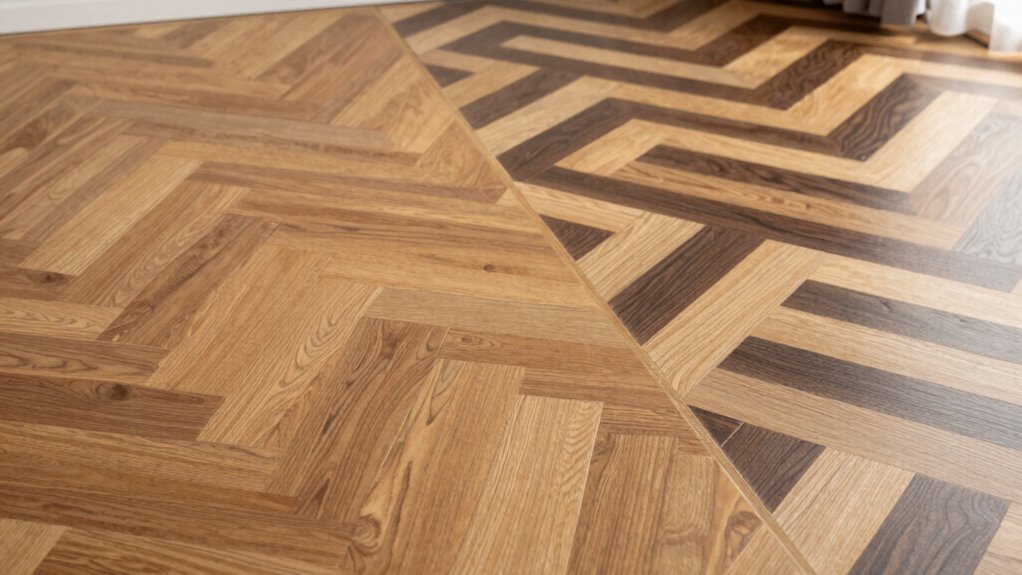
Are you unsure which flooring pattern will best suit your space? Choosing the right pattern can dramatically influence how large or cozy a room feels. One of the most impactful aspects to consider is how patterns interact with color coordination and texture contrast. These elements work together to create visual dynamics that affect perception, making your room appear more expansive or more intimate depending on your goals.
Choosing the right flooring pattern, color, and texture can transform your room’s perceived size and ambiance.
If you want to make a small room feel bigger, opt for large, linear patterns like wide plank hardwood or large-format tiles. These patterns draw the eye along the length or width of the space, emphasizing its dimensions. When selecting colors, go for subtle, monochromatic schemes or soft contrasts to maintain an open, airy feel. Bright or light-colored flooring reflects more light, further amplifying the sense of space. Conversely, darker tones tend to anchor a room, making it feel more enclosed, so they’re better suited for larger spaces where you want to create a cozy, intimate atmosphere.
Texture contrast also plays a pivotal role. Smooth, polished surfaces reflect light and give a sleek, modern appearance, which can make a room feel more expansive. In contrast, textured patterns like herringbone or chevron introduce visual interest and depth without overwhelming the space. When you combine textures with contrasting finishes—such as matte and gloss—you create a layered effect that guides the eye across the floor and influences perceived size. For example, a matte tile with a subtle pattern can add depth without making the room feel cluttered or small. Additionally, understanding how visual perception influences room design can help you make more strategic choices. Recognizing the importance of perception in design allows you to manipulate elements to enhance or diminish spatial impressions intentionally. Being aware of spatial illusions can also assist in making deliberate adjustments to your flooring choices for desired effects. Furthermore, perception-based design principles highlight how subtle modifications in pattern and color can dramatically alter spatial perception. Incorporating psychological factors into your design process can further enhance how these visual cues are interpreted, ultimately creating a more balanced and harmonious space.
If you’re aiming to make a room feel more contained and cozy, smaller patterns like mosaic tiles, intricate parquet, or tightly woven carpets work well. These patterns can add visual complexity, making the space feel more intimate. By pairing darker colors with textured surfaces—like a deep, textured carpet—you enhance the sense of warmth and closeness. Texture contrast here is useful: combining smooth with rough surfaces creates a tactile experience that draws attention to the flooring, adding depth without expanding the perceived size.
Ultimately, your choice of flooring pattern should align with your desired room perception. Careful attention to color coordination and texture contrast can transform a space, making it look larger or smaller, more open or more inviting. By understanding how these elements work together, you can select a flooring pattern that complements your style while optimizing the room’s visual impact.
Products Worth Considering

Philips Hue Smart Light Starter Kit with Bridge and 4 White and Color A19 Bulbs

Philips Hue Festavia 130-Foot Indoor/Outdoor Smart String Lights, 500 Mini Color-Changing LEDs

Levoit Core 600S-P Smart Air Purifier for Large Rooms
As an affiliate, we earn on qualifying purchases.
Frequently Asked Questions
How Does Lighting Affect the Perception of Flooring Patterns?
Lighting greatly influences how flooring patterns are perceived by enhancing light reflection and creating shadow play. Bright, well-lit spaces highlight intricate patterns and make the flooring appear larger, while softer lighting minimizes patterns and adds depth through shadows. You can use strategic lighting to emphasize or downplay certain flooring features, altering the room’s perceived size and style. Proper lighting guarantees your flooring pattern complements the room’s overall ambiance perfectly.
Can Furniture Placement Influence How Flooring Patterns Change Room Size?
Imagine your furniture like anchors, guiding the eye across the room. You can make a space feel larger or cozier by strategically placing pieces to highlight or downplay flooring patterns, especially when paired with wall color and ceiling height. For instance, tall furniture elongates the room, while low pieces with open arrangements emphasize expansive patterns. Light wall colors and high ceilings complement larger patterns, creating a more spacious and balanced feel.
Are Certain Flooring Materials Better for Creating the Illusion of Space?
Certain flooring materials are better for creating the illusion of space, especially when you consider texture variety and pattern orientation. Light-colored materials with smooth textures reflect more light, making your room feel larger. Opt for diagonal or linear patterns aligned with the room’s length to enhance the sense of depth. Combining these elements cleverly can make even small spaces feel open and airy, transforming your room’s overall perception.
How Do Color Choices Interact With Pattern to Alter Room Perception?
Color choices act like a painter’s brush, transforming space perception. You’ll notice that high color contrast and small pattern scale can make a room feel lively and compact, while low contrast and large patterns open it up. When pairing pattern scale with color contrast, you control the flow of energy and openness. Use subtle hues with large patterns for spaciousness, and bold colors with small patterns to energize a cozy room.
What Are Common Mistakes When Choosing Flooring Patterns for Small Rooms?
When choosing flooring patterns for small rooms, avoid pattern clash and texture mismatch, which can make the space feel cramped or chaotic. Steer clear of busy, contrasting patterns that overwhelm the room’s size. Instead, opt for subtle, uniform designs with consistent textures. Mixing patterns or textures can distract and distort perception, so keep it simple to enhance openness and create a cohesive, inviting atmosphere.
Conclusion
Choosing the right flooring pattern can make your space feel twice as big or cozy enough to feel intimate. It’s the secret weapon that transforms a room’s perception—turning a cramped area into an open haven or a vast space into a cozy retreat. So, don’t underestimate the power of pattern; it’s the simple detail that can change everything. After all, your room’s perceived size isn’t just about space—it’s about how you style it.