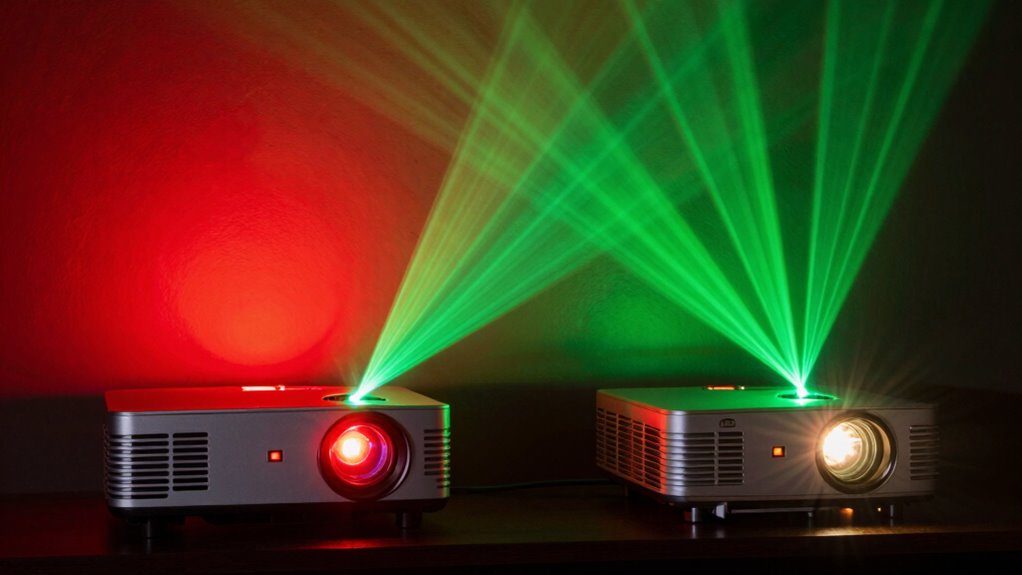

When comparing laser and lamp projectors, it’s important to understand what their specs mean in everyday use. Laser projectors offer brighter images, sharper colors, and a longer lifespan, meaning less maintenance and lower long-term costs. Lamp projectors are cheaper upfront but require frequent bulb replacements and more upkeep. Brightness, contrast, and resolution directly impact image clarity, especially in different room sizes and lighting. Want to see which features best suit your needs? Keep exploring to find out more.
Key Takeaways
- Laser projectors offer longer lifespan (20,000+ hours) and lower maintenance compared to lamp projectors needing bulb replacements every few thousand hours.
- Higher lumens in laser projectors mean brighter images suitable for well-lit environments, while lamp projectors may struggle in ambient light.
- Laser models provide richer, more accurate colors and better contrast, enhancing image vibrancy and realism in real-world viewing.
- Setup and portability are easier with laser projectors due to simpler calibration and lighter, more compact designs.
- Although initial costs may be higher for laser projectors, their durability and lower maintenance make them more cost-effective long-term.

ViewSonic LS901-4K UHD 4K Laser Projector with 5500 Lumens, 1.7X Optical Zoom, 4K HDR/HLG Support, 4 Corner Adjustment, H/V Keystone, 360 Degrees Projection for Home Theater and Commercial Venues
4K Home Theater Laser Projector: UHD (3840x2160p) 4K resolution with a 1.2-2.0 throw ratio and 5,500 ANSI lumens,…
As an affiliate, we earn on qualifying purchases.
As an affiliate, we earn on qualifying purchases.
What Are the Key Differences Between Laser and Lamp Projectors?

Have you ever wondered what sets laser projectors apart from traditional lamp projectors? The main difference lies in their projection technology. Laser projectors use focused laser beams to generate images, which results in sharper, more vibrant visuals. They also tend to be more energy-efficient because lasers consume less power and produce less heat compared to lamps. Unlike lamp projectors, which rely on replaceable bulbs that degrade over time, laser projectors have a longer lifespan and require less maintenance. This means you get consistent performance without frequent bulb replacements. Additionally, laser projectors often support advanced color technology, enhancing overall image quality and color accuracy. Because of their longer lifespan, laser projectors are considered a more sustainable investment. Overall, laser projectors offer a more sustainable, cost-effective solution with superior image quality, making them a smart choice for both home entertainment and professional settings.

HAPPRUN 2500 ANSI Lumens Outdoor Projector with Built-in Streaming Apps, 4K Decoding Resolution, Dolby Audio, WiFi 6 and Bluetooth 5.2 for Indoor and Outdoor Home Theater
[ Built-in Streaming System ] – No extra equipment needed. This smart projector gives you direct access to…
As an affiliate, we earn on qualifying purchases.
As an affiliate, we earn on qualifying purchases.
How Do You Measure Brightness in Lumens?
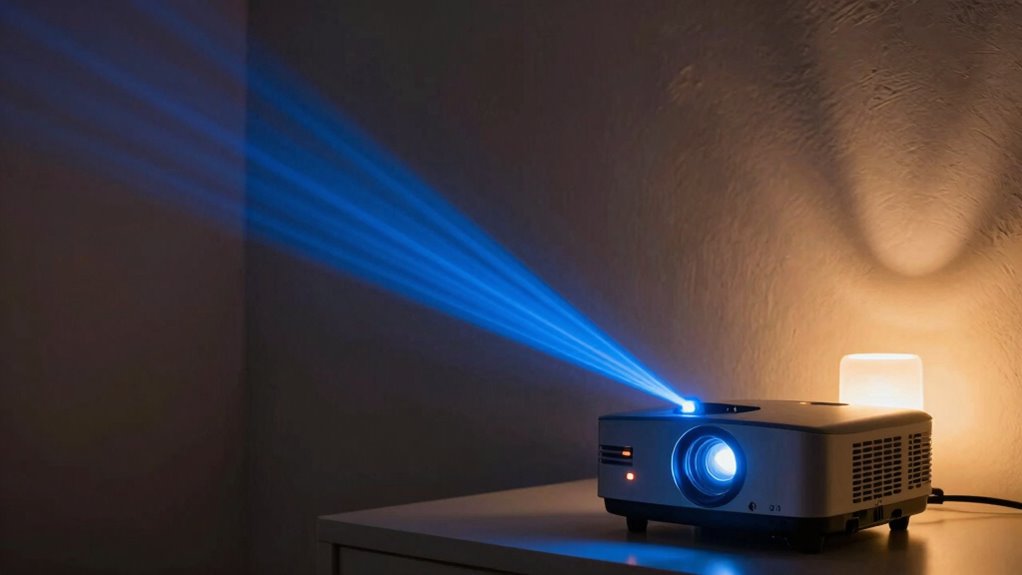
Brightness in projectors is measured using lumens, a unit that quantifies the amount of light the device emits. To accurately assess brightness measurement, you need to comprehend how lumen calculation works. Manufacturers typically specify the lumen rating based on standardized testing conditions, but real-world brightness can vary depending on ambient light and screen size. When comparing projectors, look at the lumen figures to gauge their light output; higher lumens mean brighter images. Keep in mind that a projector with 2,000 lumens may appear less bright in a well-lit room than one with 3,500 lumens. Understanding how brightness is measured helps you choose the right projector for your environment and ensures your viewing experience is clear and vibrant. Additionally, ambient light conditions can significantly impact perceived brightness, making it essential to consider your specific setup when selecting a projector. For example, the materials and design of high-end projectors can influence how effectively they project light in different settings, especially when combined with lens quality and other technical features. Good technical specifications also play a role in optimizing overall brightness and image clarity. Moreover, considering projection distance can help determine how much brightness is preserved over different screen sizes and placement options.
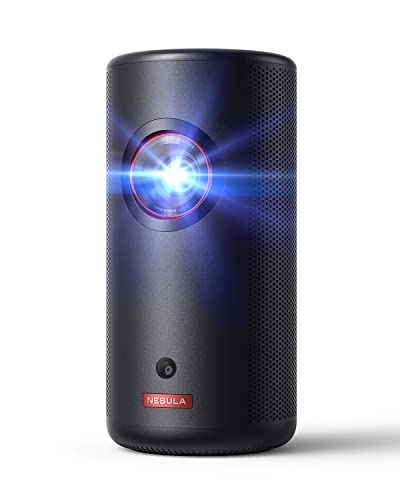
NEBULA Capsule 3 Laser, Outdoor Portable Mini Wi-Fi Smart TV Projector, Upgraded with Google TV, Official Netflix, Dolby Digital, 120 inches Screen and 2.5H Built-In Battery
Laser Engine to Illuminate Your World: Experience vibrant visuals with this laser projector, featuring a laser light source…
As an affiliate, we earn on qualifying purchases.
As an affiliate, we earn on qualifying purchases.
What Role Do Color Quality and Contrast Play in Image Clarity?

Your viewing experience depends heavily on color quality and contrast, which determine how vivid and detailed images appear. A wide color range and high contrast ratio make scenes look more lifelike and sharp. When these elements are strong, your images gain clarity and depth that can’t be matched by brightness alone. Additionally, understanding the Free Floating projection technology can help clarify how image quality is maintained at various distances. Incorporating color accuracy into your evaluation can further enhance your understanding of overall image fidelity and realism. Recognizing the importance of contrast ratio helps you appreciate how nuanced differences can significantly impact image clarity and immersion, especially when considering how dynamic range enhances the visual experience. Moreover, evaluating color gamut can provide insight into the projector’s ability to display a broad spectrum of colors, further improving image quality.
Brightness and Color Range
Color quality and contrast are crucial factors that determine how sharp and vibrant an image appears on the screen. Higher brightness ensures the image remains clear even with increased projection distance or in ambient light. A wider color range produces richer, more accurate hues, making scenes feel more lifelike. When projecting in well-lit rooms, brightness is essential to prevent washed-out images. Conversely, limited color range can make images look dull or flat. Consider this:
| Brightness | Color Range |
|---|---|
| Bright images in ambient light | Rich, vivid hues |
| Clear projection at a distance | Accurate color reproduction |
| Avoids washed-out visuals | Enhances image depth |
Contrast Ratio Significance
Contrast ratio plays a pivotal role in how sharp and detailed an image appears on the screen. A higher contrast ratio enhances the image depth, making dark areas richer and bright areas more vivid. This creates a more dynamic picture, improving overall clarity. When contrast is high, you’ll notice better differentiation between shades, which prevents images from looking flat or washed out. This means you’ll see sharper details and more lifelike visuals, even in scenes with subtle color variations. Conversely, a low contrast ratio can make images look dull and less defined, reducing overall image quality. Understanding the contrast ratio helps you choose a projector that delivers deeper blacks and brighter highlights, ensuring a more engaging and visually striking viewing experience. Additionally, image quality can be significantly affected by the projector’s contrast ratio, impacting your overall viewing satisfaction.
Color Accuracy Importance
Clear and accurate colors are just as important as high contrast when it comes to sharp, lifelike images. If your projector’s color calibration isn’t spot-on, images can look washed out or overly saturated, diminishing clarity. Good color saturation enhances the vibrancy of images, making details pop and ensuring true-to-life visuals. When evaluating projectors, pay attention to how well they reproduce colors and maintain consistency across scenes. Proper calibration ensures that reds, greens, and blues are accurate, preventing color distortions that can distract or mislead viewers. Remember, a projector with excellent contrast but poor color accuracy won’t deliver realistic images. Focus on models that balance contrast with vibrant, well-calibrated colors for the clearest, most immersive experience. Proper color calibration guarantees true color reproduction and is essential for a realistic viewing experience. Additionally, color accuracy is often linked to the projector’s ability to reproduce subtle shades and hues, which greatly impacts overall image quality. Achieving optimal color fidelity is crucial for displaying images that are both vibrant and true to life.
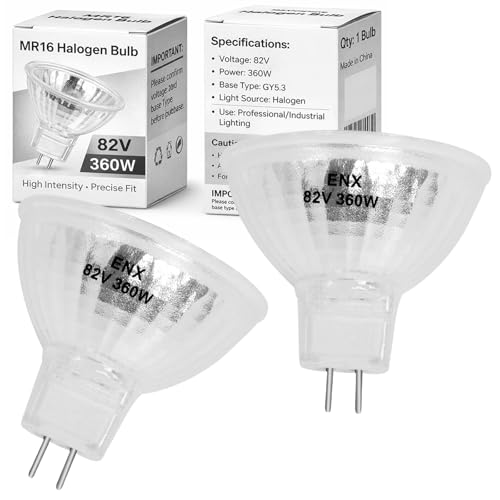
Wadoy EN-X 82V 360W Projector Bulb 2 Pack, MR16 GY5.3 Base Compatible with Apollo EN-X Overhead Projectors Stage Studio Lighting Lamp Replacement with 2-Flat Pin
Precision Compatibility: Compatible with Apollo EN-X series projectors, features MR16 blub with 2-flat pin GY5.3 base type. Perfect…
As an affiliate, we earn on qualifying purchases.
As an affiliate, we earn on qualifying purchases.
How Long Do Laser and Lamp Projectors Last?
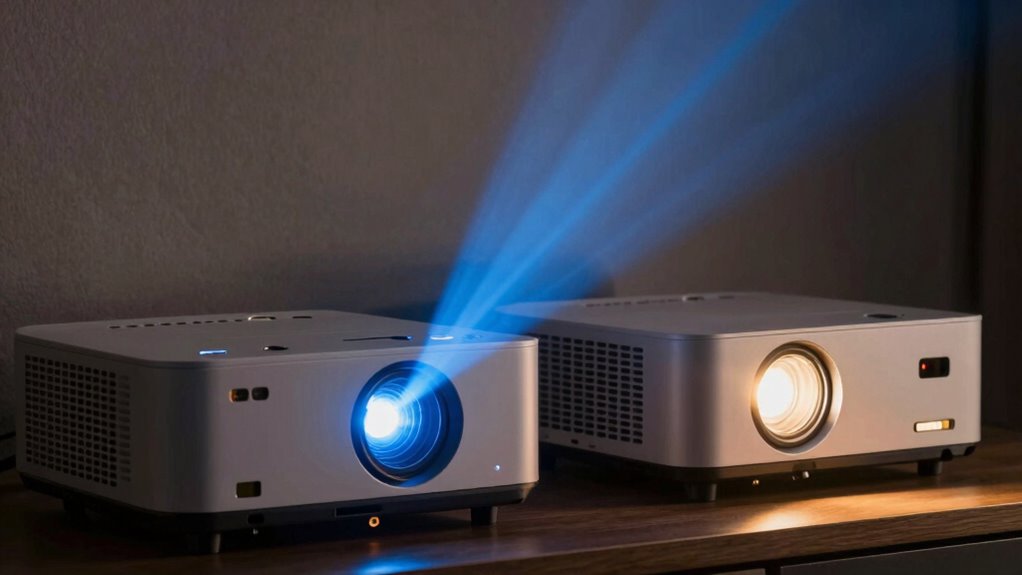
You’ll want to contemplate how long laser light sources typically last compared to lamp replacements, which need frequent changes. Maintenance and care also affect each projector’s lifespan, impacting how often you’ll need to service them. Knowing these factors helps you choose a projector that fits your long-term needs and budget.
Laser Light Lifespan
Laser projectors generally have a much longer lifespan than traditional lamp projectors, often lasting up to 20,000 to 30,000 hours of use. This impressive laser lifespan means your projector can operate for years without needing a light replacement, thanks to their superior light longevity. You’ll benefit from consistent brightness and image quality over time, making laser projectors a reliable choice. Keep in mind that the actual lifespan can vary depending on usage and maintenance. Additionally, nanotech fabrication challenges can influence the durability and performance of laser components over time. Proper heat management is also essential to maintain optimal laser performance and longevity throughout the projector’s lifecycle.
Here are some key points:
- Laser light longevity ensures fewer replacements
- Longer lifespan reduces overall maintenance costs
- Consistent performance over many years
With this extended light lifespan, laser projectors are designed to deliver durability and reliability, making them a smart investment for long-term use.
Lamp Replacement Frequency
While traditional lamp projectors typically require bulb replacements every 2,000 to 4,000 hours of use, laser projectors dramatically reduce this frequency, often lasting up to 20,000 to 30,000 hours before needing a new light source. This extended lifespan considerably lowers maintenance costs over time, since you won’t need frequent bulb changes. Additionally, the microplastics in dust can accumulate on projector components, so choosing a projector with a longer lifespan can help reduce the need for frequent cleaning and maintenance. extended lifespan is a key advantage that minimizes interruptions and ongoing expenses. Moreover, long-lasting light sources in laser projectors mean fewer replacements and less hassle. However, the longer replacement interval doesn’t eliminate installation challenges; laser projectors may require more precise setup and calibration initially. The durability of laser light sources means fewer disruptions and less downtime, saving you money and effort. In contrast, lamp projectors tend to incur higher ongoing costs due to regular bulb replacements. Overall, laser projectors offer a more reliable, low-maintenance solution, making them a smarter choice for long-term use.
Maintenance and Care
Understanding how long your projector will last depends on its light source and maintenance practices. Proper care can prolong the lifespan of both laser and lamp projectors. Regular filter maintenance is essential to prevent dust buildup, which can cause overheating and reduce brightness. For lamp projectors, bulb replacement is necessary once the bulb reaches its end of life, typically after 2,000 to 4,000 hours. Laser projectors generally have longer-lasting light sources, often exceeding 20,000 hours, but still benefit from routine cleaning. To maximize longevity, keep the air filters clean, follow the manufacturer’s maintenance schedule, and monitor usage. Proper care ensures consistent performance and delays costly replacements, saving you time and money in the long run.
- Regular filter maintenance keeps dust out and cools the projector efficiently
- Timely bulb replacement ensures peak brightness and avoids sudden failures
- Routine cleaning and following manufacturer guidelines extend overall lifespan
What Are the Ongoing Maintenance Costs and Replacement Intervals?
Maintenance costs and replacement intervals vary considerably between laser and lamp projectors, impacting your long-term expenses. Laser projectors typically have longer-lasting light sources, reducing replacement frequency and lowering ongoing costs. Although they may have higher initial prices, their durability improves cost considerations over time. Lamp projectors, on the other hand, require more frequent bulb replacements—usually every 2,000 to 4,000 hours—adding to maintenance expenses. Additionally, lamp replacements generate more waste, increasing environmental impact. Laser projectors tend to be more eco-friendly due to their longer lifespan and lower waste output. When evaluating ongoing costs, consider not just the price of replacements but also the environmental footprint, as laser models often offer a more sustainable solution with lower maintenance demands over their lifespan. Maintenance schedules can also vary depending on usage intensity and device quality. Moreover, advancements in technology durability continue to improve the longevity of laser projectors, making them an increasingly attractive long-term investment. As technology evolves, performance reliability also tends to increase, further enhancing their appeal for sustained use.
How Easy Is It to Set Up and Move Your Projector?
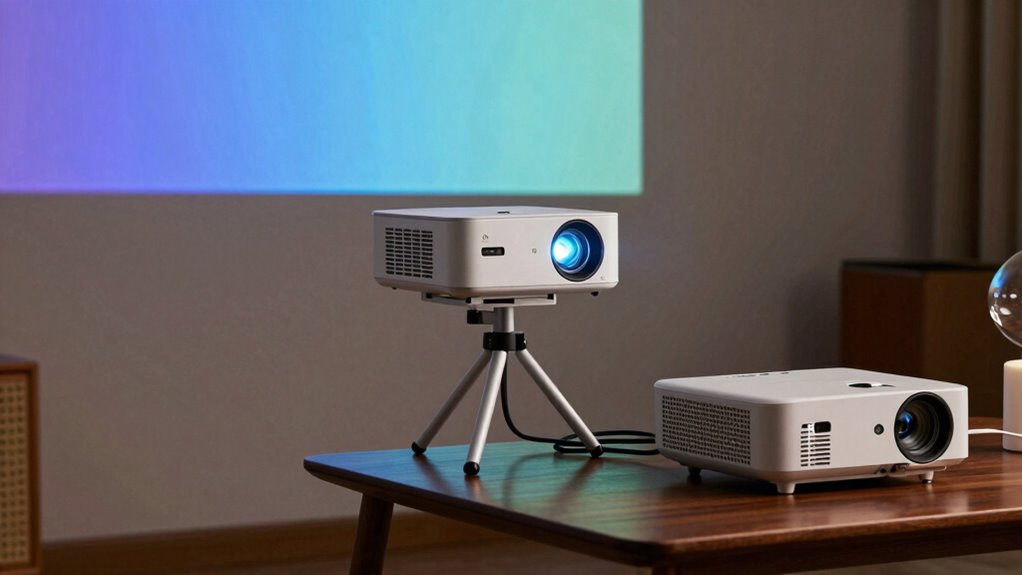
Setting up your projector can vary in complexity and time, depending on its design. Portable models are usually quick to install and move, while larger, fixed units may require more effort. Considering how often you need to reposition your projector helps determine which type best fits your needs.
Setup Complexity and Time
Laser projectors typically offer a more straightforward setup process compared to lamp projectors, making them easier to install and reposition. They often involve fewer installation challenges, reducing time and effort. The calibration process is usually quicker and less complicated, saving you from extensive adjustments. With fewer components and integrated alignment features, you spend less time fine-tuning your setup. Additionally, laser projectors are designed for easy mounting, often with adjustable mounts that simplify positioning. This means you can get your projector up and running faster, with minimal fuss. Overall, their streamlined setup process helps you avoid common installation pitfalls and speeds up the entire process, making laser projectors a hassle-free option for quick and efficient setup.
- Fewer installation challenges
- Faster calibration process
- Easier mounting and repositioning
Portability and Mobility
How easily can you move and set up your projector in different locations? If you value portability, look for a model with a portable design that’s lightweight and compact. Laser projectors often excel here, offering greater mobility convenience thanks to their smaller size and fewer external components. Lamp projectors tend to be bulkier and require more effort to transport. A portable design means you can quickly set up your projector in various spaces—whether at home, a coworking spot, or outdoors—without hassle. Consider built-in handles or carry cases to enhance mobility convenience. The easier it is to move and set up your projector, the more versatile your viewing experience becomes. Ultimately, a portable design boosts your flexibility and makes switching locations seamless.
Does Resolution Affect Picture Sharpness and Detail?
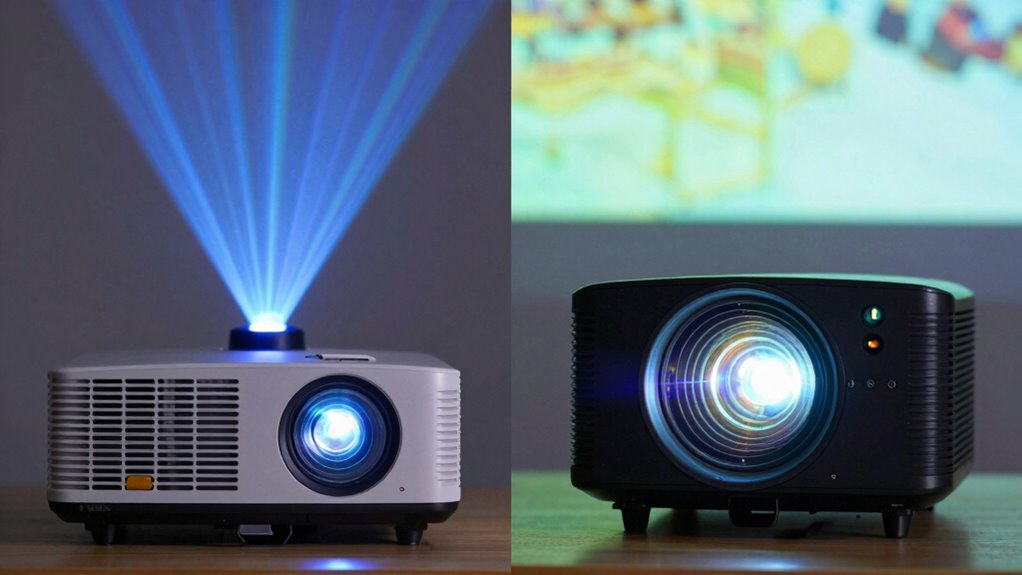
Resolution plays a crucial role in determining how sharp and detailed your projected image appears. Higher resolution means more pixels, which directly increases pixel density and enhances image sharpness. When resolution is low, images can look blurry or pixelated, losing fine details. Conversely, a higher resolution offers crisper visuals, making text clearer and images more lifelike. Keep in mind, however, that resolution alone isn’t everything; a high-resolution image can still look soft if the projector’s lens or focus isn’t ideal. To get the best picture quality, consider both resolution and pixel density. This ensures your projection remains sharp and detailed, especially on larger screens where pixelation is more noticeable.
Higher resolution and pixel density ensure sharper, clearer images on larger screens.
- Higher resolution improves image clarity and detail
- Pixel density influences how sharp images appear
- Low resolution can cause pixelation and blurriness
How Do Room Lighting and Size Affect Projector Performance?

Room lighting and size have a significant impact on projector performance, influencing both image visibility and quality. In rooms with high ambient lighting, you’ll need a brighter projector to guarantee the image remains clear and vibrant. Dimmer environments make it easier to see details, even with lower brightness levels. Room size also matters; larger rooms require projectors with higher lumens to fill the space without washing out the picture. Small rooms can benefit from lower-lumen projectors, which prevent images from appearing overly bright or washed out. Additionally, the amount of ambient light can wash out images, so controlling lighting or choosing projectors with higher brightness ratings becomes crucial for ideal viewing. Adjusting for room lighting and size ensures you get the best picture quality.
Which Projector Is Best for Home Theater, Education, or Business?
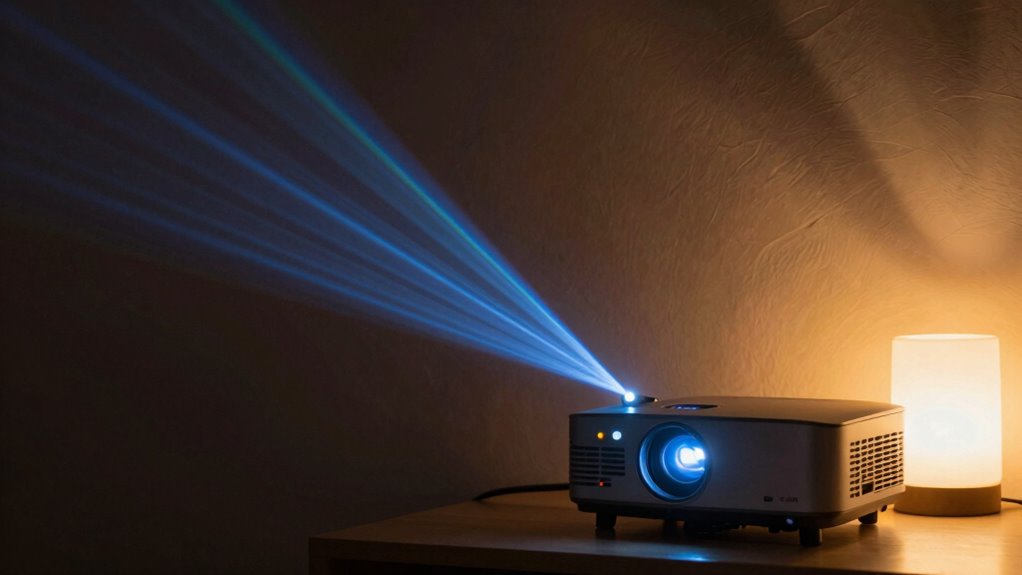
Choosing the right projector depends on your specific needs, whether it’s for home theater, education, or business. For home theaters, focus on high contrast, accurate projector calibration, and sound integration for immersive viewing. If you’re using it in an educational setting, prioritize brightness and reliability to make certain visibility in well-lit rooms. Business use calls for portable designs, quick setup, and sharp image quality for presentations. Consider features like ease of projector calibration to get the best picture, and integrated audio options to eliminate extra equipment. Laser projectors often excel in brightness and longevity, making them ideal for large spaces, while lamp projectors work well in smaller, controlled environments. Your choice depends on balancing these factors with your environment and use case.
Key Questions to Ask When Choosing Between Laser and Lamp Projectors

When deciding between laser and lamp projectors, asking the right questions can help you make an informed choice that aligns with your needs. Consider the projection technology: laser projectors typically offer brighter images, longer lifespan, and more consistent color performance, while lamp projectors may be more cost-effective upfront. Think about maintenance costs—laser projectors usually require less maintenance due to longer-lasting light sources, reducing the need for bulb replacements. Ask how often you’ll need to replace parts and what ongoing expenses are involved. Also, consider the environment where you’ll use the projector; laser models often perform better in well-lit spaces. Clarifying these points guarantees you select a projector that balances performance, durability, and long-term costs effectively.
Frequently Asked Questions
How Does Projector Lifespan Impact Long-Term Costs?
Your projector lifespan directly affects your long-term costs by influencing maintenance and replacement expenses. A longer-lasting projector requires less frequent replacement, saving you money on new units. Proper maintenance extends its lifespan, reducing unexpected breakdowns and repair costs. Conversely, a shorter lifespan means more frequent replacements, increasing your overall expenses. Investing in a durable projector can keep your costs lower over time, making it a smarter, cost-effective choice.
Are Laser Projectors More Energy-Efficient Than Lamp Models?
Imagine your projector glowing brightly without draining your power bill—that’s what laser projectors do. They’re more energy-efficient than lamp models, consuming less energy during operation. This means you save on electricity and reduce your carbon footprint, making them a more eco-friendly choice. With lower energy consumption, laser projectors not only cut costs but also help you contribute to a greener planet.
Can Projector Brightness Be Adjusted for Different Environments?
Yes, you can adjust projector brightness to suit different environments. When dealing with ambient light, increasing brightness helps guarantee the image remains clear, while lowering it in darker settings can improve contrast. Proper projector placement also influences perceived brightness, so position your projector appropriately to optimize the image quality. Most projectors offer easy brightness controls, allowing you to tailor the display for various lighting conditions and environments effortlessly.
What Safety Precautions Are Needed for Laser Projectors?
Think of laser safety as a friendly reminder to keep your eyes safe. When using laser projectors, always follow manufacturer guidelines and avoid direct eye exposure. Use appropriate eye protection if necessary, especially during setup or maintenance. Keep the projector in secure locations away from wandering hands or curious eyes. Proper training and clear safety signage guarantee everyone stays aware, making your experience safe and enjoyable without unnecessary risks.
How Do Projector Throw Distance and Lens Options Influence Setup?
Your throw distance and lens options directly impact your projector setup. A longer throw distance means you’ll need more space between the projector and screen, while a shorter distance allows for a compact setup. Lens options give you flexibility; zoom lenses let you adjust the image size without moving the projector. Consider your room size and desired image dimensions to choose the right throw distance and lens type for a seamless installation.
Conclusion
Choosing between laser and lamp projectors is like steering through a maze—you need to weigh brightness, longevity, and image quality to find your best fit. Consider your room size, lighting conditions, and budget carefully. Don’t rush your decision; instead, do your homework to get it right. With the right projector, you’ll be able to hit the bullseye and enjoy stunning visuals that make every viewing a home run.