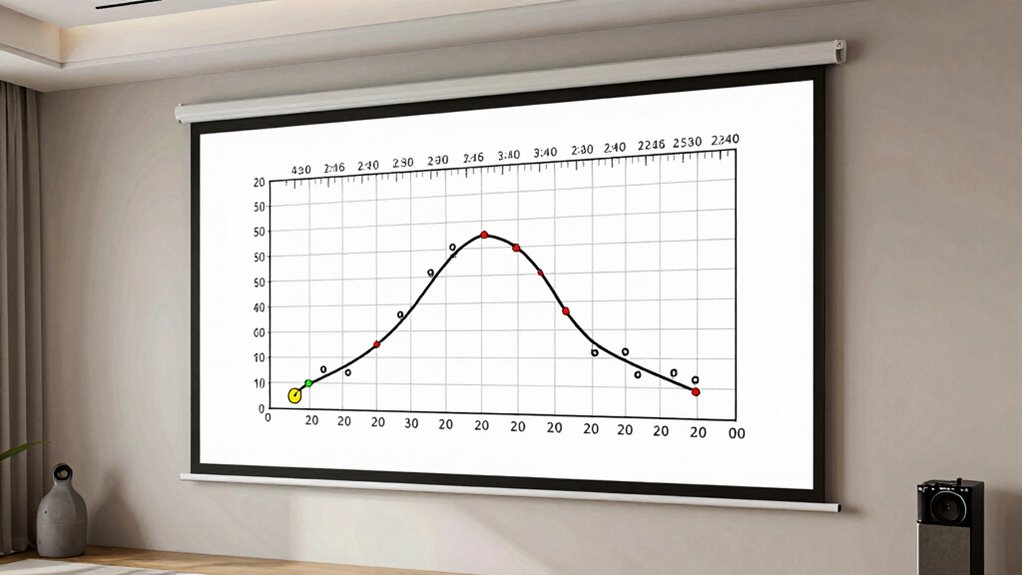
To choose the right projector screen size and distance, you’ll want a handy distance chart tailored to your room and projector. This chart shows the ideal distance based on your screen size, helping you avoid distorted images or eye strain. It factors in room size, lighting, and resolution for the best viewing experience. Keep exploring to discover how to tailor your setup perfectly for movies, gaming, or presentations.
Key Takeaways
- Use a distance chart to determine optimal projector placement based on your desired screen size for clarity.
- Proper positioning ensures minimal distortion and maximizes image sharpness and immersion.
- Adjust projector distance according to screen size and room dimensions for the best viewing experience.
- Follow recommended distances to prevent eye strain, glare, and maintain proper aspect ratios.
- Flexible placement helps customize screen size and viewing angles, enhancing overall home theater setup.

Silver Ticket Products STR Series 6 Piece Home Theater Fixed Frame 4K / 8K Ultra HD, HDTV, HDR & Active 3D Movie Projection Screen, 16:10 Format, 93" Diagonal, White Material STR-161093
Wall Mounted Fixed Frame Projection Screen (Overall Size 54.75" Tall x 84.75" Wide) (Viewing Area 93" Diagonal x…
As an affiliate, we earn on qualifying purchases.
As an affiliate, we earn on qualifying purchases.
How to Calculate the Perfect Screen Size and Distance for Your Home Theater
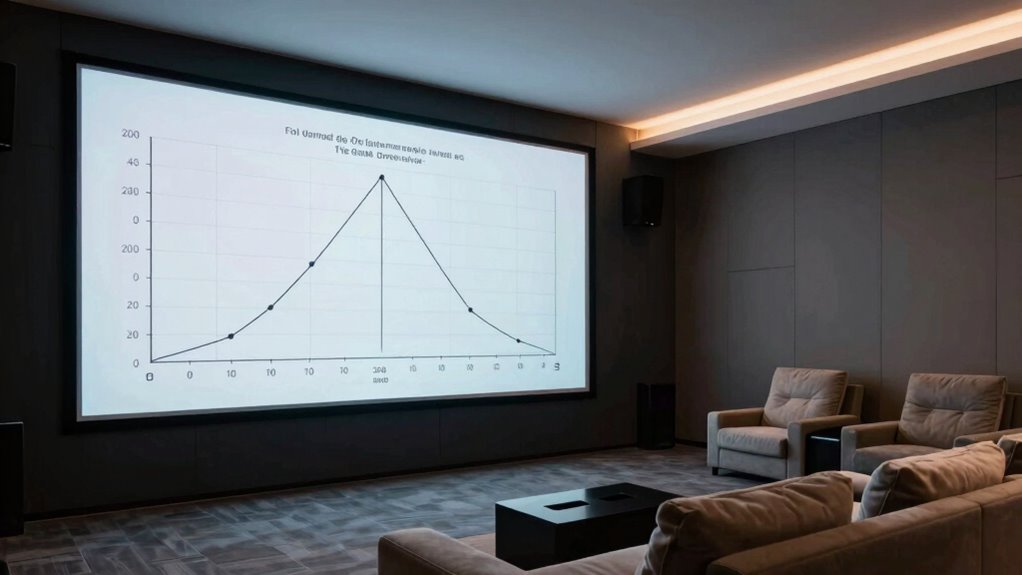
Determining the right screen size and viewing distance is essential for a satisfying home theater experience. Your screen resolution plays a key role; higher resolutions like 4K allow for larger screens without losing clarity. When calculating size, consider the ambient lighting in your room, as bright environments can wash out images on larger screens. To optimize your setup, aim for a screen size that fills your field of view comfortably, usually about 1.5 to 2.5 times the diagonal measurement away from your seating. Keep in mind that excessive size might cause eye strain, while too small can diminish immersion. Balancing resolution, ambient light, and viewing distance guarantees you get the best picture quality and a truly immersive experience. Additionally, the contrast ratio of your projector influences how well you can see details in dark scenes, ensuring a richer viewing experience. Understanding visual acuity can help you choose a screen size that matches your ability to perceive detail comfortably. Moreover, factoring in screen calibration ensures that colors and brightness are optimized for your specific environment.

Mdbebbron 120 inch Projector Screen 16:9 Foldable Anti-Crease Portable Projector Movies Screens for Home Theater Outdoor Indoor Support Double Sided Projection
CONVENIENT TO STORAGE AND CARRY : Compact one-piece,lightweight and folding design. You can fold the projector screen in…
As an affiliate, we earn on qualifying purchases.
As an affiliate, we earn on qualifying purchases.
Why Choosing the Right Projector Screen Size Matters
Choosing the right projector screen size is crucial because it directly impacts your viewing experience. A screen that’s too large can cause excessive screen glare, making it harder to see details clearly. Conversely, a screen that’s too small may not fully immerse you in the content. Ambient light also plays a role; a larger screen can be more forgiving in bright rooms, but it can also amplify glare if not properly managed. By selecting an appropriate size, you guarantee ideal brightness, vivid colors, and sharp images, even when lighting conditions aren’t perfect. The right size balances visibility and comfort, reducing eye strain and preventing you from missing important details. Ultimately, choosing wisely enhances your overall enjoyment and makes your home theater setup truly effective.

Zoienu Eye Chart Projector with Remote Control 31 Adjustable Viewports, 2-7m Projection Distance for Optometry Clinics and Optical Shops
【Comprehensive Optometry Projector】: Complete optometry, red, green and polarized optotypes are used to test single and binocular vision…
As an affiliate, we earn on qualifying purchases.
As an affiliate, we earn on qualifying purchases.
Best Screen Sizes and Distances for Different Room Types
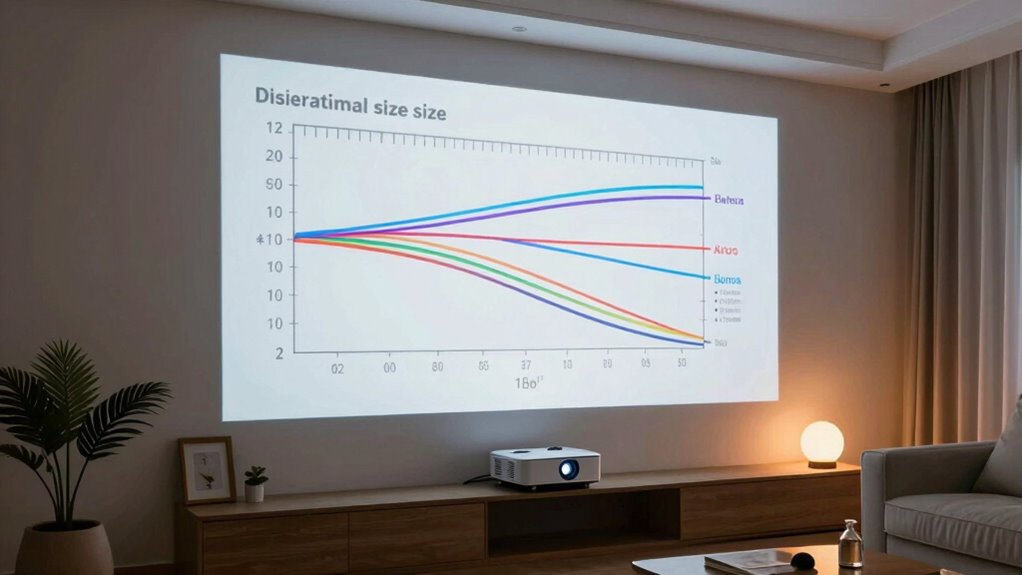
The ideal screen size and viewing distance vary considerably depending on your room type, guaranteeing you get the best possible experience. For different spaces, consider factors like screen material and projector brightness to maximize clarity and contrast. In a small room, a smaller screen (60-80 inches) works best, reducing the need for high projector brightness. Larger rooms can comfortably support bigger screens (100-150 inches) with higher brightness levels for vivid images. Keep these points in mind:
- Choose a screen material suitable for ambient light conditions
- Match projector brightness to room size for clear images
- Consider viewing angles to avoid strain
- Balance screen size with room dimensions for optimal immersion
- Adjust setup based on natural lighting and wall space
- Projection technology improvements can enhance image quality even in challenging lighting conditions, so stay informed about the latest innovations.
Being aware of cable failures and proper installation techniques can help you maintain consistent image quality and avoid disruptions during your viewing. These considerations ensure you select a screen size that maximizes your viewing experience in any room.
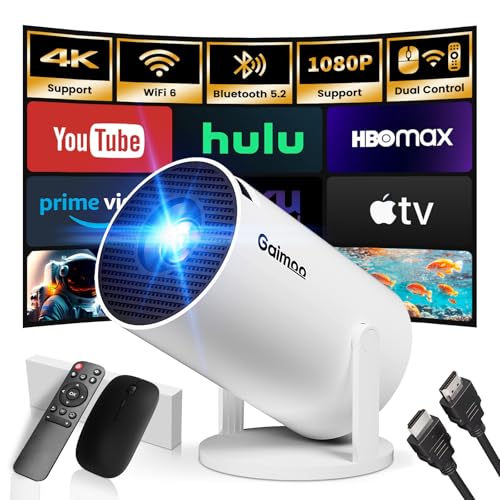
Mini Projector with WiFi and Bluetooth Built-in Apps Smart Projector Support 4K 1080P FHD 180° Adjustable Auto Keystone Compatibile with HDMI/TV Stick/Memory Stick/Laptop, White
Dual Control Mode & Built-in Multiple Apps: Gaimoo GM200 smart projector can use wireless-mouse and remote control dual…
As an affiliate, we earn on qualifying purchases.
As an affiliate, we earn on qualifying purchases.
Using a Distance Chart: Tips to Optimize Your Setup

Have you ever wondered how to guarantee your projector setup delivers the sharpest, most immersive image? Using a distance chart can help you fine-tune your placement. Start by considering your screen material, as different surfaces reflect light differently—some enhance brightness, while others improve color accuracy. When selecting mounting options, ensure your projector is positioned at the recommended distance for your screen size; too close or far can cause distortion or blurriness. Use the chart to determine the ideal distance based on your room’s dimensions. Keep in mind that stable mounting prevents shifts that could affect image sharpness. Proper car protection options and accessories can also help maintain your setup’s durability and performance. Additionally, understanding room acoustics can enhance your viewing experience by minimizing echo and background noise, ensuring clear audio alongside a crisp image. By aligning your projector’s position with the chart, considering your screen material, and choosing secure mounting options, you’ll maximize image clarity and enjoy a truly immersive viewing experience.
Adjusting Screen Size and Placement for Movies, Gaming, and Presentations
To get the best experience, you need to set your screen size and placement based on your viewing activities. Making sure you’re at the right distance enhances picture clarity and comfort whether you’re watching movies, gaming, or giving a presentation. Adjusting your setup ensures everyone gets a clear, immersive view.
Optimal Viewing Distance
Adjusting your screen size and placement is key to achieving the best viewing experience for movies, gaming, and presentations. The ideal viewing distance depends on your screen size and room conditions. Sit too close, and you may experience eye strain or notice screen glare and ambient light reflections; sit too far, and details become lost. To find the right balance, consider these points:
- Maintain a distance that allows for full immersion without discomfort
- Ensure the screen is large enough to fill your field of view comfortably
- Minimize ambient light to reduce glare and improve contrast
- Position the screen at eye level for clarity and comfort
- Adjust seating to optimize viewing angles and reduce reflections
- Remember that visual ergonomics can significantly impact your comfort and viewing quality. Additionally, using appropriate decor elements can help control ambient lighting and reflections, further enhancing your viewing experience.
Proper distance enhances clarity and minimizes distractions, making your viewing experience more enjoyable.
Adjusting Screen Placement
Optimizing your screen placement involves more than just choosing the right size; it also means positioning it correctly within your space. To guarantee ideal viewing, consider mounting techniques that suit your room layout and screen material for clarity. Adjusting your screen’s height and angle can enhance movie, gaming, or presentation experiences. Use this table as a guide:
| Room Type | Mounting Technique | Ideal Positioning |
|---|---|---|
| Living Room | Wall-mounted, adjustable bracket | Eye level, centered on seating area |
| Office | Ceiling mount, tilting brackets | Slightly below eye level |
| Gaming Room | Freestanding or wall mount | Eye level, minimal glare |
| Presentation | Fixed or motorized mount | Directly in front of audience |
This approach ensures your screen is perfectly placed for your activities. Additionally, consider screen material to ensure optimal clarity and reduce glare in your viewing area.
What to Do When Your Screen Size and Distance Don’t Match Your Space
Have you ever found your ideal projector screen size doesn’t quite fit the space you’re working with? When faced with a screen size mismatch due to room layout constraints, you need creative solutions. Consider adjusting your screen placement, choosing a different size, or modifying the room layout itself. Remember, flexibility is key to optimizing your viewing experience.
Here are some options to explore:
- Opt for a retractable or motorized screen for adaptable sizing
- Mount the screen higher or lower to better suit your space
- Use a smaller screen if the room is limited in size
- Rearrange furniture to maximize viewing distance
- Combine multiple screens for a larger viewing area without overwhelming the space
Frequently Asked Questions
How Do Ambient Light Levels Affect Optimal Screen Size?
Ambient light profoundly impacts your ideal screen size because too much can wash out the image and reduce viewing clarity. When ambient light levels are high, you should opt for a larger screen to improve contrast and visibility. Conversely, in darker rooms, a smaller screen may suffice. Adjusting your screen size based on ambient light ensures you get the best viewing clarity and an immersive experience, regardless of lighting conditions.
Can Ceiling Height Influence Projector Placement and Screen Size?
Ceiling height certainly can complicate your projector placement and screen size decisions. Taller ceilings give you more flexibility to position your projector higher, reducing shadow issues and optimizing angles. Conversely, lower ceilings may require you to adjust the projector’s placement to avoid clutter and distortion. Always measure your ceiling height carefully, and plan your projector placement to guarantee a perfect, picture-perfect projection, regardless of ceiling constraints.
What Are Common Mistakes When Choosing a Projector Screen Size?
You often pick the wrong screen size by ignoring your room’s dimensions and viewing distance. Don’t overlook the importance of choosing the right screen material for brightness and clarity, or you might end up with dull images. Also, avoid bad mounting options that cause sagging or instability. Measure your space carefully, consider your projector’s throw ratio, and select a screen size that fits comfortably and enhances your viewing experience.
How Does Screen Aspect Ratio Impact Viewing Experience?
Your aspect ratio considerably impacts your viewing experience because it determines the image proportions. A wider aspect ratio like 16:9 offers a more immersive, cinematic feel, perfect for movies and gaming, while a 4:3 ratio suits presentations and older content. Choosing the right aspect ratio ensures your images aren’t stretched or squished, providing clear, balanced visuals that match your content and enhance your overall viewing pleasure.
Are There Portable Solutions for Adjustable Projector Screen Sizes?
Think of portable screens as chameleons, effortlessly shifting to fit your space. You’ll find plenty of adjustable options that roll up, fold out, or telescope to different sizes, making them perfect for on-the-go setups. These portable screens are designed with convenience in mind, allowing you to customize your viewing experience anytime, anywhere. Whether indoors or outdoors, adjustable options guarantee you get the perfect picture size without fuss or fussiness.
Conclusion
Choosing the right projector screen size and distance can transform your viewing experience. By understanding your space and using a distance chart, you can optimize every movie, game, or presentation. Don’t settle for a setup that feels off—your perfect home theater is within reach. After all, isn’t the goal to lose yourself in the screen, not your surroundings? With a little planning, you’ll create an immersive environment that truly fits your space and style.