In smart homes, sleep trackers and smart beds offer continuous health insights by monitoring your sleep stages, movements, and breathing patterns in real time. These devices generate detailed reports, alerting you to sleep issues like apnea and providing personalized tips to improve rest. They also track essential signs and activity levels, helping you make better lifestyle choices. To discover how this seamless monitoring can boost your well-being, there’s more to explore beyond the basics.
Key Takeaways
- Sleep trackers and smart beds monitor sleep stages, breathing, and movement for personalized sleep quality insights.
- Embedded sensors detect health issues like sleep apnea, enabling early intervention and improved overall health.
- Integrated systems automate data collection on sleep and activity, reducing manual logging and increasing accuracy.
- Continuous health data from smart devices supports remote monitoring and proactive healthcare management.
- Data-driven insights help optimize sleep, activity, and nutrition, promoting healthier habits and long-term well-being.

Smart homes are transforming the way we monitor health by seamlessly integrating technology into daily life. One of the most exciting developments is the use of wearable sensors, which continuously track vital signs and activity levels without disrupting your routine. These sensors can monitor heart rate, oxygen saturation, and even sleep patterns, giving you real-time insights into your health. When paired with dietary tracking tools, wearable sensors help you understand how your nutrition impacts your overall well-being. For example, by logging your meals and syncing that data with your wearable devices, you can see how certain foods influence your energy levels, sleep quality, or heart health. This integrated approach empowers you to make informed decisions about your diet and activity, fostering healthier habits over time.
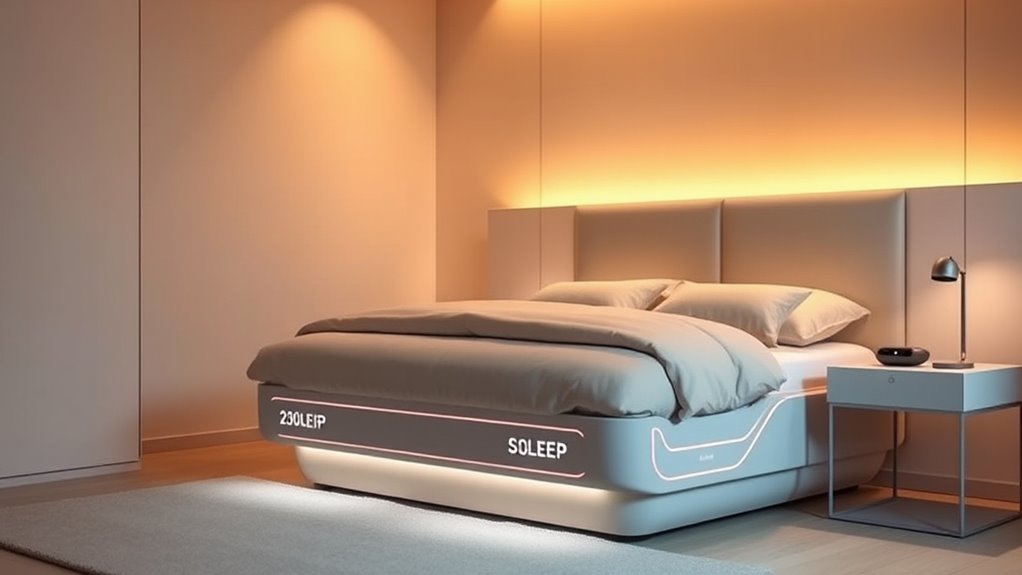
In addition to wearables, smart beds and sleep trackers play a crucial role in health monitoring within smart homes. A smart bed can detect your sleep stages, movement, and breathing patterns, providing detailed reports that help identify disruptions or underlying issues like sleep apnea. These beds often come equipped with sensors embedded in the mattress or connected to a companion app, offering personalized recommendations to improve your sleep quality. When you’re well-rested, your overall health benefits—improved immune function, better mood, and increased productivity. The data collected by sleep trackers can also alert you to potential health concerns early, prompting you to seek medical advice if irregularities are detected. Reliable data collection is essential for making accurate health assessments and informed decisions.
The integration of wearable sensors and smart beds creates a thorough health monitoring ecosystem. You don’t have to remember to log your food or manually track your sleep; instead, these devices automate the process, providing accurate, continuous data. This constant stream of information allows you to identify patterns and triggers, such as how late-night snacking affects your sleep or how exercise impacts your heart rate. The insights gained can guide adjustments to your daily routine, diet, and sleep environment, ultimately improving your quality of life. Plus, many systems allow remote monitoring, so healthcare providers can review your data and offer advice without requiring in-person visits.
Frequently Asked Questions
How Secure Is My Health Data With Smart Home Devices?
Your health data’s security depends on the device’s data encryption and privacy policies. Many smart home devices use strong encryption to protect your information during transmission and storage. However, it is crucial to review each device’s privacy policies to understand how your data is used and shared. Stay cautious, update firmware regularly, and choose reputable brands to maximize your data security and keep your health information private.
Can Sleep Trackers Diagnose Sleep Disorders Accurately?
Like a modern-day Sherlock Holmes, you might wonder if sleep trackers can accurately diagnose sleep disorders. While they improve your sleep quality insights and offer useful data, their device accuracy isn’t enough for a definitive diagnosis. Sleep trackers help identify patterns, but consulting a healthcare professional remains essential for a proper diagnosis. Don’t rely solely on these devices—they’re more like helpful clues than conclusive evidence.
Are Smart Beds Suitable for People With Medical Conditions?
Smart beds can be suitable for people with medical conditions, but you should consider medical suitability and comfort considerations first. These beds often have adjustable settings that help accommodate specific health needs, like pressure relief or mobility support. However, it is crucial to consult your healthcare provider to verify the smart bed’s features align with your condition and provide the necessary comfort and safety.
How Do Smart Home Devices Integrate With Healthcare Providers?
Smart home devices connect with healthcare providers through interoperability standards and device compatibility, enabling seamless data sharing. You can link your sleep trackers or smart beds with healthcare systems via secure platforms, allowing doctors to monitor your health remotely. Ensuring your devices adhere to industry interoperability standards guarantees smooth integration, so your healthcare team gets accurate, real-time data to support your health management without hassle.
What Is the Cost Comparison Between Traditional and Smart Health Monitoring?
You might think smart health monitoring is pricey, but a thorough cost analysis shows it can be more affordable than traditional methods over time. While initial investments in smart beds and sleep trackers may seem high, they reduce ongoing healthcare costs by catching issues early. The affordability comparison reveals that smart devices offer a cost-effective way to maintain health, especially considering convenience and long-term savings.
Conclusion
As you embrace smart homes, remember that over 60% of adults report sleep issues, highlighting the importance of sleep trackers and smart beds. These devices offer real-time insights, helping you improve your sleep quality effortlessly. By integrating health monitoring into your daily routine, you can catch potential health concerns early and enjoy better overall well-being. Staying proactive with smart technology makes a healthier, more comfortable life within your reach.