
To keep your smart home data secure, use strong, unique passwords and enable two-factor authentication on all devices. Regularly update firmware and software to patch security flaws, and verify that encryption protects your data during transmission and storage. Choose devices with advanced voice recognition and security features. Stay aware of new vulnerabilities and adopt best practices to safeguard your privacy. Continuing this guide will help you better understand how to maintain a secure and private smart home environment.
Key Takeaways
- Enable strong encryption protocols like AES for data in transit and at rest to protect sensitive information.
- Change default device passwords to unique, complex credentials and enable two-factor authentication.
- Regularly update firmware and security software to patch vulnerabilities and improve protection.
- Use voice recognition systems with advanced verification algorithms to prevent impersonation and unauthorized access.
- Verify devices support security features such as encryption and are configured with privacy-focused settings.

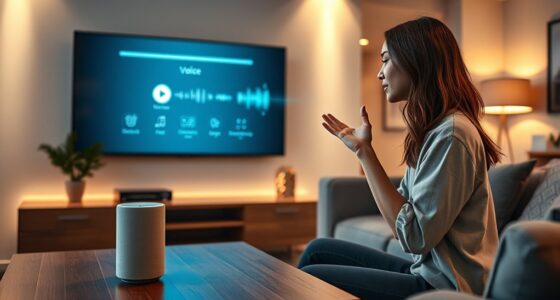
Have you ever wondered how secure your smart home really is? With more devices connected than ever before, it’s natural to question whether your personal data stays private. The key to a protected smart home lies in understanding how technology like voice recognition and data encryption work together to safeguard your information. Voice recognition allows your devices to identify you through your voice, making it easy to control smart appliances and access features without passwords. But this convenience also raises concerns: if someone else can mimic your voice, they might gain unauthorized access. That’s why choosing devices with advanced voice recognition algorithms that verify your voice patterns adds an extra layer of security. It’s crucial to keep these systems updated because newer versions often improve their ability to distinguish genuine voices from imposters. Additionally, understanding the role of data encryption is essential in maintaining your privacy and preventing unauthorized data access.
Data encryption plays an essential role in defending your data as it travels between devices or gets stored in the cloud. When data is encrypted, it’s converted into a code that only authorized parties can decode, making it nearly impossible for hackers to intercept and understand your information. Always ensure your smart home devices use strong encryption protocols like AES (Advanced Encryption Standard). This way, even if someone manages to intercept your data, they won’t be able to decipher sensitive details such as voice commands, personal schedules, or security footage. When setting up your devices, verify that the manufacturer emphasizes data encryption both during transmission and storage, and avoid devices that lack this fundamental feature.
Data encryption safeguards your smart home data during transmission and storage, protecting sensitive information from hackers.
In addition to using voice recognition wisely and ensuring robust encryption, you should also change default passwords and enable two-factor authentication whenever possible. Default passwords are often easy for hackers to guess, so customizing them greatly reduces the risk of unauthorized access. Two-factor authentication adds an extra step, like a code sent to your phone, making it much more difficult for intruders to break in even if they have your password. Regularly updating your device firmware is also crucial, as updates often patch security vulnerabilities discovered after the device’s release. By taking these steps, you help create a safer environment for your smart home.
Ultimately, protecting your privacy in a smart home requires a proactive approach. Understanding how voice recognition and data encryption work, and implementing best practices such as strong passwords and regular updates, can considerably reduce your risk. Your smart devices offer convenience and efficiency, but they also demand responsibility to keep your personal data secure. When you’re mindful about these security measures, you can enjoy your smart home’s benefits without sacrificing your privacy.
Frequently Asked Questions
How Do I Identify Insecure Smart Home Devices?
To identify insecure smart home devices, start by checking for device vulnerabilities, like outdated firmware or weak passwords. Look for devices that haven’t received recent firmware updates, as these often fix security flaws. Research the manufacturer’s security track record and read user reviews for reported vulnerabilities. Regularly update your device firmware and change default passwords to strengthen security, and consider using network segmentation to isolate potentially insecure devices.
What Are the Legal Rights Regarding Data Collected by Smart Devices?
You have legal rights regarding data collected by smart devices, including ownership and control. Data ownership means you can access and manage your data, while privacy policies inform you how your data is used and shared. Always read these policies carefully. Laws like GDPR or CCPA protect your rights, ensuring companies handle your data responsibly. If you’re uncomfortable, you can request data deletion or limit data sharing, reinforcing your control over your information.
How Often Should I Update My Smart Home Device Software?
Think of your smart home devices like a garden needing regular tending. You should update your device software whenever firmware updates are available, ideally once a month or as recommended by the manufacturer. Frequent updates ensure your devices stay compatible with new features and security patches, reducing vulnerabilities. Staying on top of updates maintains your smart home secure, efficient, and compatible, just like a well-maintained garden thriving through proper care.
Can I Delete My Data From Smart Home Service Providers?
Yes, you can delete your data from smart home service providers. You have user control over your data, and most providers offer options for data deletion or account removal. Check the privacy settings or contact customer support to request data elimination. Regularly reviewing your data privacy settings ensures you maintain control over your information and enhances your overall data security in your smart home.
What Are the Signs of a Data Breach in Smart Home Systems?
A stitch in time saves nine, so stay alert. If you notice unauthorized access or unusual activity on your smart home system, it’s a clear sign of a data breach. You might see unexpected device behavior, strange notifications, or unfamiliar login attempts. These signs suggest someone may have gained access without permission. Act quickly by changing passwords, updating software, and consulting security experts to protect your privacy and data integrity.
Conclusion
Think of your smart home as a castle; your data is the treasure within. By locking doors with strong passwords, guarding secret passages with updates, and trusting only trusted guardians, you protect your precious valuables. When you take these steps, you’re not just securing devices—you’re shielding your castle from intruders. Stay vigilant, keep watch, and make smart choices. Your home’s safety depends on your vigilance—guard your castle well.