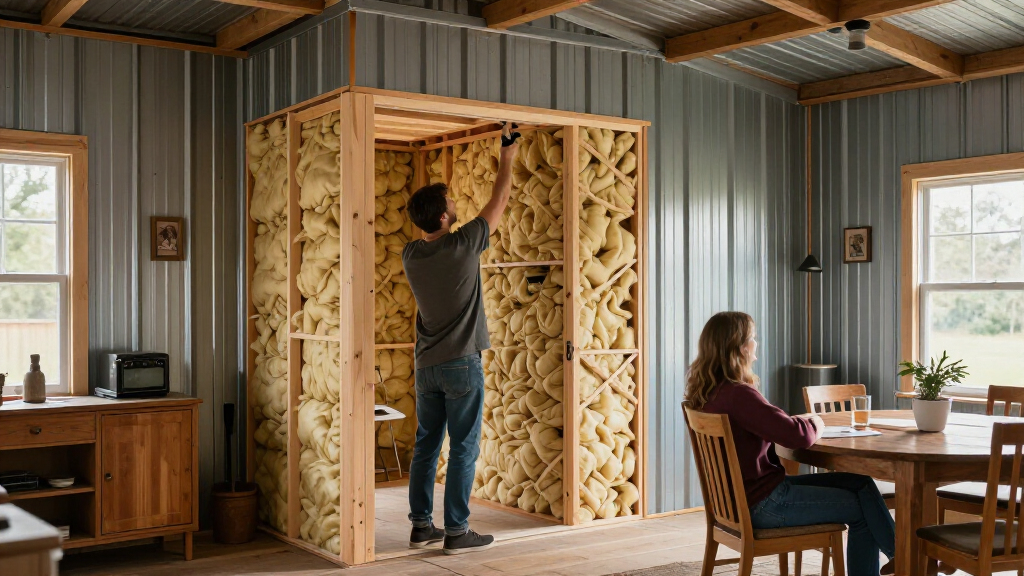

The best metal building insulation for most buyers is PRODEX AD5, a broad-coverage reflective foam barrier that balances coverage with a defined, manageable roll format. For a large installation, Trade Winds Astro-Armour’s 1,200-square-foot roll stands out for coverage, while 6-inch R-19 PSK-faced fiberglass is a better fit when substantial conventional insulation is the priority. The main tradeoffs are reflective barriers versus thicker fiberglass, coverage versus handling, and radiant control versus a vapor-control layer. Product labels alone do not establish how a material will perform in your assembly, so match the insulation to the climate, building use, and installation details. Read on for the full breakdown of all 14 options and how I would choose between them.

Get furniture and decor delivered free with Prime
- Fast, free delivery on millions of items
- Prime Video, Amazon Music and more included
- Member-only deals all year
Complete the kit


Key Takeaways
- PRODEX AD5 is the most balanced broad-coverage pick: its 1,000-square-foot roll offers substantial coverage in a 4-foot width, while its 1/4-inch reflective foam construction keeps it distinct from bubble-only barriers.
- Coverage changes the job more than the product name suggests: Trade Winds Astro-Armour’s 1,200-square-foot roll is the largest listed option, while the 16-inch-wide Insulation Marketplace roll may suit narrower runs but covers less area overall.
- Reflective barriers and fiberglass serve different priorities: the 6-inch R-19 PSK-faced fiberglass option provides a stated R-value and greater thickness, while reflective products focus on radiant control and need an appropriate assembly to perform as intended.
- Not every roll is a complete insulation system: BlueTex’s 6mm vapor barrier and the roll-up door kit address specific surfaces or functions; buyers should not treat them as interchangeable with wall or roof insulation.
- Width, length, and facing can drive installation choice: the 48-inch rolls are common across this selection, while 50- and 62-inch options may fit particular layouts better but call for careful measurement and seam planning.
| PRODEX AD5 Reflective Foam Insulation Barrier, 4 ft x 250 ft, 1/4 in Thick, 1,000 sq ft |  | Best for Large, Continuous Runs | Brand: Trade Winds | Material: Aluminum and polyethylene | Thickness: 0.25 inches | VIEW LATEST PRICE | See Our Full Breakdown |
| Trade Winds Astro-Armour Reflective Foam Insulation Roll, 6 ft x 50 ft, 300 sq ft, White |  | Best for Washable Building Interiors | Brand: Trade Winds | Manufacturer: US Energy | Material: Polyethylene foam, woven polyethylene scrim, and metalized film | VIEW LATEST PRICE | See Our Full Breakdown |
| US Energy Products Double Bubble Reflective Insulation, 48 in. x 100 ft., R-8 |  | Best for Versatile Cut-to-Fit Projects | Dimensions: 48 in. wide x 100 ft. long | Coverage: 400 square feet | Construction: Double bubble | VIEW LATEST PRICE | See Our Full Breakdown |
| Insulation Marketplace Double Reflective Bubble Insulation Roll, 16 in x 50 ft |  | Best for Narrow Sections and Repairs | Roll dimensions: 16 in x 50 ft | Bubble layer thickness: 3/16 in | Reflective surfaces: Foil on both sides | VIEW LATEST PRICE | See Our Full Breakdown |
| BlueTex Commercial Roll-Up Garage Door Insulation Kit, 700 Sq Ft |  | Best for Commercial Roll-Up Doors | Brand: BlueTex Insulation | Material: Pure aluminum foil surface and PE woven fabric | Roll dimensions: 50 in wide x 168 ft long | VIEW LATEST PRICE | See Our Full Breakdown |
| US Energy Products Double Bubble Reflective Insulation Roll, White/Foil, 48 in x 125 ft (500 sq ft) |  | Best Overall Reflective Roll | Brand: US Energy Products | Coverage: 500 sq ft | Roll dimensions: 48 in x 125 ft | VIEW LATEST PRICE | See Our Full Breakdown |
| EcoFoil Single Bubble Reflective Insulation Roll, 48 in x 125 ft, 500 sq ft |  | Best for Easy DIY Handling | Width: 48 in | Length: 125 ft | Coverage: 500 sq ft | VIEW LATEST PRICE | See Our Full Breakdown |
| 6-Inch R-19 PSK-Faced Fiberglass Insulation, 48 Inches Wide x 39.3 Feet Long |  | Best for Higher Thermal Resistance | Thickness: 6 in | R-value: R-19 | Facing: Polypropylene scrim kraft (PSK) | VIEW LATEST PRICE | See Our Full Breakdown |
| Houseables Radiant Barrier Insulation Roll, 250 ft x 4 ft, 1,000 sq ft |  | Best for Large-Area Radiant Coverage | Brand: Houseables | Dimensions: 250 ft x 4 ft | Coverage: 1,000 sq ft | VIEW LATEST PRICE | See Our Full Breakdown |
| 2-Inch PSK-Faced Fiberglass Insulation Blanket, 48 in. x 52.5 ft. | | Best for Shallower Building Cavities | Thickness: 2 in | Dimensions: 48 in x 52.5 ft | Coverage: 24.5 sq ft (as listed) | VIEW LATEST PRICE | See Our Full Breakdown |
| BlueTex Insulation 6mm Vapor Barrier for Metal Buildings, 62 in. Wide, 300 sq. ft. |  | Best for Added Foam Thickness | Thickness: 6 mm | Roll width: 62 in. in title; product information also lists 50 in. | Coverage: 300 sq. ft. | VIEW LATEST PRICE | See Our Full Breakdown |
| US Energy Products Radiant Barrier Insulation Roll, 1,000 sq ft, 4 ft Wide |  | Best for Large, Breathable Coverage | Coverage: 1,000 sq. ft. | Dimensions: 4 ft. wide × 250 ft. long | Construction: Five-layer reflective barrier with metalized aluminum, Mylar, and nylon scrim | VIEW LATEST PRICE | See Our Full Breakdown |
| Trade Winds Astro-Armour Reflective Foam Insulation, White, 1,200 sq. ft., R-7 | | Best for High-Coverage Foam Insulation | Coverage: 1,200 sq. ft. | Roll count and dimensions: 4 rolls, each 6 ft. × 50 ft. | Thickness: 0.13 in. (approximately 1/8 in.) | VIEW LATEST PRICE | See Our Full Breakdown |
| BlueTex 2mm PRO Reflective Metal Building Insulation, 50 in. × 168 ft., 700 sq. ft. |  | Best for Metal-Building Retrofits | Thickness: 2 mm | Roll dimensions: 50 in. wide × 168 ft. long | Coverage: 700 sq. ft. | VIEW LATEST PRICE | See Our Full Breakdown |
| metal building insulation | Coverage | Material | Thickness | Model number |
|---|---|---|---|---|
| PRODEX AD5 Reflective Foam Ins | 1,000 square feet | Aluminum and polyethylene | 0.25 inches | — |
| Trade Winds Astro-Armour Refle | 300 square feet | Polyethylene foam, woven polyethylene scrim, and metalized film | Approximately 0.13 in (1/8 in) | 134 |
| US Energy Products Double Bubb | 400 square feet | — | — | — |
| Insulation Marketplace Double | — | — | — | — |
| BlueTex Commercial Roll-Up Gar | 700 square feet | Pure aluminum foil surface and PE woven fabric | — | 2MM700-50W-DOORKIT |
| US Energy Products Double Bubb | 500 sq ft | Polyethylene bubbles with metalized film | 1/4 in | — |
| EcoFoil Single Bubble Reflecti | 500 sq ft | — | Approximately 1/8 in (3.175 mm) | — |
| 6-Inch R-19 PSK-Faced Fibergla | 187.2 sq ft | Fiberglass | 6 in | INS-R19-PSK-48 |
| Houseables Radiant Barrier Ins | 1,000 sq ft | — | — | RaBa |
| 2-Inch PSK-Faced Fiberglass In | 24.5 sq ft (as listed) | Fiberglass | 2 in | — |
| BlueTex Insulation 6mm Vapor B | 300 sq. ft. | XPE foam and PE woven single-sided foil | 6 mm | 6MMFW-BT300 |
| US Energy Products Radiant Bar | 1,000 sq. ft. | — | — | — |
| Trade Winds Astro-Armour Refle | 1,200 sq. ft. | High-density polyethylene foam, woven polyethylene scrim, and metalized reflective film | 0.13 in. (approximately 1/8 in.) | 134 |
| BlueTex 2mm PRO Reflective Met | 700 sq. ft. | EPE foam, aluminum foil, and white woven backing | 2 mm | 2MM700-FW50-BT |
More Details on Our Top Picks
PRODEX AD5 Reflective Foam Insulation Barrier, 4 ft x 250 ft, 1/4 in Thick, 1,000 sq ft
For a metal building with broad wall or roof sections to cover, the 1,000-square-foot roll means fewer roll changes and potentially fewer seams than the smaller US Energy Products Double Bubble Reflective Insulation, 48 in. x 100 ft. Its closed-cell polyethylene foam core sits between reflective foil faces, pairing a radiant barrier with a thin layer of material that can help manage moisture and condensation when installed correctly. The manufacturer lists a 97% radiant heat reduction and an R-value of 22.67, but buyers should check how those figures were determined and avoid treating reflective performance as a substitute for a tested whole-wall R-value. At 1/4 inch thick, it is still a relatively thin barrier, not a deep cavity insulation. The long roll can suit larger projects, though it may be awkward to handle and trim in a small space.
Pros:- 1,000 square feet per roll can reduce the number of roll changes on large projects
- Reflective aluminum faces on both sides of a closed-cell polyethylene foam core
- Designed to reduce radiant heat transfer and help manage moisture and condensation
- Listed thickness of 1/4 inch gives it more core material than thinner reflective films
Cons:- A thin reflective barrier does not replace thicker insulation where high thermal resistance is needed
- The listed R-value of 22.67 is not explained as an assembly or test condition in the supplied product data
- The 250-foot roll may be cumbersome to move, measure, and cut for small installations
Best for: Owners insulating large metal-building wall or roof areas who want a long roll with a foam core and reflective faces.
Not ideal for: Buyers seeking substantial cavity insulation or a clearly documented assembly R-value; this is a thin reflective barrier, and its listed R-value needs context.
- Brand:Trade Winds
- Material:Aluminum and polyethylene
- Thickness:0.25 inches
- Roll dimensions:4 ft x 250 ft
- Coverage:1,000 square feet
- Listed R-value:22.67
- Radiant heat transfer reduction:97%
- Contact noise reduction:19 dBA
- Finish:White, non-perforated
Our verdict“Choose this for large, continuous metal-building surfaces when roll coverage and a foam-backed reflective barrier matter more than deep insulation.”
Trade Winds Astro-Armour Reflective Foam Insulation Roll, 6 ft x 50 ft, 300 sq ft, White
The washable white surface makes Astro-Armour a practical match for metal or post-frame buildings where the interior finish may collect dust or need occasional cleaning. Its metalized layer and high-density polyethylene foam are designed to reduce radiant heat transfer, while the manufacturer cites up to 95% radiant heat reduction. Compared with the PRODEX AD5, this roll is thinner at about 1/8 inch and covers only 300 square feet, so it is less suited to large uninterrupted projects but may be easier to manage in smaller areas. The listing says it can help mitigate condensation only when installed properly; it is not a fix for poor ventilation or incorrect detailing. There is also a dimension discrepancy: the title and description do not agree on how the roll dimensions are presented, so verify the delivered size before planning coverage.
Pros:- White surface can be cleaned or pressure washed
- Designed for metal and post-frame buildings
- Reflective metalized layer paired with polyethylene foam
- Designed to resist tearing and help reduce condensation when installed correctly
Cons:- About 1/8 inch thick, so it offers less material depth than the 1/4-inch PRODEX AD5
- 300-square-foot coverage means more roll changes on larger buildings
- Conflicting dimension details make it harder to plan cuts and coverage confidently
Best for: Metal-building owners who want a reflective foam layer with a white surface that can be cleaned, especially in workshops or utility spaces.
Not ideal for: Buyers planning a large installation around exact coverage or those who need a thicker barrier; the roll covers 300 square feet and its listed dimensions are inconsistent.
- Brand:Trade Winds
- Manufacturer:US Energy
- Material:Polyethylene foam, woven polyethylene scrim, and metalized film
- Dimensions:6 ft x 50 ft, as stated in the description; listing dimensions are inconsistent
- Coverage:300 square feet
- Thickness:Approximately 0.13 in (1/8 in)
- Radiant heat reduction:Up to 95%
- Model number:134
Our verdict“Pick Astro-Armour for a cleanable white interior on a smaller metal-building project, but confirm the roll dimensions before ordering.”
US Energy Products Double Bubble Reflective Insulation, 48 in. x 100 ft., R-8
This double-bubble roll is a flexible option for metal-building owners who need one material for a mix of wall, roof, garage, or crawl-space sections. At 4 feet wide and 100 feet long, it provides 400 square feet and can be cut to fit irregular areas; its foil face and waterproof white vinyl backing also give the two sides distinct roles during installation. Compared with the 1,000-square-foot PRODEX AD5, this roll is easier to allocate to smaller or varied jobs but covers less ground and has no foam-core construction listed. The product name gives an R-8 designation, yet the supplied details do not state test conditions or explain the assembly behind that figure. Measuring and cutting are part of the job, so it is less convenient for anyone hoping to cover a large building with minimal seams or layout work.
Pros:- Flexible double-bubble material can be cut to suit varied spaces
- Foil face and waterproof white vinyl backing provide different surface options
- 400-square-foot roll can suit smaller projects without committing to a 1,000-square-foot roll
- Listed for residential and commercial uses including roofs, walls, and garages
Cons:- Measuring and cutting add labor, especially across broad, regular building surfaces
- Less coverage per roll than the PRODEX AD5
- The supplied product details do not explain the test conditions for the listed R-8 designation
Best for: DIY installers handling mixed-size areas in a metal building who value a flexible roll that can be cut for walls, roofs, or garage sections.
Not ideal for: Large-building crews seeking fewer seams or buyers relying on a fully documented R-value; the 400-square-foot roll needs fitting and the supplied data gives little context for R-8.
- Dimensions:48 in. wide x 100 ft. long
- Coverage:400 square feet
- Construction:Double bubble
- Listed R-value:R-8
- Front finish:Foil
- Back finish:Waterproof white vinyl
- Cut-to-fit use:Can be cut for walls, roofs, attics, crawl spaces, and garages
Our verdict“Choose this roll for varied cut-to-fit areas when flexibility matters more than maximum coverage or fully specified thermal performance.”
Insulation Marketplace Double Reflective Bubble Insulation Roll, 16 in x 50 ft
The 16-inch width is the defining advantage here: it can be easier to handle for narrow bays, small repairs, ducts, or compact shed sections than the 4-foot-wide US Energy Products Double Bubble Reflective Insulation. A 3/16-inch bubble layer is laminated between foil on both sides, and the product is described as moisture-resistant and puncture- and tear-resistant. Its up-to-95% radiant-energy reflection is a stated product claim, not a measure of whole-building heat retention, so installation details and an air gap may affect results. The narrow format becomes a drawback on broad metal walls, where multiple strips mean more seams and labor. Although the listing cites Class A / Class 1 fire performance, it does not provide independent performance documentation in the supplied details, making this a focused repair or narrow-area choice rather than my pick for insulating an entire building.
Pros:- Narrow 16-inch width is manageable for small sections and repairs
- Foil on both sides surrounds a 3/16-inch bubble layer
- Described as moisture-resistant and puncture- and tear-resistant
- Listed for indoor or outdoor use across several applications
Cons:- Multiple strips and seams are likely on standard-width walls and roofs
- No roll coverage figure is supplied in the product data
- The listed fire classification and performance claims are not accompanied by independent documentation in the supplied details
Best for: DIYers repairing or insulating narrow metal-building sections, ducts, RVs, or sheds who prefer a manageable-width roll.
Not ideal for: Owners covering wide walls or roofs; the 16-inch strip requires multiple runs, and the supplied details lack independent performance documentation.
- Roll dimensions:16 in x 50 ft
- Bubble layer thickness:3/16 in
- Reflective surfaces:Foil on both sides
- Radiant energy reflection:Up to 95%
- Use:Indoor or outdoor
- Moisture resistance:Described as moisture-resistant
- Durability:Described as puncture- and tear-resistant
- Fire performance:Rated Class A / Class 1, according to the product data
- Made in:USA
Our verdict“Use this roll for narrow sections and targeted repairs, not as the main insulation choice for broad metal-building surfaces.”
BlueTex Commercial Roll-Up Garage Door Insulation Kit, 700 Sq Ft
This kit is purpose-built for commercial roll-up doors, not general metal-building walls. The 50-inch-wide, 168-foot-long roll is sized for up to four 12 x 12 ft doors, and the package includes double-sided tape, seam tape, a utility knife, and optional screws and washers. Its 97% radiant heat reflection claim applies when the material is installed with at least 1/4 inch of airspace, so a tight fit against the door does not meet the stated condition. Compared with the 300-square-foot Trade Winds Astro-Armour roll, this kit covers more area and includes door-installation supplies, but it is less versatile for building envelopes and may not fit residential panel doors. The woven fabric is designed to resist tearing and punctures; buyers still need to check door operation, clearances, and attachment requirements before installation.
Pros:- Designed specifically for commercial roll-up garage doors
- 700 square feet of coverage, listed for up to four 12 x 12 ft doors
- Includes double-sided tape, seam tape, a utility knife, and optional fasteners
- Woven fabric is designed to resist tears and punctures
Cons:- The stated 97% radiant heat reflection requires at least 1/4 inch of airspace
- Specialized door format may not suit residential panel doors or general building surfaces
- Door clearances and operation must be checked before adding insulation
Best for: Commercial property owners insulating compatible roll-up garage doors, especially those covering several large doors in one project.
Not ideal for: Homeowners with sectional or residential panel doors, or metal-building owners seeking general wall and roof insulation; the kit is specialized for commercial roll-up doors.
- Brand:BlueTex Insulation
- Material:Pure aluminum foil surface and PE woven fabric
- Roll dimensions:50 in wide x 168 ft long
- Coverage:700 square feet
- Door capacity:Up to four 12 x 12 ft doors
- Radiant heat reflection:97% with at least 1/4 in airspace
- Included components:Insulation roll, 3 rolls double-sided tape, 2 rolls of 3 in x 180 ft seam tape, utility knife, and 52 optional screws and washers
- Weight:35 lb
- Model number:2MM700-50W-DOORKIT
Our verdict“Choose this kit for compatible commercial roll-up doors when its airspace requirement and attachment method fit the door.”
US Energy Products Double Bubble Reflective Insulation Roll, White/Foil, 48 in x 125 ft (500 sq ft)
I’d put this double-bubble roll first for buyers who want a reflective layer with a stated thermal rating rather than foil alone. Its two polyethylene bubble layers sit between metalized film faces, and the product is rated R-8 while reflecting 99.97%. That makes it a more substantial reflective option than the thinner, single-bubble EcoFoil roll, though neither should be treated as a direct substitute for thick fiberglass where cavity insulation is the goal. The white-and-foil faces and stated moisture resistance suit varied metal-building uses, including walls and crawl spaces. The tradeoff is its modest 1/4-inch thickness: it is easy to handle, but it provides little bulk, and the supplied details don’t include installation guidance. I’d choose it for broad reflective coverage, not as a complete insulation plan.
Pros:- Double-bubble construction adds more material than the single-bubble EcoFoil roll.
- Stated R-8 thermal performance and 99.97% reflectivity.
- 500 square feet of coverage in a 48-inch-wide roll.
- Described as resistant to moisture and humidity.
Cons:- At 1/4 inch thick, it offers little insulation depth compared with fiberglass blankets.
- Supplied product information does not include installation instructions.
Best for: Metal-building owners who want a moisture-resistant, double-bubble reflective layer for a large wall or crawl-space area and value a stated R-8 rating.
Not ideal for: Buyers seeking thick cavity insulation, detailed installation guidance, or a fiberglass blanket with a specified thickness like the 6-inch R-19 PSK-faced option.
- Brand:US Energy Products
- Coverage:500 sq ft
- Roll dimensions:48 in x 125 ft
- Thickness:1/4 in
- Reflectivity:99.97%
- Thermal performance:R-8
- Material:Polyethylene bubbles with metalized film
- Pack count:1
Our verdict“Choose this roll for broad, moisture-resistant reflective coverage with a stated R-8 rating, but not as a replacement for thick cavity insulation.”
EcoFoil Single Bubble Reflective Insulation Roll, 48 in x 125 ft, 500 sq ft
The EcoFoil roll is the simpler, lighter choice for a DIYer who prioritizes easy cutting and handling over a thicker build. Its single-bubble, approximately 1/8-inch construction is thinner than the US Energy Products Double Bubble roll, and the stated radiant reflectivity is 96% rather than 99.97%. That difference makes EcoFoil a more basic radiant-control layer, not the stronger pick for buyers comparing reflective performance alone. Its useful edge is flexibility: it can be cut with scissors or a utility knife, and its fiber-free, non-toxic material avoids the handling concerns associated with fiberglass blankets such as the R-19 PSK-faced option. Properly sealed seams can let it serve as a vapor barrier, but tape and careful installation are part of that result. I’d favor it for straightforward projects in mild conditions, not harsh winter exposure.
Pros:- Lightweight material can be cut with scissors or a utility knife.
- Reflects up to 96% of radiant heat.
- Fiber-free, non-toxic, non-carcinogenic, and described as having no off-gassing.
- Can act as a vapor barrier when properly installed and sealed.
Cons:- Approximately 1/8 inch thick, so it provides less material depth than double-bubble options.
- Seams need tape to provide a moisture barrier.
- Product information says it is best suited to warmer regions with minimal snow or ice.
Best for: DIY builders insulating garages, barns, or crawl spaces who want a lightweight, fiber-free roll that is easy to cut and can form a vapor barrier when seams are sealed.
Not ideal for: Owners of buildings in areas with heavy snow or ice, or buyers who want a thicker reflective layer or a stated R-value comparable to the US Energy Products double-bubble roll.
- Width:48 in
- Length:125 ft
- Coverage:500 sq ft
- Thickness:Approximately 1/8 in (3.175 mm)
- Color:White/foil
- Radiant heat reflectivity:Up to 96%
- Emissivity:4%
- Country of manufacture:USA
Our verdict“Pick EcoFoil for easy DIY cutting and handling in milder conditions, but choose a thicker or more robust option for demanding climates.”
6-Inch R-19 PSK-Faced Fiberglass Insulation, 48 Inches Wide x 39.3 Feet Long
For buyers who need insulation depth rather than a thin radiant barrier, this 6-inch fiberglass blanket with a stated R-19 rating is the most thermally substantial option in this group. Its PSK facing is described as a vapor barrier that helps manage condensation in metal buildings, giving it a different job from the reflective US Energy Products double-bubble roll, which is far thinner and centers on radiant reflection. The thicker blanket is a better fit for pole barns, workshops, and garages where cavity insulation is the priority. The tradeoff is coverage: at 187.2 square feet, one roll covers much less area than the 500-square-foot reflective rolls. Product details also omit installation instructions, and the faced blanket is intended for building applications rather than every surface or retrofit situation. I’d pick it when R-value and thickness matter more than covering a large area quickly.
Pros:- Six-inch fiberglass thickness and stated R-19 thermal performance.
- PSK facing is intended to help control moisture and condensation.
- Designed for metal buildings, pole barns, workshops, and agricultural structures.
Cons:- Covers 187.2 square feet, less than the 500-square-foot reflective rolls.
- The thick blanket may not suit shallow cavities or installations with limited clearance.
- Supplied product details do not specify installation instructions.
Best for: Owners of pole barns, workshops, or garages who need a thick fiberglass blanket with a stated R-19 rating and a facing intended to help control condensation.
Not ideal for: Buyers seeking a lightweight reflective layer, broad coverage per roll, or a thin product for tight spaces; the US Energy Products double-bubble roll covers more area per roll.
- Thickness:6 in
- R-value:R-19
- Facing:Polypropylene scrim kraft (PSK)
- Material:Fiberglass
- Width:48 in
- Length:39.3 ft
- Coverage:187.2 sq ft
- Model number:INS-R19-PSK-48
Our verdict“Choose this blanket when a metal building needs substantial fiberglass depth and R-19 performance, rather than a thin reflective surface layer.”
Houseables Radiant Barrier Insulation Roll, 250 ft x 4 ft, 1,000 sq ft
Houseables is the coverage-first choice: its 1,000-square-foot roll supplies twice the area of the US Energy Products Double Bubble and EcoFoil rolls, making it appealing for large roofs or walls where a continuous radiant layer is the goal. The double-sided, perforated aluminum foil is lightweight and stated to reflect more than 97%, but this is a foil radiant barrier, not a thick insulation blanket. Compared with the R-19 PSK-faced fiberglass, it is easier to cut and far broader in coverage, while giving up insulation depth and a stated R-value. The product is described as resistant to humidity, tearing, and pests, and the manufacturer lists ASTM fire, smoke, and breathability standards. Still, thin foil calls for careful handling, and any cooling benefit depends on climate. I’d choose it for large-scale radiant control, not as the only thermal layer where substantial R-value is needed.
Pros:- 1,000 square feet of coverage in one roll.
- Double-sided perforated foil with a stated reflective value above 97%.
- Lightweight material is easy to cut.
- Described as resistant to tearing, humidity, fungi, bacteria, and pests.
Cons:- Thin foil provides no stated R-value or substantial insulation depth.
- The material can require careful handling during installation.
- Potential cooling savings depend on the climate region.
Best for: Builders covering a large metal-building surface who want a lightweight radiant barrier and prefer one 1,000-square-foot roll over several smaller rolls.
Not ideal for: Buyers who need a specified R-value, thick cavity insulation, or a tougher blanket-style product; the 6-inch R-19 PSK-faced fiberglass is better suited to those needs.
- Brand:Houseables
- Dimensions:250 ft x 4 ft
- Coverage:1,000 sq ft
- Reflective value:More than 97%
- Construction:Double-sided, perforated aluminum foil
- Model number:RaBa
- Number of items:1
- Stated standards:ASTM fire, smoke, and breathability standards
Our verdict“Choose Houseables for broad, lightweight radiant-barrier coverage, but pair it with another insulation approach when the building needs substantial thermal resistance.”
2-Inch PSK-Faced Fiberglass Insulation Blanket, 48 in. x 52.5 ft.
This 2-inch PSK-faced blanket makes more sense than the 6-inch R-19 fiberglass option when a metal building has limited cavity depth or needs a thinner faced layer around walls, ceilings, or ducts. The fiberglass core provides thermal insulation, while the PSK facing is intended to help control condensation—an important distinction from reflective rolls such as EcoFoil, which rely on a thin radiant layer and sealed seams for vapor control. The supplied data does not state an R-value, so I wouldn’t rank it alongside the R-19 blanket for measurable thermal performance. There is also a coverage discrepancy: the listed dimensions of 48 inches by 52.5 feet do not match the stated 24.5-square-foot coverage. Buyers should confirm the amount supplied before planning a project. It is a focused option for shallow metal-building applications, but its limited detail makes selection less straightforward.
Pros:- Two-inch thickness can fit spaces where a 6-inch blanket is impractical.
- PSK facing is intended to help control moisture and condensation.
- Fiberglass construction suits metal-building and agricultural applications.
Cons:- No R-value is provided in the supplied product data.
- Listed dimensions and stated 24.5-square-foot coverage appear inconsistent.
- Intended for specific building uses rather than general-purpose reflective coverage.
Best for: Owners of pole barns, workshops, or garages with shallow cavities who want a fiberglass blanket with a PSK facing for condensation control.
Not ideal for: Buyers who need a clearly specified R-value, broad coverage, or verified roll-area details; the 6-inch R-19 PSK blanket provides clearer thermal specifications.
- Thickness:2 in
- Dimensions:48 in x 52.5 ft
- Coverage:24.5 sq ft (as listed)
- Material:Fiberglass
- Facing:Polypropylene scrim kraft (PSK)
- Recommended use:Agricultural buildings
Our verdict“Consider this blanket for shallow metal-building cavities only after confirming its coverage and accepting that no R-value is stated.”
BlueTex Insulation 6mm Vapor Barrier for Metal Buildings, 62 in. Wide, 300 sq. ft.
For a metal-building buyer who wants more foam than a thin reflective liner provides, this 6 mm XPE layer gives the roll a more substantial profile than the 2 mm BlueTex PRO. Its reflective foil and glossy white face are intended to help manage radiant heat and moisture, while the adhesive edge can make overlapping seams easier to secure during installation. Coverage is 300 square feet, so it suits a smaller project or a phased build better than the 1,000-square-foot US Energy Products roll. The main drawback is a listing inconsistency: the title says 62 inches wide, but product information gives 50 inches. I would verify the actual roll width before planning cuts. It is also a metal-building-focused product, rather than a versatile barrier for every building type.
Pros:- 6 mm XPE foam provides a thicker layer than the 2 mm BlueTex PRO
- Adhesive edge helps hold overlapping seams together
- Combines reflective foil with a glossy white face
- Suitable for new construction and retrofit projects
Cons:- Width is inconsistent between the title and product information
- 300-square-foot coverage may require multiple rolls for larger buildings
- Application is focused on metal buildings, limiting versatility elsewhere
Best for: Metal-building owners handling a smaller installation who want a thicker foam layer and an adhesive seam edge.
Not ideal for: Buyers who need precisely planned roll widths or broad coverage; the listed width conflicts, and 300 square feet may not cover a large building.
- Thickness:6 mm
- Roll width:62 in. in title; product information also lists 50 in.
- Coverage:300 sq. ft.
- Material:XPE foam and PE woven single-sided foil
- Sides:Reflective foil and glossy white
- Adhesive edge:Yes
- Recommended uses:Moisture prevention and thermal insulation
- Model number:6MMFW-BT300
Our verdict“Choose this roll for a smaller metal-building project where added foam thickness and an adhesive seam edge matter more than unambiguous width details.”
US Energy Products Radiant Barrier Insulation Roll, 1,000 sq ft, 4 ft Wide
This roll is a practical pick when the priority is covering a broad area with a reflective layer that can also allow airflow through its perforations. The 1,000-square-foot coverage and 250-foot length reduce the need to join short pieces, unlike the 300-square-foot BlueTex 6mm roll. Its five-layer, double-sided construction includes metalized aluminum, Mylar, and nylon scrim, with tear resistance that can help during handling across a large installation. The breathable, perforated design sets it apart from the non-perforated Trade Winds Astro-Armour, but it is a barrier rather than a thick foam blanket. Its stated 99.7% reflectivity does not by itself establish whole-building performance; results depend on climate and installation, and the product’s thin profile offers less bulk than foam insulation.
Pros:- Covers 1,000 square feet in one roll
- Double-sided five-layer construction is designed to resist tearing during installation
- Perforations allow the material to breathe
- Four-foot width suits broad runs across walls or roof areas
Cons:- Thin barrier construction provides less bulk than foam insulation
- Cooling and insulation outcomes vary with climate and installation
- Perforations may not suit buyers seeking a continuous, non-perforated vapor barrier
Best for: Owners of large sheds, warehouses, attics, or house-wrap projects who want wide-area reflective coverage with a perforated, breathable construction.
Not ideal for: Buyers seeking a substantial foam layer or a non-perforated liner; this is a thin reflective barrier, and performance depends on how it is installed.
- Coverage:1,000 sq. ft.
- Dimensions:4 ft. wide × 250 ft. long
- Construction:Five-layer reflective barrier with metalized aluminum, Mylar, and nylon scrim
- Reflectivity:99.7%
- Design:Perforated, double-sided, and breathable
- Durability and weather features:Tear-resistant, waterproof, and weatherproof
- Fire classification:Class A/Class 1 stated
- Manufacturer:AES
Our verdict“Pick this for large projects that benefit from breathable reflective coverage, not as a substitute for a thicker foam insulation layer.”
Trade Winds Astro-Armour Reflective Foam Insulation, White, 1,200 sq. ft., R-7
The 1,200-square-foot coverage and stated R-7 rating make Astro-Armour the strongest fit here for buyers lining a larger metal or post-frame building with reflective foam. Four 6-by-50-foot rolls are easier to divide among sections than a single long roll, and the durable scrim construction is intended to resist ripping. Its white, washable finish also makes sense in farm and animal-confinement buildings where a cleanable interior surface matters. Compared with the perforated US Energy Products barrier, this is a non-perforated foam product with a stated R-value, but it requires correct installation for the described condensation benefit. At about 1/8 inch thick, it is still a relatively thin layer; buyers needing a more substantial cavity-fill approach should look at faced fiberglass options instead.
Pros:- Four rolls provide 1,200 square feet of coverage
- Stated R-7 rating and 95% radiant heat reflection
- White surface is washable
- Woven scrim construction is designed to resist ripping and tearing
Cons:- Condensation benefit depends on correct installation
- Approximately 1/8-inch thickness is less substantial than cavity-fill insulation
- Non-perforated construction may be unsuitable where a breathable barrier is required
Best for: Farm, commercial, and post-frame building owners who need broad reflective-foam coverage, a washable white face, and a stated R-value.
Not ideal for: Buyers who need thick cavity insulation or cannot follow installation requirements; its foam layer is about 1/8 inch and condensation control depends on proper installation.
- Coverage:1,200 sq. ft.
- Roll count and dimensions:4 rolls, each 6 ft. × 50 ft.
- Thickness:0.13 in. (approximately 1/8 in.)
- R-value:R-7
- Radiant heat reflection:95%
- Material:High-density polyethylene foam, woven polyethylene scrim, and metalized reflective film
- Finish:White, non-perforated
- Model number:134
Our verdict“Choose Astro-Armour for broad metal-building coverage when a washable white foam face and stated R-7 rating matter more than a thicker insulation buildout.”
BlueTex 2mm PRO Reflective Metal Building Insulation, 50 in. × 168 ft., 700 sq. ft.
For a retrofit where manageable roll size and rugged handling matter, the 700-square-foot BlueTex PRO strikes a middle ground between the 300-square-foot BlueTex 6mm roll and the much larger Trade Winds Astro-Armour package. Its 2 mm EPE foam is backed with tear- and puncture-resistant woven material, while the aluminum face is designed to reflect up to 97% of radiant heat when installed with an air gap. That air gap is a real installation requirement, not a bonus the material supplies on its own. The product is also intended to help with vapor and condensation control, making it relevant to garages, barns, sheds, and commercial doors. Compared with the 6mm BlueTex, it offers more coverage but less foam thickness; sound insulation is listed, though the product details provide little evidence about that performance.
Pros:- Provides 700 square feet of coverage
- Reflects up to 97% of radiant heat when installed with an air gap
- Woven backing is designed to resist tears and punctures
- Intended to help control vapor and condensation in metal buildings
Cons:- Radiant-heat performance depends on maintaining an air gap
- At 2 mm, it has less foam thickness than the BlueTex 6mm roll
- Sound-insulation performance is not detailed in the listing
Best for: Owners retrofitting garages, barns, sheds, or commercial doors who need a durable reflective roll with mid-sized coverage.
Not ideal for: Buyers who cannot install an air gap or who want a thicker foam layer or well-documented sound insulation performance.
- Thickness:2 mm
- Roll dimensions:50 in. wide × 168 ft. long
- Coverage:700 sq. ft.
- Material:EPE foam, aluminum foil, and white woven backing
- Radiant heat reflection:Up to 97% when installed with an air gap
- Features:Vapor barrier, condensation control, tear and puncture resistance
- Recommended uses:Thermal insulation, moisture protection, and sound insulation
- Model number:2MM700-FW50-BT
Our verdict“Choose BlueTex PRO for a durable, mid-coverage retrofit when you can provide an air gap and do not need the thicker foam profile of the 6mm option.”

How We Picked
I compared the 14 listed products on the details that shape a metal-building insulation decision: material type, stated thickness or R-value, roll dimensions, total coverage, facing, and whether the product is presented for a specific application such as a roll-up door or vapor barrier. I gave more weight to options with clear, useful specifications and a broad fit for common building surfaces, while noting when a product’s role is narrower or its listed details leave performance questions unanswered.
The order reflects usefulness for different buyers, not a claim that one material suits every building. Broad-coverage reflective options lead because they combine practical roll formats with stated dimensions; specialized barriers and door kits rank for their narrower jobs; and fiberglass options stand out for buyers prioritizing a stated R-value or thicker insulation. I did not treat unlike R-value claims as directly comparable, and buyers should check the full assembly, installation instructions, and local requirements before choosing.
Factors to Consider When Choosing Best Metal Building Insulation
Choosing insulation for a metal building starts with the building assembly, not the roll label. I would first pin down whether the project is a roof, wall, door, or retrofit, then compare the material’s thermal role, moisture strategy, and installation demands. These factors help avoid buying a product that covers the area but does not solve the problem.
Match the Material to the Heat-Control Problem
Reflective foil and bubble products are designed to reduce radiant heat transfer, while fiberglass is a thicker insulation option with a stated R-value on some listings. These are not interchangeable measures of performance, and comparing an R-value claim with a reflective barrier label can mislead. Reflective materials generally depend on the assembly and an adjacent air space for their radiant-control function; pressing them tightly between surfaces can change that performance. Fiberglass may suit buyers seeking conventional insulation depth, but its fit, facing, and protection from moisture matter. Identify whether your main concern is summer heat, winter heat loss, condensation, or a combination before selecting a material. If several problems matter, a layered assembly may be more appropriate than asking one roll to do everything.
Plan for Condensation and Vapor Control
Metal surfaces can become cold quickly, so warm indoor air reaching them may create condensation depending on climate and building use. A reflective face or vapor-barrier product is not automatically a complete moisture-control plan; seams, edges, penetrations, and ventilation also affect results. Decide which side of the assembly needs vapor control using local climate guidance and the building’s heating and cooling pattern. Avoid adding layers without understanding how the wall or roof can dry, since trapping moisture can damage materials over time. Products such as a dedicated vapor barrier have a more specific role than a thermal insulation blanket. For conditioned spaces, consult an insulation professional or local building guidance before closing the assembly.
Calculate Coverage With Seams and Waste Included
Use the actual roof or wall surface area, then account for overlaps, cuts, corners, and openings rather than buying exactly the measured square footage. Roll width can matter as much as total area: a narrower roll may be easier to position in a confined bay but create more seams across a large surface. Wider rolls can reduce seam count, though they may be harder to handle overhead or around obstructions. Check both width and length against the framing layout and the number of people available for installation. A large coverage figure is useful only if the roll can be safely moved and fitted. Make a cut plan before ordering so you can estimate waste and avoid awkward leftover sections.
Treat Doors and Other Special Surfaces Separately
Garage doors and roll-up doors move, flex, and use tracks, so insulation intended for fixed walls may interfere with operation or wear at hinges and edges. A door-specific kit can make more sense for that surface, but verify compatibility with the door type and manufacturer instructions. Likewise, a vapor-barrier roll should not be assumed to provide the same insulation function as a thicker blanket. Check clearances, added weight, attachment method, and access to hardware before covering a moving door. For walls and roofs, choose a material designed for that assembly instead of extending a specialized product beyond its stated purpose. Separating the building into surface types often leads to a better mix of materials than using one product everywhere.
Verify Fire, Code, and Installation Requirements
Metal-building insulation must fit the project’s building code and fire-safety requirements, which can vary by location and by whether the space is occupied or conditioned. Ask for documentation on flame spread, smoke development, and approved applications rather than relying on a general product label. Also confirm whether the facing can remain exposed or needs a protective covering. Installation details matter: gaps, compressed insulation, unsealed seams, and poorly treated penetrations can undermine the assembly. Read the manufacturer’s instructions before buying fasteners, tape, or supports, since those accessories may be material-specific. When a building will house people, equipment, or combustible contents, have the complete wall or roof assembly reviewed rather than evaluating the insulation in isolation.
Choose Based on Installation Capacity, Not Just Coverage
Large rolls can reduce the number of joins, but their size may make overhead work and alignment more difficult. Before ordering, consider access to the building, ceiling height, framing spacing, available helpers, and whether the material can be cut and supported safely. Fiberglass blankets can require protective clothing and careful fitting around framing, while reflective rolls call for clean, well-sealed joints to limit gaps. A product that is straightforward on an open wall may be frustrating around doors, bracing, and roof penetrations. Allow time and materials for cutting and sealing, not only for laying out the main runs. If the installation is unfamiliar or the building is difficult to access, a simpler roll format or professional installation may be worth the added effort.
Frequently Asked Questions
Can I use reflective bubble insulation as the only insulation in a metal building?
That depends on the climate, building use, and complete assembly; the product name alone cannot answer it. Reflective bubble products focus on radiant heat control and may rely on an air space, while a stated R-value gives a different kind of information. Check the manufacturer’s installation instructions and local code requirements, then compare the proposed assembly with the insulation level needed for a conditioned space. If you also need substantial resistance to heat flow or condensation control, a layered approach may be required. Do not assume that a reflective roll replaces every other insulation or vapor-control component.
How should I compare a reflective barrier with the 6-inch R-19 fiberglass option?
Start by separating the performance claims: the fiberglass listing gives an R-value, while reflective products are generally described by their radiant-control construction and coverage. Those labels do not provide a direct like-for-like comparison. Check how each material is meant to be installed, including whether the reflective product needs an air space and whether the fiberglass facing suits the assembly. Then compare total installed thickness, moisture strategy, fire requirements, and the conditions inside the building. For a heated or cooled space, use the required assembly performance for your location as the deciding point rather than choosing by one product specification alone.
Should I buy one large roll or several narrower rolls?
A large roll can reduce the number of seams and simplify coverage calculations, but it may be harder to move and position, especially overhead. Narrower rolls can fit particular framing layouts or confined areas more easily, though additional seams mean more cutting and sealing. Measure the surface and map the roll width against framing, openings, and likely offcuts before deciding. Include overlaps and waste in the coverage estimate; the listed square footage is not the same as usable finished area. If access is limited or only one installer is available, handling may matter more than minimizing seams.
Do I need a separate vapor barrier if my insulation has a foil or white facing?
Not necessarily, and a facing should not be assumed to provide the right vapor control for every building. The correct vapor strategy depends on climate, heating and cooling patterns, indoor moisture, and where the layers sit in the assembly. A foil or white surface may serve a particular role, but seams and penetrations can affect continuity, while an incorrectly placed vapor-resistant layer can trap moisture. Review the product instructions and local guidance for the whole wall or roof design. If the building will be conditioned or used in a humid process, get project-specific advice before adding another barrier.
Can a wall insulation roll be installed on a roll-up garage door?
Do not assume it will work just because it can be cut to size. A moving door has tracks, hinges, clearances, and weight limits that can be affected by added material, and ordinary wall insulation may not tolerate repeated flexing. A door-specific kit is a more appropriate starting point, but you still need to confirm that it matches the door construction and does not interfere with operation. Follow the door and kit instructions, including any limits on attachment or added weight. If the door balance or movement changes after installation, stop using it until it has been checked.
Conclusion
For the broadest fit across common metal-building projects, I would start with PRODEX AD5, my best overall pick for its 1,000-square-foot coverage and reflective foam format. For buyers prioritizing coverage per roll, Trade Winds Astro-Armour at 1,200 square feet is the best value-style choice in this lineup, provided its reflective construction suits the assembly. The best premium direction is not a single named product here: buyers seeking a stated insulation level should compare the 6-inch R-19 PSK-faced fiberglass with their project requirements and installation plan. For beginners, I would favor a clearly measured, manageable roll and a simple, accessible surface rather than starting with a specialized door or vapor-barrier product. For specific needs, choose the BlueTex roll-up door kit for a compatible moving door, or the BlueTex 6mm vapor barrier when vapor control is the defined job. Before ordering any option, verify assembly requirements, coverage after overlaps, and installation compatibility.
Halloween Picks

Halloween Inflatable Haunted House Maze – 20×20 ft with Removable Roof and Blower

10-Foot Halloween Inflatable Double-Headed Dragon Archway

Jenaai 5.3-Foot Motion-Activated Halloween Animatronic Skeleton
As an affiliate, we earn on qualifying purchases.