
To create dramatic depth with ultimate darks and complex blacks, focus on layering warm, adjustable lighting like soft sconces or warm-toned lamps to soften shadows. Choose rich, varied palettes with subtle undertones and pair them with textured materials like plush fabrics or matte metals. Incorporate metallic accents to reflect light, balancing darkness with light neutrals for warmth. By mastering lighting, color, and texture, you’ll transform dark interiors into elegant, inviting spaces—discover how these elements work together to enhance depth.

Get furniture and decor delivered free with Prime
- Fast, free delivery on millions of items
- Prime Video, Amazon Music and more included
- Member-only deals all year
Key Takeaways
- Use layered, warm lighting with dimmable fixtures to enhance the richness and depth of dark hues.
- Incorporate subtle undertones and varied dark shades like charcoal, ink blue, or muted greens for complexity.
- Select textures such as plush fabrics, matte metals, and natural woods to add tactile contrast and warmth.
- Incorporate metallic accents and lighter materials to reflect light, preventing the space from feeling flat or cavernous.
- Balance dark palettes with warm neutrals and strategic lighting to create a sophisticated, inviting atmosphere.
Have you ever wondered how to create interiors that feel both sophisticated and inviting using dark hues? The secret lies in mastering lighting techniques and carefully selecting your color palette choices. Dark colors, especially complex blacks, can instantly add drama and depth to a space, but without proper lighting, they risk feeling oppressive or cold. Instead, you want to craft a balance that makes the room feel welcoming and refined.
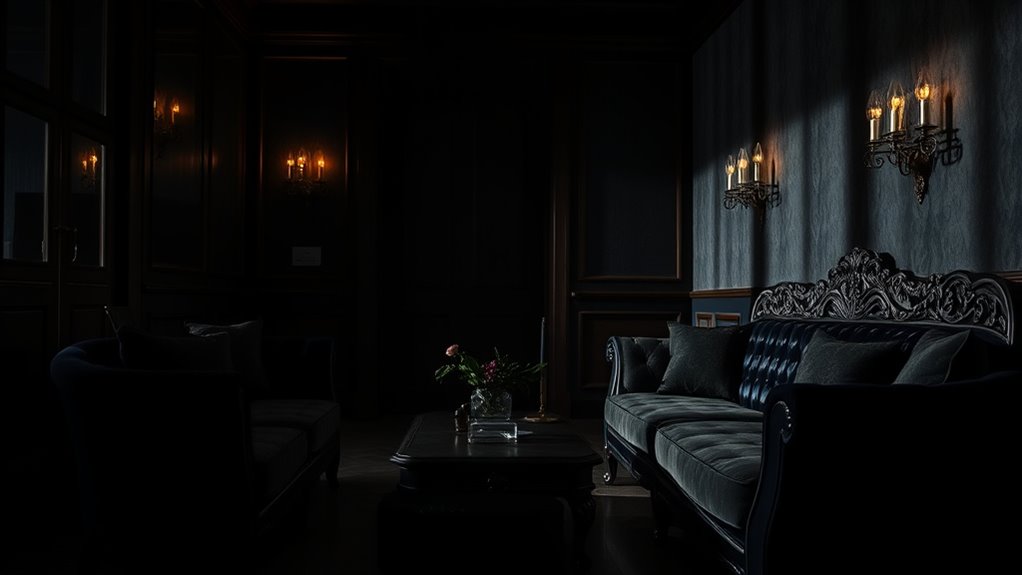
Start by considering your lighting techniques. Warm, layered lighting can transform dark interiors from gloomy to glamorous. Incorporate a mix of ambient, task, and accent lighting to add dimension and highlight your dark hues without overwhelming the space. For example, soft wall sconces or warm-toned table lamps can cast a gentle glow, emphasizing the richness of your black or dark-colored walls. Dimmable fixtures allow you to adjust the mood, making the room adaptable for different occasions. Avoid harsh, direct lighting that can create stark contrasts and diminish the subtlety of complex blacks. Instead, opt for indirect lighting or fixtures with warm bulbs, which soften shadows and reveal the nuanced undertones within your dark palette. Additionally, understanding the color temperature of your lighting can significantly influence how your dark hues appear and interact with surrounding materials.
Layer warm, dimmable lighting to enhance the richness and depth of dark interiors.
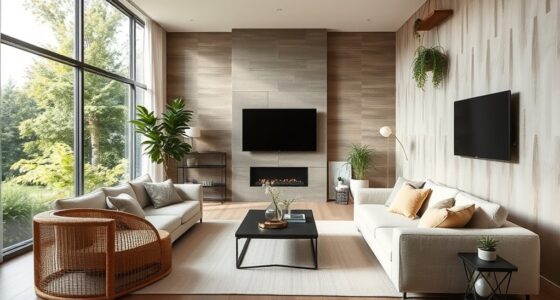
Your color palette choices are equally indispensable. While black might be your primary tone, introducing variations or undertones can add complexity and visual interest. Consider deep charcoal, ink blue, or even muted greens that complement your main dark hue. These subtle variations prevent the space from feeling flat or monotonous. Pair your dark walls with lighter, textured materials—think plush fabrics, matte metals, or natural woods—to create a tactile contrast that invites touch and adds warmth. Using metallic accents in gold, brass, or bronze can also reflect light and enhance the richness of your dark interiors. When selecting your palette, think about the overall ambiance you want to achieve; incorporating warm neutrals or soft whites can balance the darkness, ensuring the room feels cozy rather than cave-like.
In essence, creating a sophisticated, inviting space with dark hues hinges on your ability to manipulate lighting techniques and make thoughtful color palette choices. By layering warm, adjustable lighting, you highlight the depth and complexity of blacks and other dark shades. Simultaneously, choosing subtle variations and textures within your palette helps to prevent the space from feeling heavy. When done right, these elements work together to produce an interior that exudes drama, depth, and elegance—an environment that’s both striking and comfortable.
As an affiliate, we earn on qualifying purchases.
Frequently Asked Questions
How Do Lighting Conditions Affect Dark and Black Interior Paints?
Lighting conditions considerably impact how dark and black interior paints appear. Bright lighting can highlight subtle undertones and create striking contrast, while dim lighting might make the colors seem deeper and more mysterious. The lighting impact also influences shadow effects, adding drama and depth to your space. To achieve the desired effect, consider the natural and artificial light sources, adjusting them to enhance the paint’s rich, dramatic qualities.
What Are the Best Wall Colors to Complement Complex Blacks?
Imagine you’re in a vintage speakeasy—your walls need to pop! To complement complex blacks, choose neutral shades like warm greys or soft taupes for the main walls. Add a contrasting trim color, perhaps crisp white or deep charcoal, to create visual interest. You can also incorporate complementary accent walls in rich jewel tones like emerald or sapphire, which enhance the depth and drama of your interior design effortlessly.
How Durable Are Dark and Black Paints in High-Traffic Areas?
Dark and black paints are quite durable in high-traffic areas if you choose high-quality paint with good paint durability. They resist everyday wear and tear, but you should be mindful of cleaning dark paints—use gentle, non-abrasive cleaners to avoid dulling the finish. Regular maintenance and touch-ups help keep the color vibrant, ensuring your walls look fresh and dramatic while standing up to busy spaces.
Can Dark Shades Make a Room Feel Smaller or More Confined?
Yes, dark shades can make a room feel smaller or more confined by affecting visual perception and spatial dynamics. When you paint walls in deep hues, it creates an intimate atmosphere, but it may also make the space seem more limited, especially in smaller rooms. To counteract this, add plenty of light and use mirrors or lighter accents to balance the effect and keep the room feeling open.
What Techniques Help Prevent Streaks or Uneven Coverage With Dark Paints?
Did you know that uneven coverage is the top reason dark paint jobs fail? To avoid streaks, use a high-quality brush and make sure your paint has the right consistency—thick enough to cover evenly but not so thick it clumps. Apply paint in even, overlapping strokes, and don’t overload your brush. This technique helps achieve a smooth, professional finish, preventing streaks and guaranteeing your dark walls look stunning and uniform.
Conclusion
Embracing deep, rich blacks in your interiors adds a touch of mystery and sophistication that’s hard to resist. It’s like whispering secrets in the shadows, inviting curiosity without overwhelming the space. When you carefully balance these dramatic tones, your rooms feel cozy yet enthralling, a perfect blend of comfort and allure. So, don’t shy away from exploring darker depths — they might just become your favorite secret weapon for creating a truly memorable ambiance.
Halloween Picks
halloween
As an affiliate, we earn on qualifying purchases.