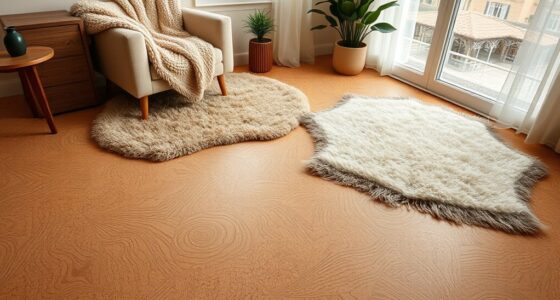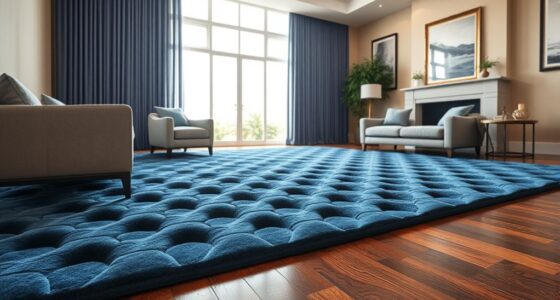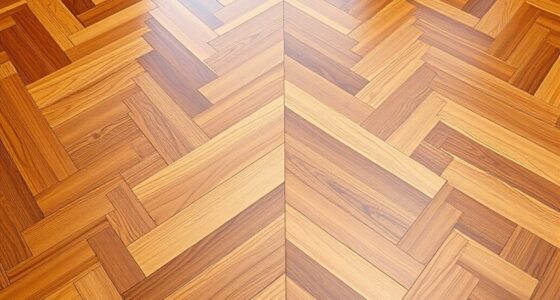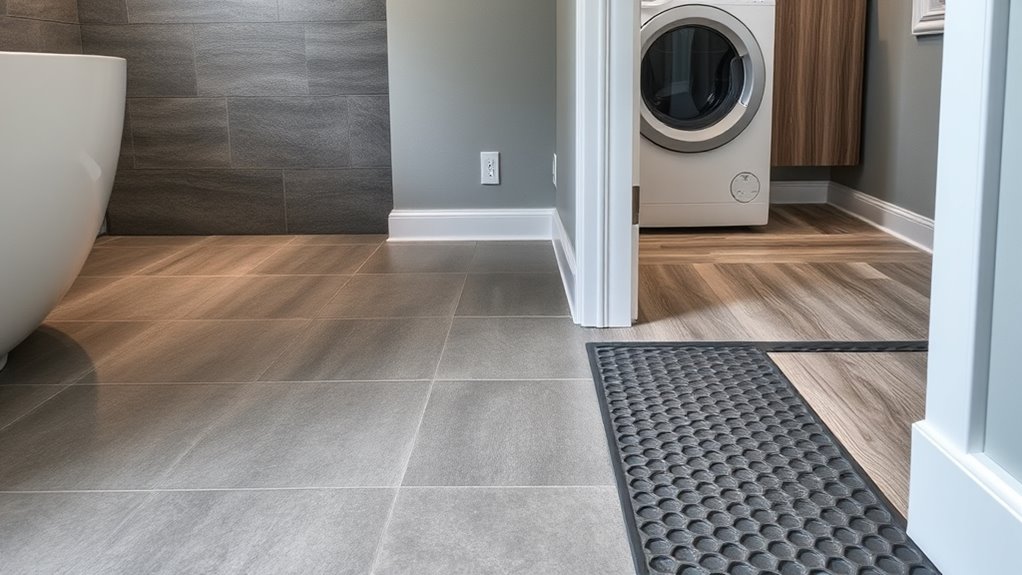
For wet areas like bathrooms, laundry rooms, and basements, epoxy coatings with anti-slip finishes are an excellent choice. They create seamless, waterproof surfaces that resist stains, spills, and humidity while providing added safety with traction-enhancing textures. These floors are durable, easy to clean, and customize to match your decor. To guarantee long-lasting safety and style, exploring more options can help you find the best solution for your moisture-prone spaces.

Get furniture and decor delivered free — and shop member deals
- Fast, free delivery on millions of items
- Access to Prime Big Deal Days deals on October 6–7
- Prime Video, Amazon Music and more included
Key Takeaways
- Epoxy coatings create seamless, waterproof surfaces resistant to stains, spills, and humidity in wet areas like bathrooms, laundry rooms, and basements.
- Incorporating anti-slip finishes enhances safety by reducing slip hazards on wet floors without compromising aesthetics.
- Epoxy with anti-slip additives offers a durable, easy-to-maintain flooring solution resistant to mold and mildew.
- Regular cleaning and resealing prolong the lifespan and safety features of epoxy and anti-slip floors in moisture-prone environments.
- Alternative options like textured tiles or rubber mats can complement epoxy for enhanced safety and durability in wet spaces.
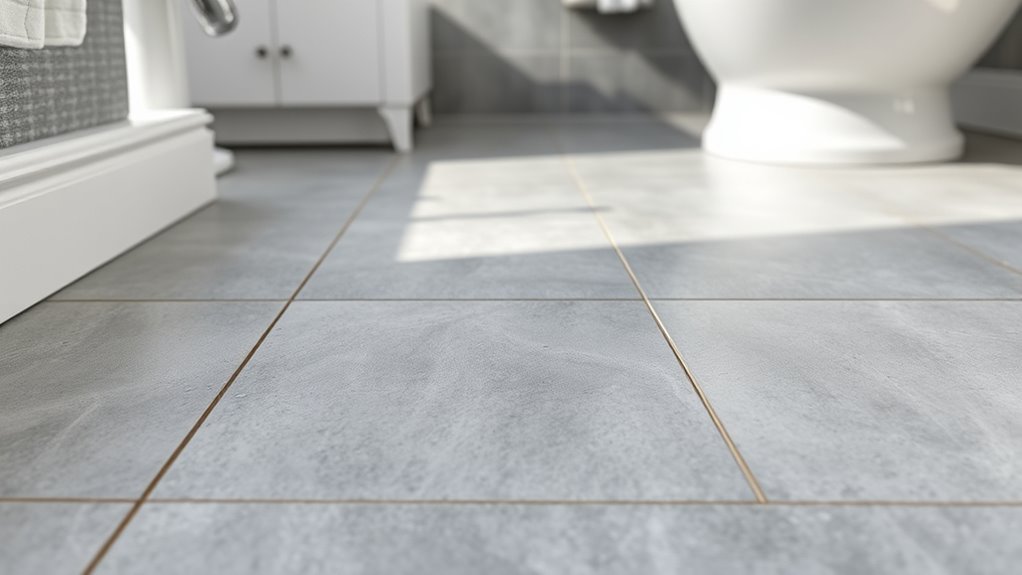
Have you ever wondered what type of flooring works best in wet areas like bathrooms, kitchens, or laundry rooms? When moisture is a constant presence, choosing the right flooring becomes critical for safety, durability, and ease of maintenance. Epoxy coatings are a popular choice because they create a seamless, waterproof surface that resists stains, spills, and humidity. Applying epoxy in these spaces not only provides a sleek, polished look but also forms a strong barrier against water infiltration, which is essential in areas prone to leaks or splashes. Plus, epoxy coatings are highly customizable in terms of color and finish, allowing you to match your decor while guaranteeing the floor remains functional.
Epoxy coatings create waterproof, customizable floors ideal for bathrooms, kitchens, and laundry rooms.
However, even with epoxy coatings, safety remains a priority, especially in wet environments. That’s where anti-slip finishes come into play. You can incorporate anti-slip additives directly into epoxy coatings or apply anti-slip sealants over existing surfaces. These finishes substantially reduce the risk of slips and falls, making them ideal for bathrooms, laundry rooms, and basements where water and moisture are common. Anti-slip finishes help maintain traction under wet conditions, giving you peace of mind whether you’re stepping out of the shower or walking across a damp laundry floor.
In addition to epoxy and anti-slip solutions, other flooring options like textured tiles or rubber mats can enhance safety and durability. Yet, epoxy coatings with integrated anti-slip finishes often stand out because they provide a smooth, continuous surface that’s easy to clean and resistant to mold and mildew. This is especially beneficial in laundry rooms and basements, where moisture can promote bacterial growth if not properly managed. Applying an anti-slip finish over epoxy makes maintenance straightforward while maintaining a high level of safety.
When selecting flooring for wet areas, durability and moisture resistance should top your list. Epoxy coatings with anti-slip finishes offer a practical combination, providing a waterproof surface that reduces water damage and a textured grip that keeps you safe. This combination is especially valuable in bathrooms and laundry rooms, where water exposure is frequent. Maintaining this type of flooring is simple—regular cleaning with mild detergents keeps the surface looking new, and resealing with anti-slip finishes every few years helps sustain the safety features.
Additionally, choosing moisture-resistant flooring can help prevent issues like mold and mildew growth, which are common in damp environments. Ultimately, investing in epoxy coatings with anti-slip finishes ensures your wet areas are both stylish and secure. It’s a reliable solution that balances waterproofing, safety, and ease of upkeep, making it the smart choice for any space prone to moisture.
epoxy flooring with anti-slip finish
As an affiliate, we earn on qualifying purchases.
As an affiliate, we earn on qualifying purchases.
Frequently Asked Questions
How Do I Prevent Mold and Mildew on Wet Area Floors?
To prevent mold and mildew on wet area floors, you need to focus on mold prevention and mildew control. Keep the area dry by wiping up spills and using a dehumidifier if needed. Guarantee proper ventilation with exhaust fans and open windows after use. Regularly clean floors with mold-inhibiting solutions, and fix leaks promptly. These steps help maintain a dry environment and reduce mold and mildew buildup effectively.
What Is the Best Maintenance Routine for Waterproof Flooring?
You should establish regular cleaning schedules, ideally wiping down waterproof flooring weekly to prevent dirt buildup. Use gentle cleaning solutions that won’t damage the sealant. Additionally, seal your flooring with appropriate sealing techniques every couple of years to enhance water resistance. Keep the area well-ventilated to reduce moisture, and promptly address spills or leaks to maintain your waterproof flooring’s integrity and longevity.
Are There Eco-Friendly Flooring Options Suitable for Wet Areas?
Did you know that over 60% of homeowners now prefer eco-friendly materials? You can choose sustainable flooring like bamboo, cork, or reclaimed wood for wet areas. These options are not only environmentally friendly but also durable and water-resistant when properly sealed. By selecting sustainable flooring, you reduce your ecological footprint while ensuring your bathroom, laundry room, or basement stays functional and stylish. Eco-friendly options truly combine practicality with sustainability.
How Do I Repair Water Damage on Wet Area Flooring?
To repair water damage on your wet area flooring, start by removing any damaged material and thoroughly drying the area. Apply a high-quality sealant to prevent future moisture penetration and install moisture barriers underneath new flooring. If the damage is extensive, consider replacing the affected section entirely. Make sure to inspect for mold or rot, and address those issues before sealing and re-laying your flooring for lasting protection.
Can I Install Radiant Heating Under Wet Area Floors?
Installing radiant heating under wet area floors is like wrapping your space in cozy warmth. You can definitely do it, but you’ll need to choose waterproof, compatible systems designed for wet environments. Make sure to install proper insulation and vapor barriers to prevent moisture issues. With the right setup, radiant heating can make your bathroom, laundry, or basement floor comfortably warm without risking water damage or mold.
Conclusion
Choosing the right flooring for wet areas ensures safety and durability, and sometimes, the best option might surprise you—like discovering that a waterproof vinyl or textured tile not only withstands moisture but also adds style. Remember, your home’s most unexpected moments, like a spill or leak, can become the perfect test for your flooring choice. With the right materials, you’ll find that your bathroom, laundry, or basement remains both beautiful and resilient, just when you need it most.
Fall Picks
fall essentials
As an affiliate, we earn on qualifying purchases.