TL;DR

Get furniture and decor delivered free with Prime
- Fast, free delivery on millions of items
- Prime Video, Amazon Music and more included
- Member-only deals all year
Hunker published a roundup of 16 ways to repurpose concrete blocks for home and garden projects, including planters, tables, stairs, privacy walls, fountains and a pool. The ideas range from simple decorative reuse to structural or water-holding projects that need careful planning; the report does not provide tested designs, costs or project-by-project safety specifications.
Hunker has published a roundup of 16 ways to repurpose concrete blocks around the home and garden, including planters, tables, benches, stairs, privacy walls, fountains and a small pool. The ideas illustrate how a common building material can be reused, but projects involving structural support, water or permanent construction require more planning than decorative arrangements.
The report describes concrete blocks as durable, regularly shaped and relatively inexpensive, and says some homeowners may already have leftovers or be able to find reclaimed blocks. It notes that cinder blocks are often concrete blocks, while cautioning readers to watch for damage because block types can differ. The article does not set out a formal inspection process or establish that every block is suitable for every use.
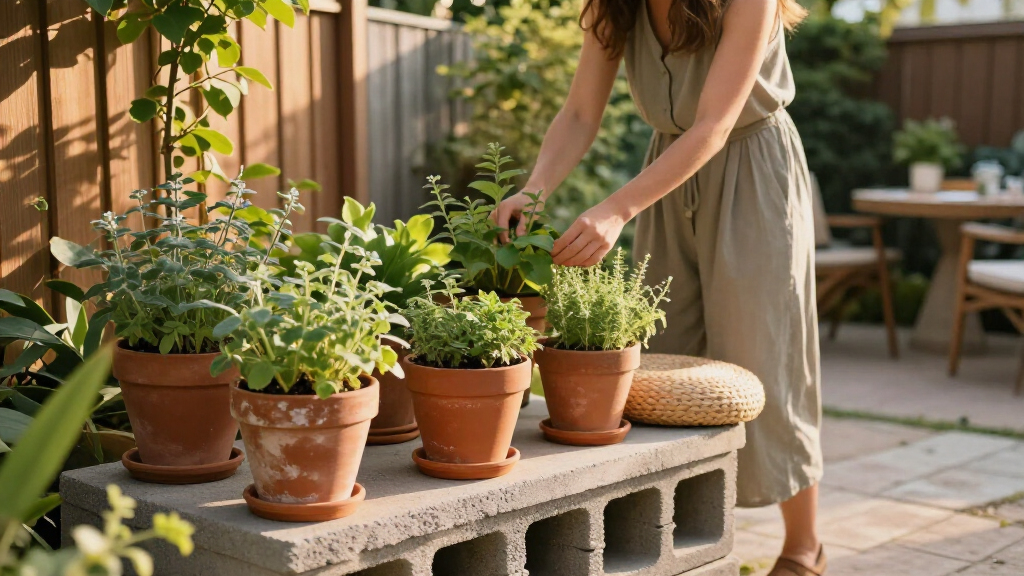
Several suggestions use the blocks as supports rather than requiring extensive alteration: stack them under a wood or stone tabletop, arrange them as a TV stand, or form a nightstand or bench. The openings can hold shelves or serve as planting pockets. For planters, the report recommends lining the bottoms of the openings with mesh or landscape fabric to keep soil from falling through. It also suggests painting blocks or adding fabric to change their appearance.
Other ideas call for more substantial work. The roundup describes temporary stairs made by arranging blocks in tiers, while permanent outdoor steps need a firmer base and gaps filled with sand or cement. It also proposes walls, fountains and a pool. For the pool concept, the article says block walls need rebar reinforcement and a waterproof coating; it advises checking local rules for permits. The source does not provide engineering plans, dimensions or detailed construction instructions for these projects.
From Leftovers to Useful Features
The roundup gives readers options for reusing leftover or reclaimed materials instead of treating them solely as construction waste. Smaller projects, such as planters, low stands and decorative pieces, can be adapted to a space with comparatively little work, while the blocks’ simple form can suit an industrial or minimalist look. Paint, wood, stone and fabric offer ways to soften or disguise that appearance.
The ideas also vary sharply in risk and effort. A stack used as a small side table is not equivalent to stairs, a permanent wall or a pool. Stability, weight, drainage, weather exposure and local rules can affect whether a project is safe and durable. The article is an inspiration list, not a substitute for construction specifications or professional advice for work that supports people or contains water.
As an affiliate, we earn on qualifying purchases.
How the Sixteen Ideas Differ
The source groups its suggestions across furniture, garden use and decorative projects. Alongside the examples detailed above, it points to benches, garden art, sculptural arrangements and seasonal decorations. A single block can be painted as a pumpkin or scarecrow, while multiple blocks can be arranged as a train or painted to resemble books. These options are primarily decorative reuse, rather than building work.
For outdoor planting, the blocks can be used separately or stacked into a tower, pyramid or wall. A basic fountain can use a block-built basin and a floating spout; more elaborate versions might circulate water through a raised wall or create a tiered centerpiece. In either case, the source says the blocks should be waterproofed to prevent leaks. It does not provide product recommendations or explain how to size a pump.
Plans and Safety Details Missing
The supplied report does not identify tested designs, load limits, block dimensions, estimated costs or how long the projects take. It also does not give detailed instructions for reinforcing stairs, anchoring furniture, building a retaining or privacy wall, or constructing a pool. Those details matter because block condition and stability can vary, and a design that works for decoration may not be appropriate for supporting weight.
It is also unclear which local permits or rules might apply to a particular project; requirements depend on location and the work being done. The article advises checking local regulations before a pool project but does not identify jurisdictions or outline specific code requirements. Readers should treat the larger builds as concepts, not complete plans.
Choose a Project Before Building
Readers can start by checking whether their blocks are intact and deciding whether the intended use is decorative, load-bearing or exposed to water. Simple projects still need a stable, level arrangement; larger or permanent work calls for project-specific plans and local code checks. Before building stairs, walls or a pool, homeowners should consult a qualified professional where needed rather than relying on a short inspiration roundup.
For garden projects, the next practical steps include planning drainage, placing mesh under planter openings and selecting materials suitable for outdoor exposure. For water features, readers need to plan waterproofing and circulation, and confirm any permit requirements. The source gives no follow-up timetable or additional technical guidance, so the safety and construction questions remain for each project to resolve.
Key Questions
What are some ways to reuse concrete blocks at home?
Hunker’s list includes planters, tables, TV stands, nightstands, benches, stairs, privacy walls, fountains, garden art and a pool. Some suggestions are decorative, while others involve permanent construction.
Can concrete blocks be used as planters?
The report says the openings can hold small plants. It recommends adding mesh or landscape fabric at the bottom so soil and plants do not fall through.
Can concrete blocks form a pool?
The article presents blocks as a starting point for a pool, but says the walls need rebar reinforcement and waterproof coating. It also advises checking local permit requirements; it does not provide a complete pool-building plan.
Are cinder blocks suitable for these projects?
The source says many cinder blocks are concrete blocks and may be reusable, but notes differences between block types and advises watching for damage. It does not say every block is fit for every project.
Source: rss
Fall Picks
fall essentials
As an affiliate, we earn on qualifying purchases.