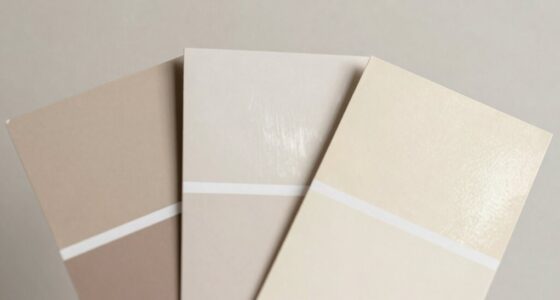
To paint a room for better light reflection, choose light, reflective colors like whites, creams, or pastels, especially for low-light spaces. Use a high-quality, semi-gloss or satin finish to boost brightness, and guarantee surfaces are smooth and clean before painting. Strategically place reflective furniture or mirrors near windows, and avoid blocking natural light. Proper technique, like long, even strokes, helps create a uniform, luminous surface. Keep exploring for more tips to make your room shine even brighter.

Get furniture and decor delivered free with Prime
- Fast, free delivery on millions of items
- Prime Video, Amazon Music and more included
- Member-only deals all year
Key Takeaways
- Choose light colors like whites, creams, or pastels to maximize light reflection and brighten the room.
- Use semi-gloss or satin finishes for higher reflectivity and a more luminous space.
- Ensure walls are smooth, clean, and properly primed before painting to enhance surface reflectivity.
- Apply paint with long, smooth strokes for an even coat, minimizing dull spots and uneven patches.
- Incorporate reflective elements like mirrors and strategic furniture placement to amplify natural and artificial light.

Painting a room for better light reflection can dramatically enhance its brightness and ambiance. When you select the right color palette choices, you’re not just changing the look; you’re actively influencing how light bounces around the space. Light colors, especially whites, creams, and soft pastels, reflect more light than darker shades. If your goal is to make a room feel more open and airy, opt for these hues. Matte finishes tend to diffuse light evenly, reducing glare and creating a softer, more inviting glow. On the other hand, semi-gloss or satin finishes can reflect more light, making the space appear brighter and more lively.
Light colors and glossy finishes boost brightness and create an inviting, airy atmosphere.
Your furniture placement also plays a vital role in how light interacts with your walls. If you position larger pieces away from windows, you allow more natural light to reach the walls, maximizing their reflective potential. Avoid blocking windows with bulky furniture, which can cast shadows and diminish light distribution. Instead, place smaller or reflective furniture—like glass tables or mirrors—near windows. Mirrors are especially effective because they bounce light back into the room, amplifying brightness and giving the illusion of a larger space. Ensuring your surfaces are smooth and free of imperfections can also significantly improve light reflection, as surface quality directly impacts how light is dispersed across your walls. Proper surface preparation and paint application techniques further enhance light reflection by ensuring an even, glossy finish that reflects light uniformly. Additionally, choosing the right paint finish can make a noticeable difference in how well your walls bounce light around.
When choosing your color palette, consider the room’s natural light levels. Rooms with limited sunlight benefit from lighter, cooler tones that reflect what little light they do receive. In contrast, rooms flooded with sunlight can handle warmer shades without feeling overwhelming. Keep the walls uniform in color to maintain a consistent reflection surface, but you can add accents or trim in slightly contrasting shades to add depth without sacrificing brightness.
In terms of application, guarantee you prepare the walls properly. Clean, smooth surfaces absorb and reflect light more effectively. Apply primer if needed, and use high-quality paint to achieve an even coat, which enhances the overall reflective quality. When painting, use long, smooth strokes to avoid uneven patches that can trap light and create dull spots. Additionally, understanding the importance of surface quality can help you achieve the best reflective results. Remember that proper lighting fixtures and placement can further optimize how your walls reflect light, making the space feel even more luminous.
Finally, think about your overall interior design. Light-colored walls paired with strategic furniture placement can make even small rooms feel spacious and bright. Keep clutter to a minimum, as it can block light and create shadowy areas. By carefully selecting your color palette choices, positioning your furniture mindfully, and paying attention to finish quality, you’ll transform your room into a luminous, welcoming space.
As an affiliate, we earn on qualifying purchases.
Frequently Asked Questions
What Is the Best Type of Paint for Light Reflection?
The best type of paint for light reflection is a high-gloss or semi-gloss finish with light colors from your chosen color palettes. These finishes reflect more light, brightening your space, while light colors like whites, creams, or pastels enhance the overall brightness. You should opt for paints specifically designed to maximize reflectivity, ensuring your room feels more open and airy. Remember, the right combination makes a significant difference.
How Do Wall Textures Affect Light Reflection?
Think of wall textures as a dance floor—smooth surfaces like high gloss reflect light vividly, creating a bright, lively space. Rough or heavily textured walls, with their varied patterns, scatter light in multiple directions, softening reflections and adding depth. Your choice of surface gloss and wall patterns directly influences how much light bounces around, helping you craft a room that feels more open or cozy, depending on your mood.
Can Ceiling Color Influence Room Brightness?
Yes, ceiling color can influence room brightness. Lighter ceilings reflect more light, making your space feel brighter and more open, especially in rooms with lower ceilings or limited natural light. Color psychology suggests that soft whites or pastel shades create a calming atmosphere and enhance brightness. If you have high ceilings, darker colors can add warmth, but for maximum brightness, stick with light, reflective hues that complement your ceiling height.
Are There Specific Paint Finishes That Enhance Light?
Think of your walls as the stage for your room’s glow; choosing the right paint finish can make all the difference. Satin or eggshell finishes reflect more light than matte, brightening the space effortlessly. Pair these with light color schemes and strategic lighting fixtures to maximize brightness. These finishes bounce light around, turning even dull corners into lively spots, so your room feels open, inviting, and full of energy.
How Often Should Painted Walls Be Cleaned for Optimal Reflection?
You should clean your painted walls every 3 to 6 months to maintain ideal reflection. Regular cleaning prevents dirt accumulation, which can dull the surface and reduce light bounce. Use a soft cloth or sponge with mild soap and water, avoiding harsh chemicals that could damage the paint. Consistent cleaning keeps your walls bright and reflective, enhancing the room’s overall light and ambiance.
Conclusion
By choosing the right colors and finishes, you’ll transform your space into a welcoming oasis filled with soft, bouncing light. Imagine sunlight streaming through the window, casting gentle glows on your freshly painted walls, making everything feel brighter and more inviting. With each careful brushstroke, you’re not just painting a room—you’re creating a vibrant sanctuary where warmth and cheerfulness dance together, inviting you to relax and enjoy every moment in your beautifully illuminated home.
Evergreen bestsellers Picks
bestsellers
As an affiliate, we earn on qualifying purchases.