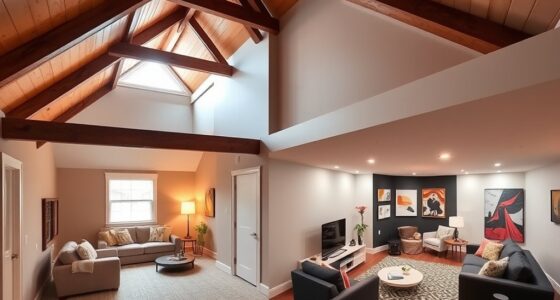
Converting your attic into a livable space is a smart way to maximize your home’s potential without expanding its footprint. You can create a cozy bedroom, office, or lounge by making the area functional and organized. Focus on evaluating the structural support, installing proper insulation, and ensuring good ventilation. With the right storage solutions and design ideas, your attic can become a comfortable and valuable part of your home. Keep exploring to discover how to make the most of this transformation.
Key Takeaways
- Assess ceiling height, support structures, and accessibility to ensure the space can be effectively converted.
- Incorporate storage solutions like built-in shelves and foldaway furniture to maximize space efficiency.
- Upgrade insulation and install proper ventilation to maintain a comfortable, energy-efficient environment year-round.
- Plan for safe access with stairs or ladders, and ensure structural integrity before beginning renovation.
- Customize the space for versatile uses such as bedrooms, offices, or lounges to enhance home functionality.
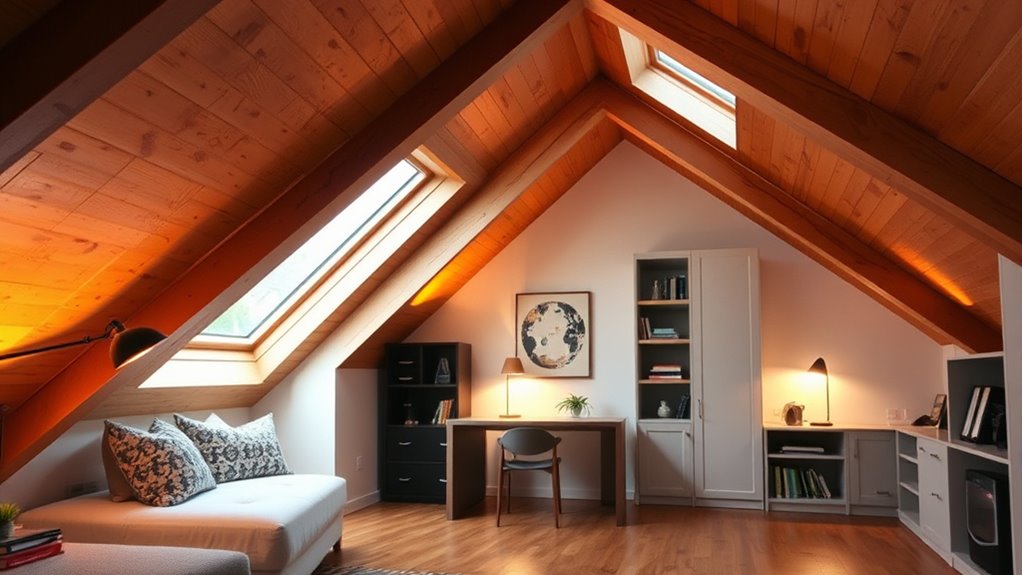
Are you looking to maximize your home’s space without expanding its footprint? An attic conversion offers a perfect solution, turning an underutilized area into a functional and inviting living space. Before diving into the transformation, it’s essential to evaluate the existing structure, including ceiling height, accessibility, and support beams. Once you’re confident the space can be adapted, focus on optimizing storage solutions. Clever storage ideas, like built-in shelves, under-eaves cabinets, or foldaway furniture, help you make the most of every inch. These solutions keep the space tidy and free of clutter, making it feel larger and more welcoming.
Maximize your home’s space with attic conversions and clever storage solutions.
Equally important are insulation improvements. Attics tend to be drafty and prone to temperature fluctuations, which can make your new living area uncomfortable and inefficient. Upgrading insulation not only maintains a cozy climate year-round but also reduces energy costs. Proper insulation helps regulate temperature, preventing heat loss in winter and keeping the space cool during summer. This step is vital for creating a comfortable environment, whether you’re converting the attic into a bedroom, office, or lounge. Additionally, insulating the attic can help reduce noise transfer from other parts of the house, enhancing overall comfort.
When planning your attic conversion, consider the existing insulation and whether it meets current standards. You might need to add or upgrade insulation materials like spray foam, fiberglass batts, or rigid foam boards. These materials enhance energy efficiency and can even dampen noise from the rest of the house. Don’t overlook ventilation, either. Adequate airflow helps prevent moisture buildup and mold growth, protecting both your health and the integrity of your home. Installing vents or fans can improve air circulation and ensure your attic remains dry and well-ventilated.
As you move forward, keep in mind that proper insulation and clever storage solutions go hand-in-hand in creating a comfortable, functional space. Well-insulated walls and ceilings maintain temperature stability, while smart storage keeps clutter out of your living area. This combination allows you to enjoy your new space without sacrificing comfort or organization. Additionally, consider the accessibility of the attic—adding a sturdy staircase or ladder makes daily use easier and safer.

Bigrizy Guard UPGRADED v2.0 Spray Foam Insulation Kit – Closed Cell Spray Foam, 32.8 oz Can, DIY Wide Polyurethane Expanding Sealant for Garage Door, Attic, Covers 240 Board ft(12 Pack, Gun & Cleaner)
HIGH-PERFORMANCE THERMAL & SOUND INSULATING: Closed-cell spray foam insulation kit provides superior insulation efficiency and soundproofing, reaching an…
As an affiliate, we earn on qualifying purchases.
As an affiliate, we earn on qualifying purchases.
Frequently Asked Questions
What Is the Typical Cost Range for an Attic Conversion?
You’ll typically spend between $20,000 and $50,000 on an attic conversion. Costs vary based on factors like attic ventilation, roof structural support, and finishing touches. If your attic requires additional structural support or improved ventilation, expenses can increase. To stay within budget, plan for proper insulation, electrical work, and possibly upgrading stairs. A well-planned conversion adds value, comfort, and extra space to your home.
How Long Does a Standard Attic Conversion Usually Take?
Imagine turning your attic into a cozy haven—how long does it take? Usually, a standard attic conversion takes about 6 to 8 weeks, but factors like installing proper attic ventilation and ensuring roof structural support can extend this timeline. You’ll need time for planning, permits, and construction, so patience pays off. Stay flexible, and soon you’ll enjoy your transformed space, feeling proud of your home’s new heartbeat.
Are Building Permits Required for Converting an Attic?
Yes, you’ll need building permits for converting an attic. You should check local building codes and zoning regulations to guarantee your project complies with safety standards and any restrictions. Applying for permits involves submitting plans and possibly inspections. Failing to obtain necessary permits can lead to fines or having to undo work, so it’s best to follow the legal process to avoid issues during or after your attic conversion.
What Are the Best Insulation Options for Attic Conversions?
Think of insulation options as the armor that keeps your attic comfortable. You should consider fiberglass batts for affordability, spray foam for superior energy efficiency, or cellulose for eco-friendliness. Each type offers unique benefits, but spray foam stands out for sealing gaps and providing maximum insulation. Choosing the right insulation type helps you save on energy bills and creates a cozy, energy-efficient space, turning your attic into a warm retreat.
Can an Attic Conversion Increase Home Value Significantly?
Yes, an attic conversion can considerably boost your home’s value. By adding quality attic insulation and structural reinforcement, you improve energy efficiency and safety, making your property more attractive to buyers. These upgrades not only enhance the livability of the space but also demonstrate that you’ve invested in the home’s overall quality. As a result, potential buyers see the added value, which can lead to a higher resale price.

VEVOR Storage Shelving Unit, 5-Tier Adjustable, 2000 lbs Capacity, Heavy Duty Garage Shelves Metal Organizer Wire Rack, Black, 60" L x 24" W x 78" H for Kitchen Pantry Basement Bathroom Laundry Closet
Load Up Your Life: Transform your cluttered garage into a neat and organized space with our storage shelving…
As an affiliate, we earn on qualifying purchases.
As an affiliate, we earn on qualifying purchases.
Conclusion
Converting your attic not only maximizes your home’s space but also boosts its value. Did you know that attic conversions can increase property value by up to 20%? By transforming an unused area into a functional living space, you create a cozy retreat or extra bedroom that suits your needs. So, don’t overlook your attic—it’s a hidden gem waiting to be revealed, adding both comfort and worth to your home.

Lift Attic Ladder Safety Railing, Extendable Dual-Level Handrail Make Climb Attic Ladder Easy&Comfortable Three-Sided Guardrail Reduce Fall Risk Nice for Ascend/Descend at House,Garage,Storage Loft
Enhanced Safety for Attic Access: Crafted from heavy-duty material, safety railing provides sturdy support when climbing up or…
As an affiliate, we earn on qualifying purchases.
As an affiliate, we earn on qualifying purchases.

MM MELISEN Fold-Away Wall Table – Natural 31.4×23.6 Inch Wood Table That maximizes Space. Creates Instant Counter Space in Laundry, Kitchen, or Workshop. Ideal for Apartments and dorms
Crafted from solid wood with a clean natural finish, this space-saving wall-mounted folding table folds flat to just…
As an affiliate, we earn on qualifying purchases.
As an affiliate, we earn on qualifying purchases.