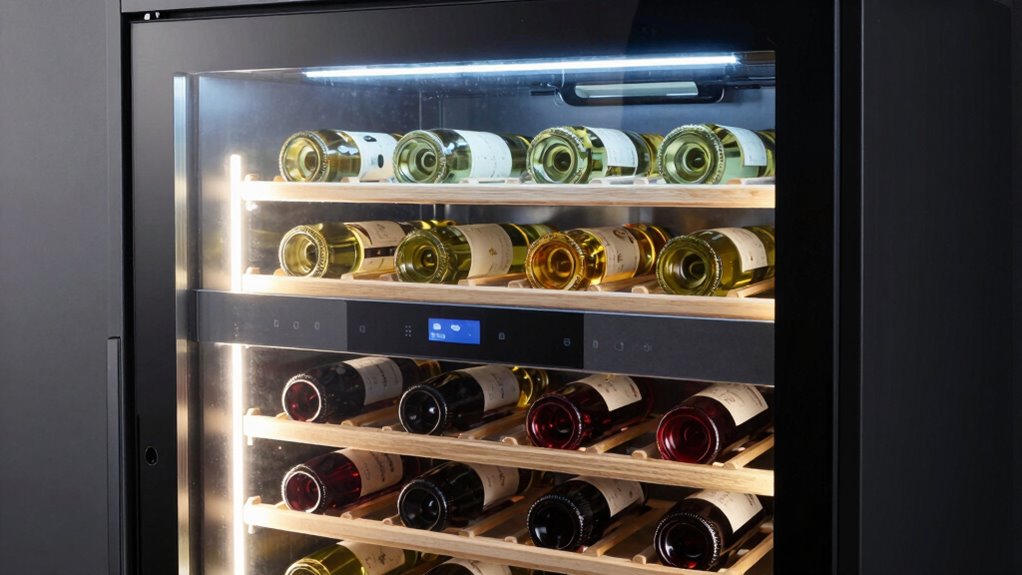
Understanding wine fridge temperature zones helps you store reds and whites at perfect conditions, preserving flavor and aging potential. Reds should be kept around 55°F, while whites do best at 45°F to maintain freshness. Dual-zone fridge allows you to set separate temperatures, ensuring each type stays ideal. Avoid mixing temperatures within a single zone to prevent spoilage. Explore how to optimize storage further to keep your wine in top shape.
Key Takeaways
- Dual-zone wine fridges allow separate temperature settings for red and white wines, optimizing storage conditions.
- Reds are best stored at around 55°F (13°C), while whites thrive at 45°F (7°C).
- Maintaining stable temperatures prevents spoilage, oxidation, and flavor deterioration.
- Proper placement with bottles laid horizontally helps corks stay moist and preserve wine quality.
- Avoid temperature fluctuations and light exposure for optimal wine aging and immediate enjoyment.
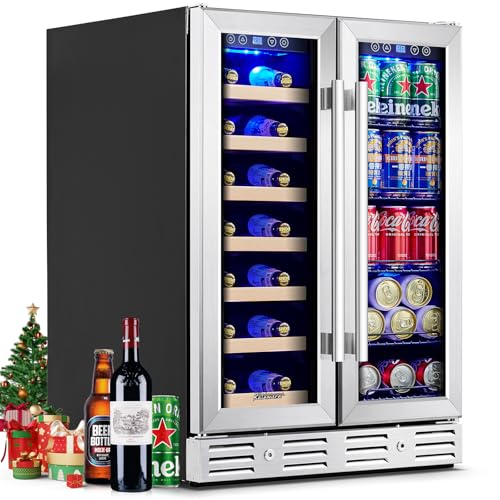
Kalamera 24 inch Wine Fridge Hold 21 Bottles and 75 Cans,Dual Zone Wine and Beverage Refrigerator,Built-In or Freestanding with Blue LED Light,for Home/Bar/Office
Dual zone independent wine storage space: The Kalamera dual zone wine cabinet can store 21 bottles of wine…
As an affiliate, we earn on qualifying purchases.
As an affiliate, we earn on qualifying purchases.
What Are Wine Fridge Temperature Zones and Why Do They Matter?
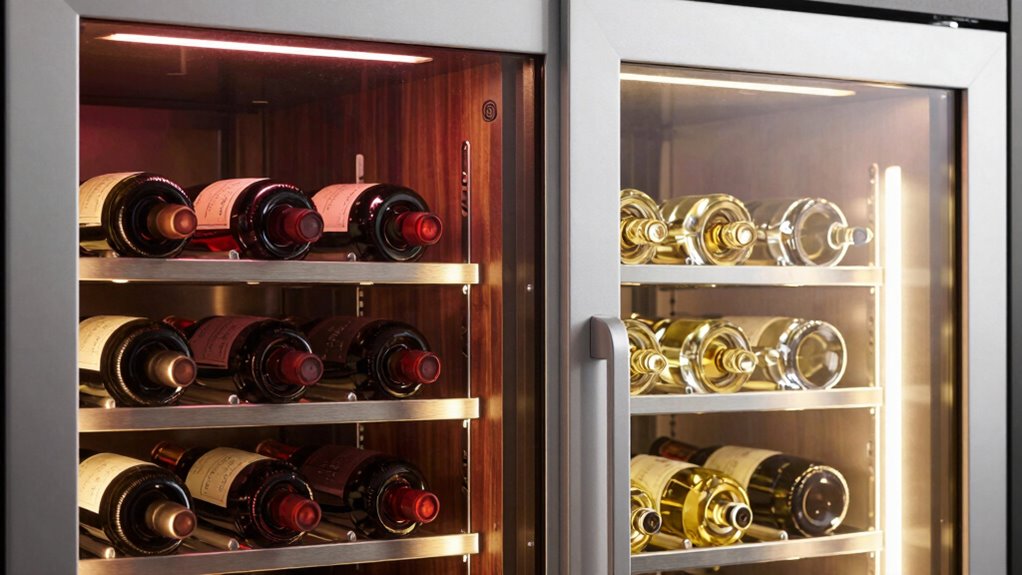
Understanding wine fridge temperature zones is essential because different types of wine require specific storage conditions to preserve their quality. Properly managed zones help maintain ideal glass storage and cork preservation, preventing spoilage. If the temperature is too high, your corks can dry out, risking oxidation and spoilage. Conversely, too cold, and the wine’s aroma and flavor can diminish. Many wine fridges are divided into zones to ensure suitable conditions for different wines, such as reds and whites. This separation helps you store various bottles at their ideal temperatures, protecting the corks and maintaining the integrity of the wine’s flavor profile. Maintaining proper temperature zones is also crucial for preventing wine spoilage and ensuring optimal taste. Understanding and managing these specific storage conditions can significantly extend the lifespan and quality of your wine collection. Properly calibrated temperature controls ensure that each zone maintains the precise conditions needed for various wine types, which is vital for wine preservation. Additionally, being aware of these climate control features can help you select a wine fridge that aligns with sustainable practices, reducing energy consumption and environmental impact. Incorporating quality insulation into your wine fridge design can further help maintain consistent temperatures and protect your collection from external temperature fluctuations. By understanding these zones, you can better safeguard your collection and enjoy wine at its best.

Mini Fridge Thermostat, Universal WPF-20 Freezer Thermostat Controller 2pin / Compatible with wpf16 and wpf18【Can Provide Installation Tutorial】
❤【 Installation tutorial available 】 This is a universal freezer thermostat. When you receive it, if you need…
As an affiliate, we earn on qualifying purchases.
As an affiliate, we earn on qualifying purchases.
How Do Temperature Zones Affect Red and White Wines?

Since red and white wines have different ideal serving temperatures, the way your wine fridge’s temperature zones are set directly impacts their quality. Properly configured zones enhance your wine pairing and tasting experiences. Red wines are best kept slightly warmer, around 55-65°F, to bring out their rich flavors. Whites thrive at cooler temperatures, around 45-55°F, preserving their crispness. Misaligned zones can dull flavors or produce off-tastes. Temperature zones play a crucial role in maintaining wine freshness and flavor integrity. Ensuring your wine fridge is properly temperature calibrated is essential for optimal storage. Regularly checking and adjusting your fridge’s settings helps maintain the ideal storage conditions for different wine types. Proper temperature control ensures your wines age well and are ready to serve at their peak flavor. Here’s a quick comparison:
| Wine Type | Ideal Serving Temperature | Effect on Wine Tasting |
|---|---|---|
| Red | 55-65°F | Enhances aroma, depth |
| White | 45-55°F | Maintains freshness, acidity |
| Sparkling | 40-50°F | Keeps bubbles lively |
| Rosé | 50-60°F | Balances fruitiness |
| Dessert | 45-55°F | Preserves sweetness |
Adjusting zones guarantees your wines are ready for suitable tasting and pairing.

Govee Digital Hygrometer Indoor Thermometer Room H5075, Bluetooth Temperature Humidity Meter with 164ft Remote App Control, Notification Alerts, 2 Years Data Storage Export for Bedroom, Wine Cellar
Smart Features: The Govee Wireless Thermometer Hygrometer supports all basic functions as well as smart functions such as…
As an affiliate, we earn on qualifying purchases.
As an affiliate, we earn on qualifying purchases.
What Are the Ideal Temperatures for Storing Reds and Whites?
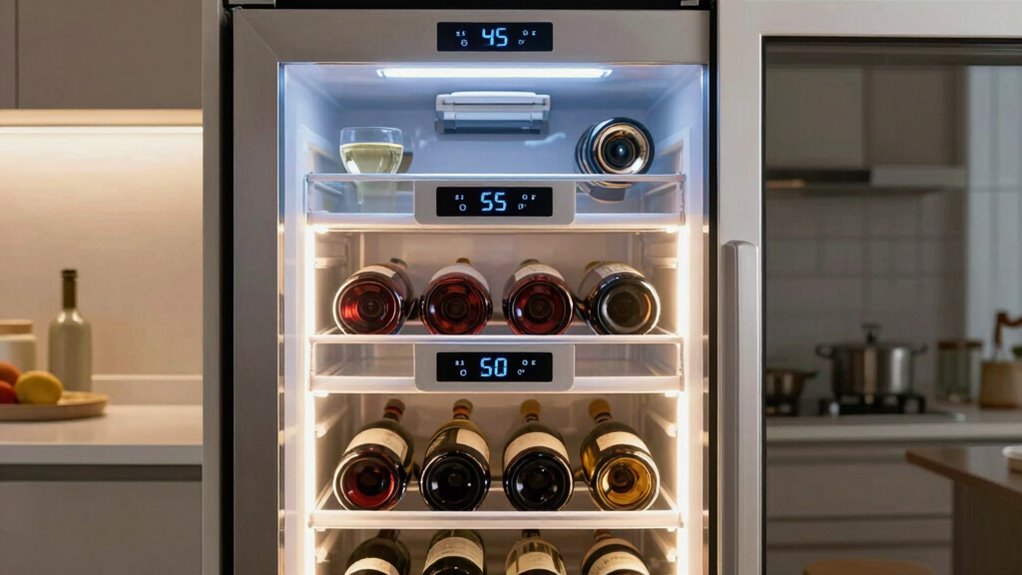
Knowing the ideal storage temperature helps preserve your wine’s flavor and quality. Variations outside recommended ranges can impact taste, so adjusting for wine type is key. Proper temperature control ensures consistent conditions and prevents spoilage. Regular monitoring with thermometer devices can help maintain these optimal conditions. Incorporating smart home automation can help maintain consistent temperatures and prevent spoilage. Additionally, understanding temperature zones within your storage unit can optimize aging and flavor development. Implementing proper insulation can also assist in maintaining stable temperatures and protecting your wine collection from external temperature fluctuations.
Optimal Wine Storage Temp
To keep your wines tasting their best, maintaining reds and whites at their ideal temperatures is essential. The perfect storage temp enhances wine pairing and preserves flavors. Reds are best stored around 55°F (13°C), while whites thrive at 45°F (7°C). Use the following table to visualize optimal storage:
| Wine Type | Ideal Storage Temp | Serving Temp |
|---|---|---|
| Reds | 55°F (13°C) | 60-65°F |
| Whites | 45°F (7°C) | 45-50°F |
| Light Reds | 50°F (10°C) | 55-60°F |
Choosing the right glassware, like a Bordeaux glass for reds and a flute for whites, complements the temperature and enhances your wine experience. Proper storage conditions are also crucial for maintaining wine quality over time, and temperature zones play a key role in this process. Additionally, understanding how environmental factors influence storage can help extend the lifespan and quality of your wines. Maintaining a consistent environment free from temperature fluctuations is vital for preserving wine integrity, and being aware of humidity levels can prevent cork deterioration and spoilage.
Temperature Variations Impacting Flavor
Small temperature fluctuations can substantially influence the flavor and aroma of your wines. Even minor changes can dull the wine’s vibrancy or accentuate unwanted notes, affecting your wine pairing choices. For example, serving a slightly warmer red can enhance its tannins, while a cooler white preserves crispness. Consistent temperatures help maintain the wine’s intended profile, so avoid temperature swings in your fridge. Your glassware selection also plays a role; a wider glass can amplify aroma differences caused by temperature shifts. Keep your reds around 60-65°F and whites at 45-55°F to protect their integrity. Temperature stability is essential for preserving wine quality over time. By maintaining stable temperatures, you’ll ensure each pour delivers the full spectrum of flavors and aromas, elevating your overall wine experience.
Adjusting for Wine Type
Adjusting your wine fridge to the right temperature depends on the type of wine you’re storing. Reds typically thrive at around 55°F (13°C), supporting the ideal wine aging process and ensuring the flavors develop properly. Whites, on the other hand, are best kept slightly cooler at 45-50°F (7-10°C), which helps preserve their crispness and aroma. Setting the right temperature also enhances wine label readability, making it easier to identify your bottles. Proper temperature zones prevent premature aging or spoilage, especially for delicate whites. Temperature regulation is essential for maintaining wine quality and preventing spoilage during storage. Additionally, understanding storage guidelines helps you optimize your fridge’s settings for each wine type. Maintaining consistent temperature zones minimizes temperature fluctuations that can negatively impact wine preservation. Properly managing temperature stability can significantly extend the lifespan of your wine collection and preserve its intended taste profile. Implementing appropriate temperature zone adjustments ensures your wines are stored under optimal conditions, preserving their character over time. This careful adjustment is key to enjoying your wines at their best.
Kalamera 24 inch Wine Fridge Hold 21 Bottles and 75 Cans,Dual Zone Wine and Beverage Refrigerator,Built-In or Freestanding with Blue LED Light,for Home/Bar/Office
Dual zone independent wine storage space: The Kalamera dual zone wine cabinet can store 21 bottles of wine…
As an affiliate, we earn on qualifying purchases.
As an affiliate, we earn on qualifying purchases.
Can You Store Reds and Whites in the Same Temperature Zone?
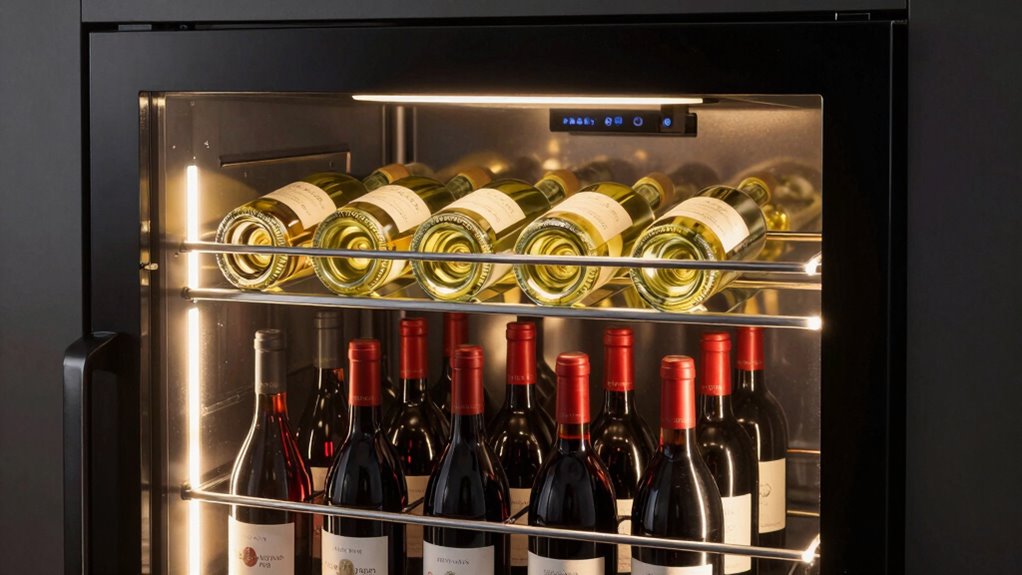
Storing reds and whites together can be convenient, but it raises questions about ideal temperatures and wine quality. If you mix them in the same zone, you might risk compromising their flavors or aging potential. Understanding the right temperature ranges helps you avoid these issues and keep your wines at their best.
Optimal Storage Temperatures
While it’s tempting to keep all your wines at a single temperature, reds and whites generally have different ideal storage ranges. Proper wine preservation depends on maintaining consistent temperatures tailored to each type. Reds are best stored around 55°F (13°C) to preserve flavor and aroma, while whites prefer slightly cooler conditions, between 45°F and 50°F (7°C-10°C). This ensures they stay at their prime serving temperature when ready to enjoy. Here’s a quick comparison:
| Wine Type | Storage Temperature | Serving Temperature |
|---|---|---|
| Red | 55°F (13°C) | 60-65°F (15-18°C) |
| White | 45-50°F (7-10°C) | 45-50°F (7-10°C) |
| Rosé | 50-55°F (10-13°C) | 50-55°F (10-13°C) |
| Sparkling | 45-50°F (7-10°C) | 45-50°F (7-10°C) |
| Dessert | 50-55°F (10-13°C) | 55-60°F (13-16°C) |
Storing wines at their prime temperatures ensures better flavor and longevity.
Wine Compatibility and Risks
Although it might seem convenient to keep all your wines at a single temperature, mixing reds and whites in the same zone can pose risks to their quality. Reds and whites thrive at different temperatures, affecting their aroma, flavor, and texture. Storing them together can compromise your wine pairing and wine tasting experience.
Imagine red wines becoming overly warm, losing their boldness, while whites turn too cold, dulling their crispness. This mismatch can lead to:
- Clashing flavors during wine tasting
- Loss of delicate white wine notes
- Red wine becoming flat or muted
- White wine losing invigorating qualities
- Difficulty achieving ideal wine pairing harmony
Keeping reds and whites separated ensures each wine reaches its full potential, preserving their unique characteristics for a perfect sip every time.
How Do Dual-Zone Wine Fridges Help Preserve Wine Quality?
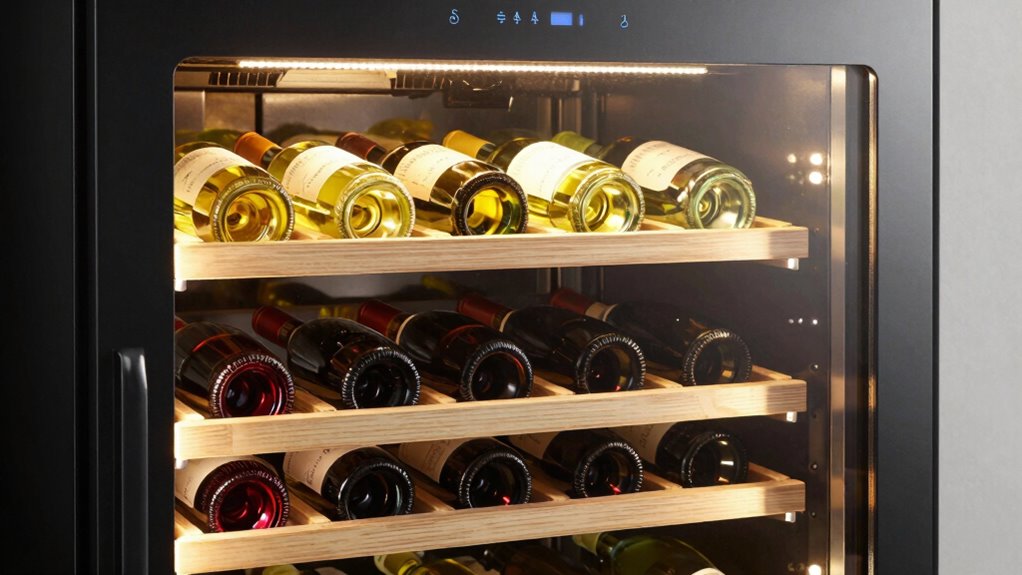
Dual-zone wine fridges are designed to maintain two separate temperature zones, allowing you to set ideal conditions for different types of wine simultaneously. By doing so, you guarantee each wine is stored at its optimal temperature, which enhances wine pairing and overall enjoyment. Maintaining the correct temperature in each zone helps preserve cork quality, preventing it from drying out or deteriorating, which could allow air to spoil your wine. This precise control reduces temperature fluctuations that can harm wine integrity over time. As a result, your reds and whites stay fresh and well-preserved, ready for drinking at their best. Dual zones make it easier to protect your wine collection’s quality, ensuring each bottle remains in pristine condition until you’re ready to savor it.
How to Set Your Wine Fridge for Aging vs. Drinking?

To optimize your wine fridge for either aging or immediate drinking, you need to set the temperature accordingly. For aging, aim for a cooler, consistent temperature around 55°F (13°C), which helps preserve corks and supports slow maturation. If you’re ready to enjoy your wine soon, set the fridge to a slightly warmer range, around 60-65°F (15-18°C), ideal for wine pairing and ready-to-drink bottles. Visualize your fridge filled with bottles resting peacefully, corks snugly sealed, ready for future or immediate enjoyment.
- Bottles laid horizontally, corks in contact with wine for cork preservation
- Temperature steady and consistent, avoiding fluctuations
- Labels facing outward for easy selection
- Wines stored away from light and vibrations
- Properly spaced to prevent shaking or jostling
Common Mistakes When Setting Your Wine Fridge Temperatures?
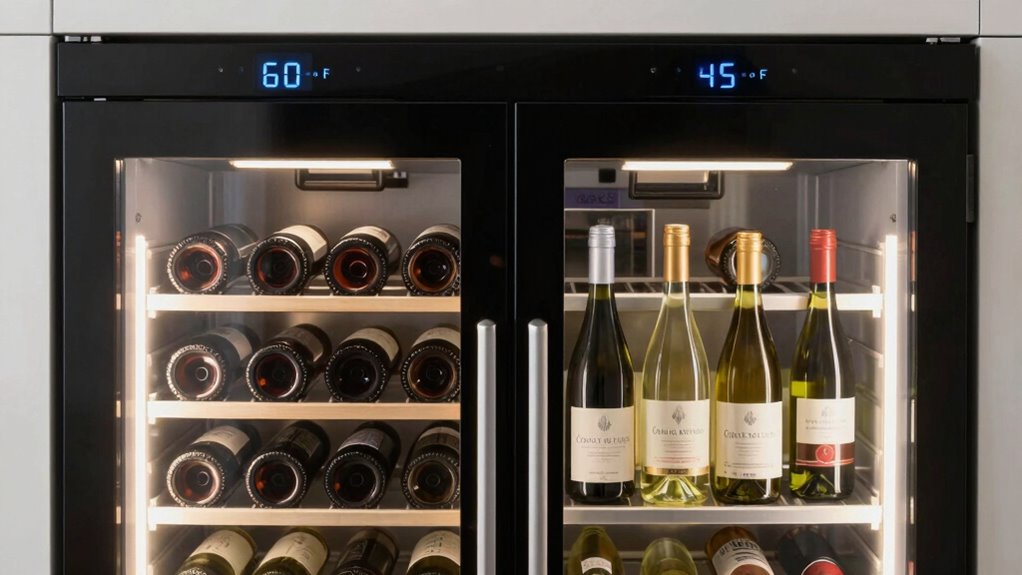
Setting your wine fridge temperature incorrectly can compromise both the wine’s quality and its longevity. One common mistake is setting the temperature too cold, which can dull flavors during wine tasting or hinder proper wine pairing. Conversely, too warm a setting risks premature aging or spoilage. Many overlook the importance of maintaining consistent temperatures, leading to fluctuations that harm delicate reds and whites.
| Mistake | Effect |
|---|---|
| Setting too cold | Loss of aroma and flavor, dulling wine tasting experience |
| Setting too warm | Accelerated aging, spoilage, and compromised wine quality |
| Ignoring temperature zones | Mismatched wines for their ideal serving conditions |
Avoid these errors to ensure your wines stay fresh, flavorful, and ready for every occasion.
How to Check If Your Wines Are Stored at the Correct Temperature?
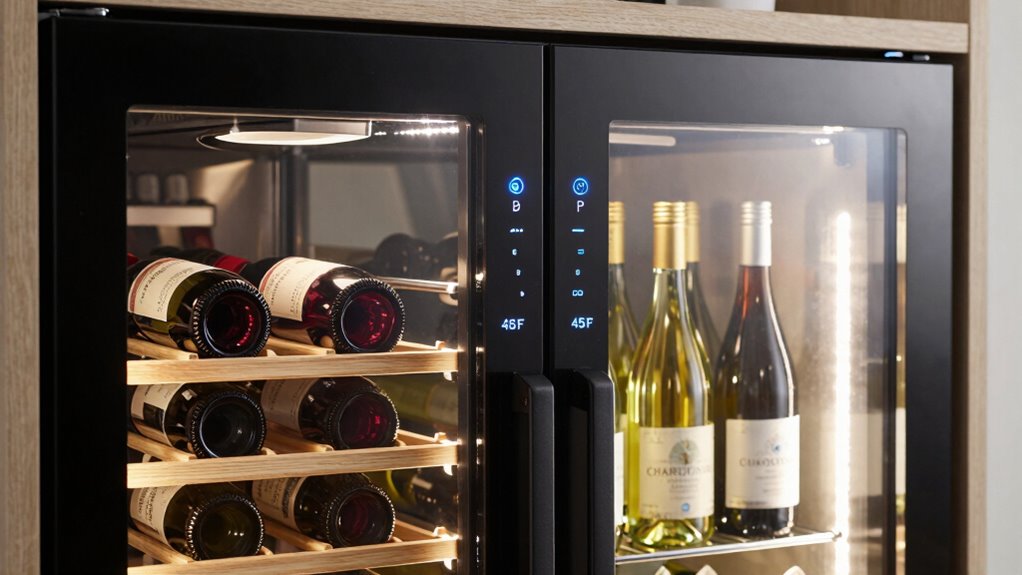
Checking if your wines are stored at the right temperature is essential to preserving their flavor and quality. To do this, use a reliable wine thermometer or digital probe to measure the fridge’s internal temperature. Place the device in different zones to ensure accuracy, especially if your fridge has multiple temperature settings. Look for signs like a consistent chill without excessive cold or warmth. Proper storage temperature directly influences your wine pairing and wine tasting experiences, ensuring each sip is at its peak. Imagine a wine cellar with perfectly chilled reds and whites, ready for your next gathering.
- A glass of red wine that feels just right on your palate
- Whites that are cool but not icy, enhancing crispness
- The aroma of wine releasing fully during tasting
- No sudden temperature fluctuations ruining the experience
- Your wine aging gracefully, maintaining flavor integrity
Troubleshooting Temperature Zone Problems in Your Wine Fridge?
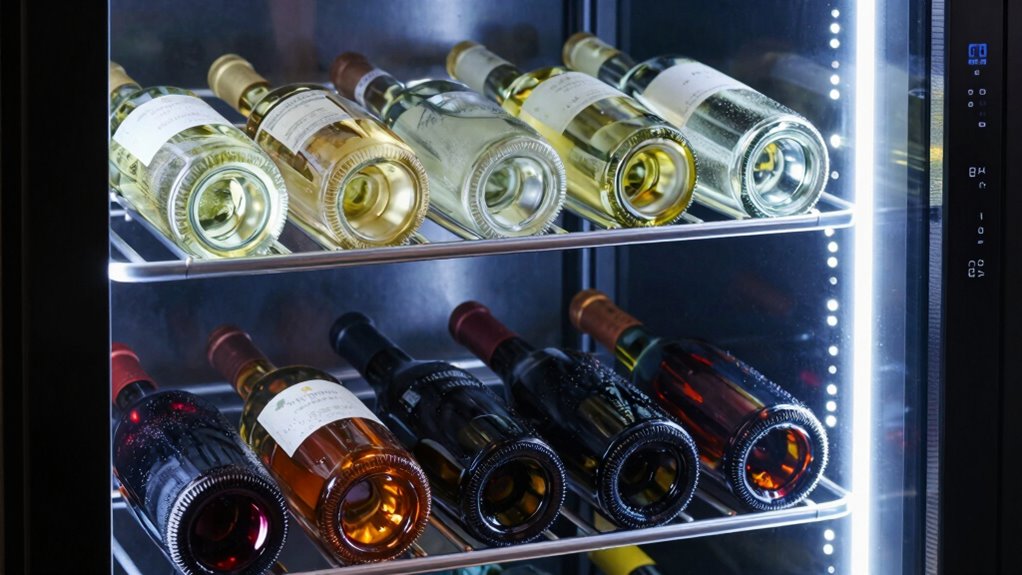
When your wine fridge isn’t maintaining consistent temperatures across its zones, it can compromise the quality and longevity of your wines. Temperature fluctuations may affect cork preservation, risking spoilage, or disrupt ideal wine pairing experiences. To troubleshoot, first check the thermostat settings to ensure they match recommended zones: red wines around 55°F and whites at 45°F. Also, verify the door seals; a loose seal causes temperature loss. Consider ambient room temperature and airflow around the fridge. Use this table to identify common issues:
| Issue | Cause | Solution |
|---|---|---|
| Uneven temperatures | Poor door seals | Replace seals |
| Fridge not cooling | Faulty thermostat | Adjust or replace thermostat |
| Temperature swings | Ventilation issues | Improve airflow |
| Cork drying out | Incorrect white zone temp | Adjust to proper white zone temp |
| Wines not aging well | Fluctuating temps | Maintain consistent zones |
Addressing these helps preserve corks and ensures perfect wine pairing every time.
Frequently Asked Questions
Can Temperature Zones Be Adjusted Over Time?
Yes, you can usually adjust temperature zones over time. Most wine fridges allow for temperature adjustment and zone customization, so you can tailor the settings to your evolving collection. Check your fridge’s controls to modify the temperature in specific zones as needed. This flexibility helps make sure your reds and whites stay perfectly preserved, regardless of how your wine preferences or storage needs change over time.
How Often Should I Calibrate My Wine Fridge Thermometer?
You should calibrate your wine fridge thermometer at least once every three to six months to ensure thermometer accuracy. Regular calibration helps maintain precise temperature control, which is essential for storing wine properly. If you notice temperature inconsistencies or the thermometer seems off, calibrate it more frequently. Using a calibration kit or comparing it with a trusted thermometer can help you keep your wine at the perfect temperature consistently.
What Are the Signs of Improper Temperature Storage?
You’ll notice improper temperature storage if your wine develops off-odors or a dull aroma, indicating it’s not aging properly. If the wine’s aroma seems muted or overly sharp, it might be too warm or too cold. Incorrect storage can hinder bottle aging, causing wines to spoil faster or lose their complexity. Always check your fridge’s temperature regularly to make sure your wine’s aroma stays vibrant and aging progresses as it should.
Do Different Wine Types Require Different Temperature Zones?
Sure, your wine collection isn’t a one-size-fits-all situation. Different wine types do demand different temperature zones for ideal wine storage and temperature control. Red wines thrive warmer, around 60-65°F, while whites prefer cooler, about 45-55°F. Ignoring these nuances is like serving red wine in a white wine glass—just wrong. So, yes, tailor your wine storage to each varietal’s needs for perfect taste and longevity.
How Does Ambient Room Temperature Affect Wine Fridge Zones?
Ambient room temperature affects your wine fridge zones by impacting climate control and temperature stability. If your room gets too warm or fluctuates often, it can cause your wine’s temperature to rise or drop unexpectedly. To keep your wine in perfect condition, make sure your fridge maintains consistent temperatures despite room temperature changes. Proper climate control helps preserve wine quality, so choose a spot with stable, moderate ambient temperatures for ideal results.
Conclusion
Getting your wine fridge temperatures right is key—whether you’re aging a fine Bordeaux or chilling a crisp Chardonnay. While perfect conditions preserve delicate flavors, setting the wrong zone can turn a treasured bottle into a disappointing sip. Think of your fridge as a delicate dance between heat and cold; balance is everything. Master this, and your wines will reward you with every glass, turning everyday drinking into a refined experience.