Your workspace colors play a big role in your focus and creativity. Bright hues like yellow or orange energize you and boost enthusiasm, making them great for brainstorming. Calm shades such as blue or soft green help reduce stress and improve concentration. Combining the right colors with thoughtful accessories and lighting creates an environment that motivates and enhances productivity. Keep exploring to discover how specific hues can transform your work environment even more effectively.
Key Takeaways
- Bright colors like yellow and orange stimulate energy and creativity, ideal for brainstorming and collaborative areas.
- Calming shades such as blue and soft green reduce stress and enhance focus during detailed or deep work tasks.
- Choosing vibrant hues or tranquil tones sets the overall mood, influencing motivation, productivity, and workday atmosphere.
- Proper lighting enhances the impact of wall colors, either amplifying energizing hues or softening calming shades for desired effects.
- Complementing wall colors with suitable desk accessories reinforces the workspace’s purpose, fostering focus and inspiring creativity.

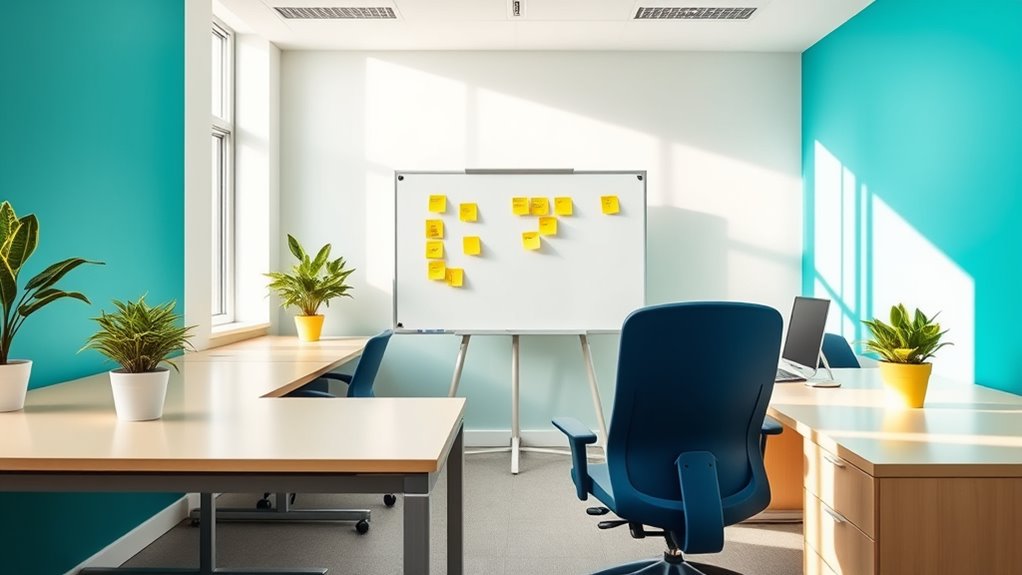
Color plays a powerful role in shaping your work environment and influencing your productivity, mood, and focus. The colors you choose for your office wall colors can have a significant impact on how you feel and perform throughout the day. Bright, energetic hues like yellow or orange can boost your enthusiasm and creativity, making them ideal for brainstorming sessions or areas where you need a burst of inspiration. On the other hand, calming shades like blue or soft green help reduce stress and improve concentration, perfect for tasks requiring deep focus. When selecting office wall colors, think about the atmosphere you want to create—are you aiming for a lively, stimulating space or a tranquil, focused one? Your choice will set the tone for your entire workday.
Choosing the right wall colors can boost creativity or promote focus in your workspace.
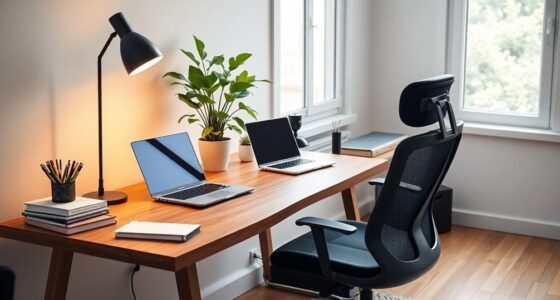
Alongside wall colors, your desk accessories play a *vital* role in reinforcing the environment you want to cultivate. For instance, adding plants or nature-inspired decor can enhance a calming green palette, creating a peaceful workspace that reduces anxiety. Conversely, accessories in vibrant colors like red or purple can energize a space, helping you stay alert and motivated. The key is to coordinate your desk accessories with your wall color to create a cohesive look that supports your goals, whether that’s boosting creativity or maintaining focus. Simple items like colorful notebooks, desk organizers, or even a stylish lamp can complement your overall color scheme and influence your mood positively.
It’s also worth considering how lighting interacts with your chosen colors. Natural light can amplify bright hues and make your workspace feel more inviting, while softer lighting can tone down intense colors and create a cozy atmosphere. When selecting desk accessories, opt for items that not only match your color scheme but also serve a practical purpose, reducing clutter and promoting organization. An organized space with thoughtfully chosen colors and accessories can help you stay motivated and efficient.
Additionally, understanding bike maintenance can inspire you to incorporate routines into your workspace, such as regular cleaning or organizing, to keep your environment fresh and functional. Ultimately, the colors you choose for your workspace, along with carefully selected desk accessories, craft an environment that fuels your productivity and creativity. By deliberately pairing office wall colors with accessories that support your work style, you create a space that feels right for you—whether that’s energetic and lively or calm and focused. Remember, your workspace is your personal zone, and customizing it through thoughtful color choices can make a real difference in how effectively you work each day.
Frequently Asked Questions
How Do Color Choices Affect Employee Mood and Productivity?
Color choices profoundly influence your employee mood and productivity through their psychological effects and color associations. Bright, energetic hues like yellow can boost enthusiasm, while calming shades like blue promote focus. Warm colors may stimulate social interaction, whereas cool tones help reduce stress. By selecting colors aligned with desired psychological effects, you create an environment that enhances mood, fosters creativity, and ultimately improves overall productivity in your workspace.
Can Color Psychology Influence Team Dynamics and Collaboration?
Imagine a vibrant workspace where harmonious colors boost team spirit and collaboration. By choosing the right hues, you can enhance team dynamics through color harmony, fostering a sense of unity. Incorporating these colors into your workspace branding creates an environment that encourages open communication and shared creativity. You influence how your team interacts, making color psychology a powerful tool to strengthen relationships and improve overall teamwork.
Are There Cultural Differences in Color Perception at Work?
Yes, there are cultural differences in color perception at work. You should consider cultural color symbolism and cross-cultural color preferences because they influence how people interpret and respond to colors. For example, white symbolizes purity in some cultures but mourning in others. By understanding these differences, you can select workspace hues that promote inclusivity, focus, and creativity across diverse teams, avoiding unintentional miscommunication or discomfort.
How Can Personalized Workspace Colors Boost Individual Motivation?
Imagine you’re back in a Victorian study, surrounded by your favorite hues. Personalizing your workspace with your preferred colors boosts motivation by creating a sense of comfort and ownership. Color personalization and workspace customization help you stay focused and inspired, making work feel less like a chore. When you choose colors that resonate with you, you naturally feel more energized, creative, and motivated to tackle tasks head-on.
What Are the Best Colors for Reducing Workplace Stress and Anxiety?
You should consider soft blues and greens for reducing workplace stress and anxiety. These colors are proven through color therapy to promote calmness and relaxation. Incorporate stress reduction techniques like calming color schemes into your workspace to create a tranquil environment. These hues help lower cortisol levels and ease tension, making it easier to focus. Using these colors intentionally can transform your workspace into a peaceful zone for better mental well-being.
Conclusion
By choosing the right colors for your workspace, you can boost focus and spark creativity. Some might think it’s just about aesthetics, but the truth is, hues influence your mood and productivity. So, don’t overlook the power of color—experiment with shades that energize or calm you. When you harness color psychology, you create an environment that supports your best work, proving that small details can make a big difference.