To design multifunctional workspaces that combine work, wellness, and leisure, focus on creating flexible zones tailored to different needs. Incorporate modular furniture, soundproof private areas, and collaborative spaces to foster teamwork and concentration. Add leisure zones with comfortable seating and wellness areas like gyms or quiet nooks to support well-being. Careful layout and adaptable features guarantee your space stays relevant and productive, making it easier to balance work and relaxation—keep exploring to see how these elements come together.
Key Takeaways
- Incorporate flexible furniture and adaptable layouts to seamlessly switch between work, wellness, and leisure activities.
- Design dedicated zones that balance collaborative, private, and relaxation spaces for diverse needs.
- Use sound-absorbing materials and partitions to ensure acoustic privacy across multifunctional areas.
- Integrate wellness amenities like quiet corners, leisure zones, and small gyms to promote employee well-being.
- Plan for future adaptability by creating versatile environments that evolve with changing team and organizational needs.
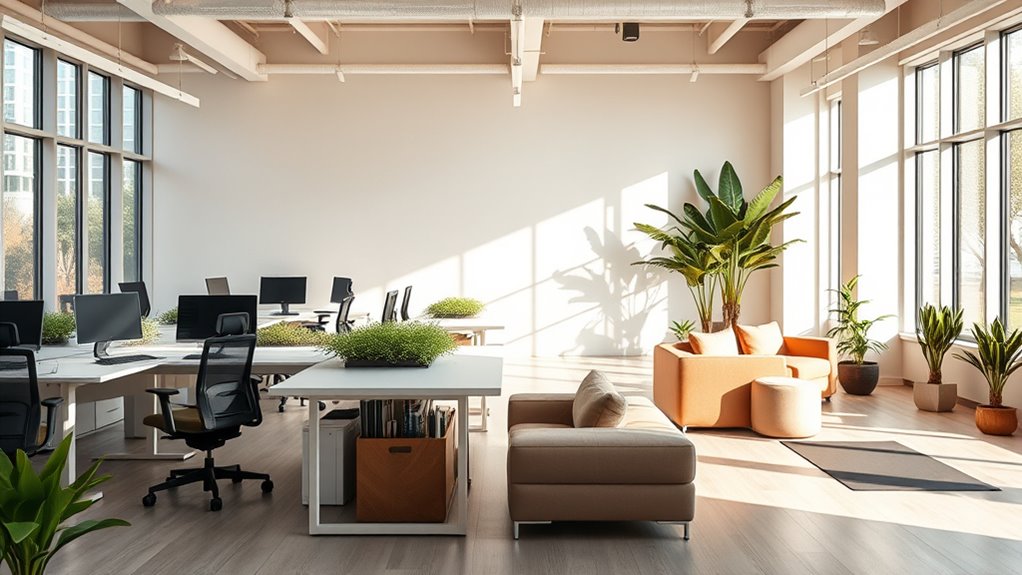
In today’s fast-paced world, designing multifunctional workspaces has become essential for boosting productivity and adapting to evolving needs. You need spaces that facilitate collaboration, encourage focus, and provide room for wellness and leisure—all within a single environment. To achieve this, you should incorporate dedicated collaborative zones that foster teamwork and idea-sharing. These areas should be flexible, equipped with movable furniture and writable surfaces, allowing teams to brainstorm freely and adapt the space to different projects. When planning collaborative zones, consider their placement carefully to ensure they encourage interaction without disrupting other work areas. Creating a balanced flow between these zones and individual workspaces is key to maintaining efficiency throughout the day.
Design flexible collaborative zones that foster teamwork and integrate seamlessly with focused work areas for optimal efficiency.
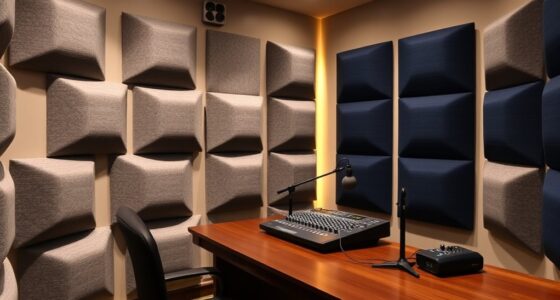
Equally important is addressing acoustic privacy. As you design multifunctional workspaces, you must think about how to minimize noise disruptions and provide quiet zones for focused work or relaxation. Acoustic privacy can be achieved through strategic use of sound-absorbing materials like acoustic panels, carpets, and ceiling tiles. Incorporate partitions or semi-enclosed booths where individuals can retreat for concentration without feeling isolated from the rest of the team. These private spaces are crucial for managing sensitive conversations or deep work sessions, ensuring that distractions are kept at bay. By controlling sound levels across the workspace, you help create an environment where everyone can perform at their best, whether they’re collaborating, focusing, or unwinding. Utilizing sound design techniques can further enhance these spaces by optimizing acoustic quality and clarity.
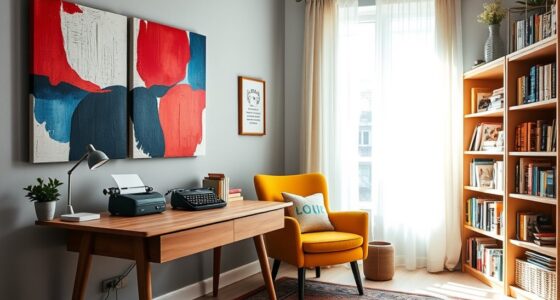
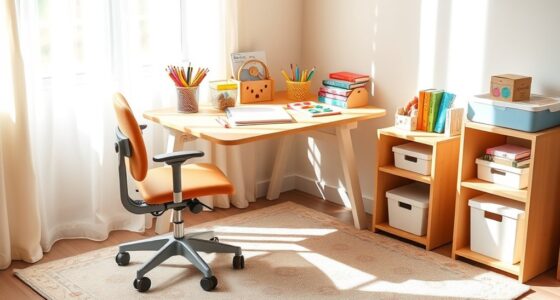
Flexibility is the cornerstone of multifunctional workspaces, so you should design with versatility in mind. Use modular furniture that can be easily reconfigured for different activities—be it a quick team huddle, a solo brainstorming session, or a wellness break. Integrate natural light and greenery to promote well-being, and include leisure zones where employees can relax and recharge. These leisure areas might feature comfortable seating, quiet nooks, or even small gyms, blending work with wellness seamlessly. When you combine thoughtful layout with acoustic privacy measures and adaptable furniture, you create a dynamic environment that supports all aspects of modern work life.
Ultimately, your goal is to craft a space that adapts to your team’s needs and fosters a balanced work experience. By prioritizing collaborative zones, ensuring acoustic privacy, and designing for versatility, you build a multifunctional workspace that boosts productivity, enhances well-being, and encourages a healthy work-life integration. This approach not only meets current demands but also future-proofs your environment, allowing it to evolve alongside your team’s changing needs.
Frequently Asked Questions
How Can Technology Enhance Multifunctional Workspace Experiences?
Technology enhances your multifunctional workspace by integrating smart furniture that adapts to your needs, providing comfort and flexibility. Virtual collaboration tools enable seamless communication, making remote and in-person connections effortless. You can easily switch between work, wellness, and leisure activities, creating an engaging environment. These innovations foster productivity and well-being, ensuring your workspace is versatile and responsive. Embracing such technology transforms your space into an efficient, enjoyable, and health-conscious environment.
What Are the Best Practices for Integrating Wellness Features?
Think of wellness features as the heart of your workspace. To integrate them effectively, embrace biophilic design by adding natural elements like plants and sunlight, creating a calming environment. Pair this with ergonomic solutions to support comfort and reduce strain. Prioritize flexibility, encouraging employees to move and relax. Regularly gather feedback to refine these features, ensuring your space nurtures both productivity and well-being seamlessly.
How to Balance Aesthetics With Functionality in Design?
To balance aesthetics with functionality, you should focus on creating an artistic ambiance that inspires productivity and comfort. Use color coordination to unify the space visually, making it appealing yet practical. Incorporate functional furniture with sleek designs that blend seamlessly into the overall aesthetic. Prioritize layout and lighting to enhance usability without sacrificing style, ensuring your space feels inviting while supporting your work, wellness, and leisure needs.
What Are Cost-Effective Strategies for Multifunctional Spaces?
You can maximize your space utilization by choosing versatile furniture that serves multiple purposes, like fold-out desks or modular seating. Focus on budget planning to prioritize essential features, and reuse existing elements to save costs. Incorporate flexible designs that easily adapt to different activities, and consider DIY solutions for decor and organization. These strategies help create a multifunctional space without overspending, making the most of your available resources.
How to Adapt Designs for Diverse User Needs?
To adapt designs for diverse user needs, you should incorporate ergonomic layouts that support different body types and preferences, ensuring comfort for all users. Additionally, use flexible lighting solutions like adjustable fixtures and natural light integration, which cater to various tasks and moods. By combining these elements, you create a versatile environment that promotes productivity, wellness, and leisure, meeting the unique needs of every individual who uses the space.
Conclusion
As you craft your workspace, remember it’s more than just a place to work—it’s your sanctuary. Like the sacred groves of ancient times, your space should nurture your mind, body, and spirit. By blending work, wellness, and leisure, you create a haven where productivity and relaxation coexist. Embrace this holistic approach, and watch your environment transform into a modern-day temple of balance, empowering you to thrive both professionally and personally.