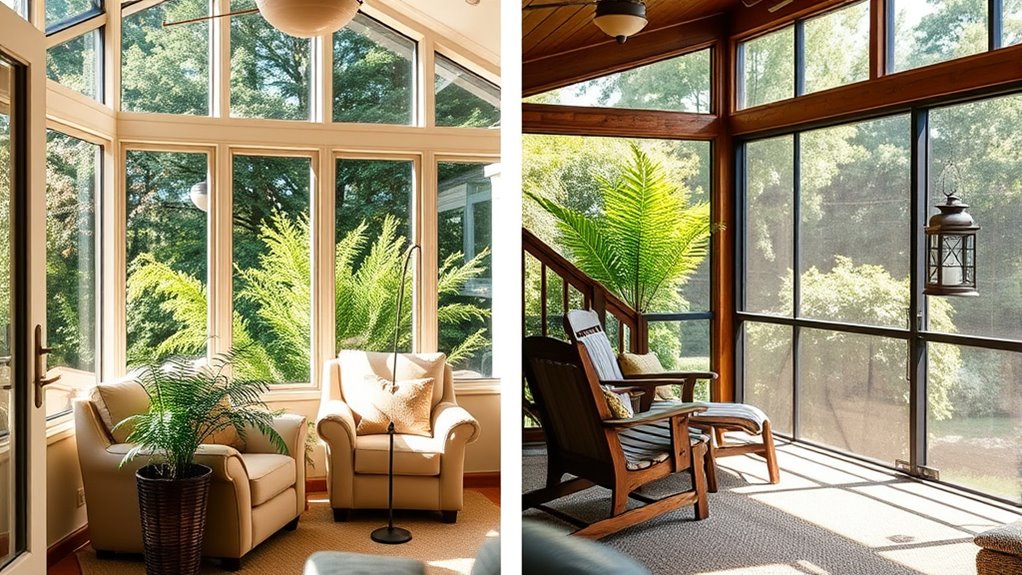

Choosing between a sunroom and a screened porch depends on your climate, style, and how you want to use the space. Sunrooms are ideal if you want an all-weather, bright indoor area with lots of glass and possible climate control. Screened porches work well for warm months, offering bug-free outdoor enjoyment without heavy insulation. To decide which fits your needs best, consider your home’s design and seasonal preferences—more details lie ahead.

Get furniture and decor delivered free — and shop member deals
- Fast, free delivery on millions of items
- Access to Prime Big Deal Days deals on October 6–7
- Prime Video, Amazon Music and more included
Key Takeaways
- Sunrooms provide year-round comfort with glass walls and climate control options, while screened porches are best for warm, bug-free outdoor use.
- Choose a sunroom for versatile, customizable spaces that enhance home value, or opt for a screened porch for casual, seasonal outdoor enjoyment.
- Sunrooms are more suitable in colder or variable climates, offering insulation and weather protection, unlike screened porches.
- Screened porches are typically more affordable, easier to build, and feature rustic or outdoor-style designs.
- Consider your climate, intended use, and aesthetic preferences to determine whether a sunroom or screened porch best fits your home.

When deciding between a sunroom and a screened porch, understanding their differences is essential to making the right choice for your home. Sunrooms are typically enclosed with glass walls and roofing, allowing you to enjoy natural sunlight year-round. In contrast, screened porches are open-air spaces with mesh screens that keep out insects but do little to block the weather. Your decision hinges on how you plan to use the space and the design options that best suit your lifestyle.
Choosing between a sunroom and screened porch depends on your climate, style, and how you want to use the space.
A key factor to consider is seasonal use. Sunrooms are versatile, providing a comfortable environment during all seasons, especially if you add heating or cooling systems. This means you can relax in a bright, cozy space during winter or on chilly evenings without sacrificing sunlight or outdoor views. Screened porches, however, excel during warmer months, offering a shaded, breezy area to enjoy outdoor living without the nuisance of bugs. But they aren’t well-suited for colder weather unless you add special features like portable heaters or retractable enclosures.
Design options also play a major role in your decision. Sunrooms offer a wide range of styles—from traditional to modern—because they can be customized with various window types, roofing materials, and interior finishes. This flexibility allows you to create a seamless extension of your home’s existing aesthetic. You can even incorporate skylights or ceiling fans for added comfort and style. Customization options in sunrooms make them highly adaptable to different home designs, further enhancing their appeal. Screened porches tend to have a more casual, outdoor feel, often blending rustic or porch-style architecture. They typically use simpler materials and are easier to build, which can make them a more cost-effective choice. Additionally, their open design limits options for insulation and climate control, making them less adaptable for year-round use.
If your goal is to maximize sunlight and create an indoor-outdoor living space, a sunroom might be the better fit. It offers more design options for customization, and its year-round usability makes it a versatile addition. Furthermore, building codes and regulations may influence your decision depending on the structure you choose. Conversely, if you want a relaxing outdoor area mainly for warmer months with minimal maintenance, a screened porch might suit you better. It provides a breezy, insect-free environment that enhances outdoor enjoyment without the need for extensive construction or climate control systems.
Another important consideration is climate adaptability, as sunrooms are more suitable for regions with variable weather conditions, while screened porches thrive in warmer, bug-prone areas. Properly designing your outdoor space can also improve energy efficiency by reducing indoor cooling costs during summer months. Ultimately, your choice depends on how you envision using the space, your climate, and your home’s style. Both options have their benefits, but understanding seasonal use and design flexibility helps you pick the perfect addition to enhance your home’s livability.
As an affiliate, we earn on qualifying purchases.
Frequently Asked Questions
Which Option Adds More Value to My Home?
When considering which adds more value to your home, think about the cost impact and resale value. Generally, a sunroom tends to boost your home’s value more because it offers year-round comfort and increased living space. However, a screened porch can be a cost-effective upgrade that enhances outdoor enjoyment. Both options can improve resale value, but a sunroom typically provides a higher return on investment.
How Do Maintenance Costs Compare Between Sunrooms and Screened Porches?
Back in the day, maintenance costs were simpler. Today, the cost comparison between sunrooms and screened porches shows that sunrooms generally have higher upkeep expenses due to their more complex structures and better insulation. You’ll likely spend more on sealing, cleaning, and replacing windows in a sunroom. Screened porches have fewer materials to maintain, making their upkeep expenses lower and more manageable for you over time.
Can I Customize the Design of a Sunroom or Screened Porch?
You can definitely customize the design of both sunrooms and screened porches. With sunrooms, you get greater design flexibility, allowing you to choose window styles, roofing, and finishes to match your aesthetic options. Screened porches also offer customization, mainly in layout and screening materials. Overall, both options allow you to tailor the space to your style and needs, ensuring your outdoor living area complements your home perfectly.
Are There Specific Permits Required for Installation?
You’ll need to check local building codes and zoning regulations before installation, as permits are often required. These rules guarantee safety and compliance for your project. Contact your city or county building department to find out specific requirements, including necessary permits, inspections, or restrictions. Doing this beforehand helps avoid delays or fines, making sure your sunroom or screened porch is built legally and safely according to local standards.
Which Option Offers Better Energy Efficiency?
While both options enhance your space, a sunroom generally offers better energy efficiency. You benefit from superior insulation quality, keeping warmth in during winter and cool air in summer. Additionally, sunrooms often feature advanced ventilation options, reducing energy costs. Screened porches, with less insulation and limited ventilation, tend to be less efficient. Your choice depends on how much energy savings matter to you, with sunrooms providing the more efficient solution.
Conclusion
Choosing between a sunroom and a screened porch depends on your lifestyle and needs. Imagine a space where you can enjoy sunlight year-round or keep insects out while relaxing outside. The truth is, both options offer unique benefits, but only one will truly match your home’s vibe. Think about how you use your outdoor space and what feels most comfortable. Ultimately, trusting your instincts will help you create a perfect retreat that feels just right.
Fall Picks
fall essentials
As an affiliate, we earn on qualifying purchases.