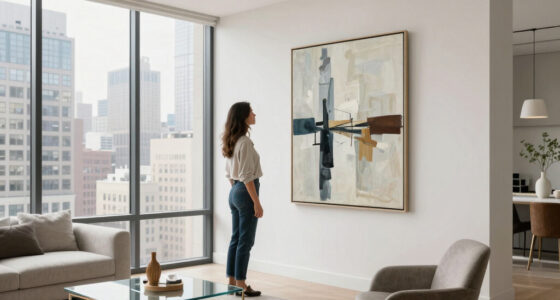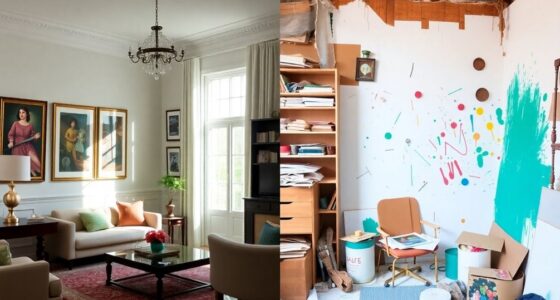
When designers say a room needs ‘tension,’ they’re talking about creating a visual balance of contrast and harmony that energizes the space. This involves using elements like bold colors, contrasting furniture arrangements, or striking artwork to keep your eye moving and your mind engaged. The goal is to make the space lively and interesting without feeling chaotic or dull. If you want to know how to achieve this perfect balance, keep exploring the details.
Key Takeaways
- Tension in design creates visual interest through deliberate contrast or opposition among elements.
- It adds energy and liveliness, preventing a space from feeling static or dull.
- Achieving tension involves contrasting colors, textures, or furniture arrangements.
- Proper tension balances excitement without overwhelming the space.
- It encourages eye movement and engagement, making the room feel dynamic.
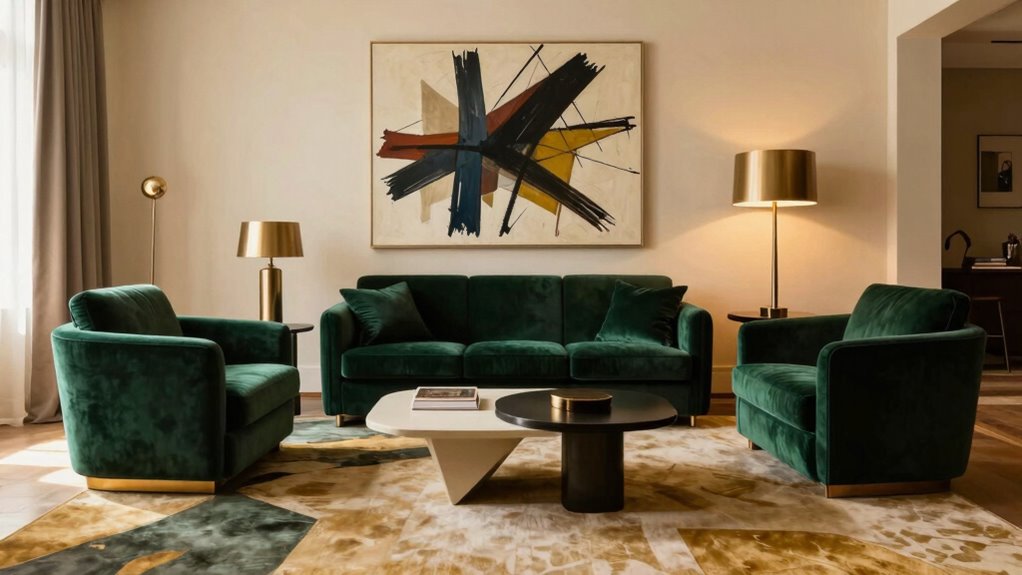
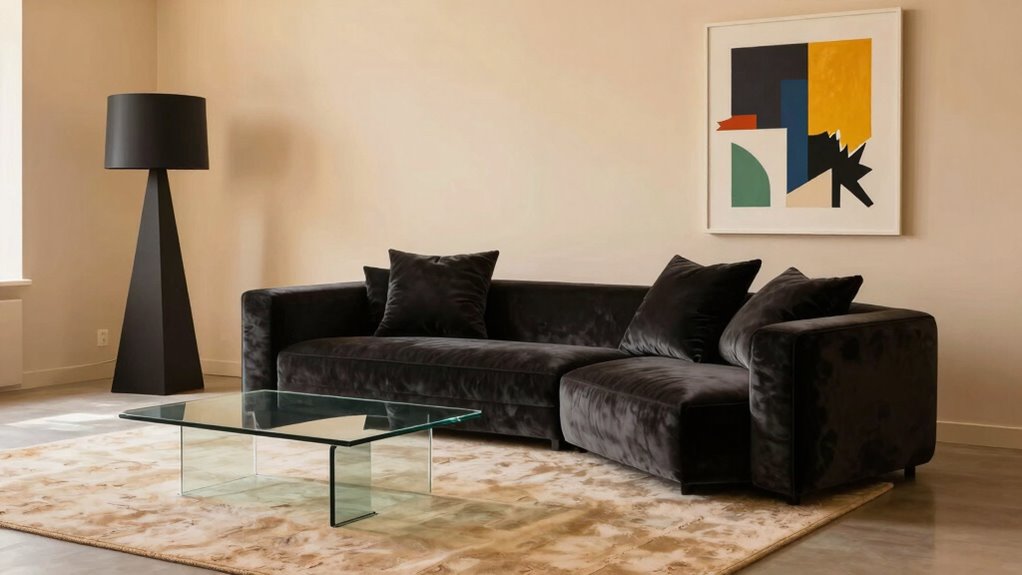
When designers talk about “tension” in a room, they’re referring to the deliberate balance or contrast that creates visual interest and energy within a space. It’s about making the room feel dynamic, rather than static or predictable. You might not notice it right away, but tension emerges from how elements work together—sometimes in opposition—to keep your eye moving and your mind engaged. This deliberate balance is often achieved through contrasting elements like color and furniture arrangement, which work together to create a sense of vitality. Creating visual interest can be as simple as pairing bold artwork with subtle decor to enhance the room’s overall energy. Color contrast is one of the most straightforward ways to build tension. When you choose colors that are opposite or vastly different on the color wheel—like deep navy paired with crisp white or vibrant orange with muted gray—you generate visual interest. These contrasts don’t just make a space pop; they add a layer of sophistication and spark energy. You might use a bold, contrasting accent wall to anchor the room or incorporate vivid throw pillows against a neutral sofa. The key is to strike a balance so the contrast energizes without overwhelming. Too much contrast can feel chaotic, while too little can make a room seem dull. When done right, the contrast invites your gaze to move naturally from one element to the next, creating a lively flow.
As an affiliate, we earn on qualifying purchases.
Frequently Asked Questions
How Do I Create Tension Without Making a Space Feel Chaotic?
To create tension without chaos, focus on balancing harmony with focal points that draw attention. Use contrasting textures, colors, or shapes strategically, ensuring they complement the overall design. Incorporate unexpected elements in a subtle way, like a bold art piece or unique furniture, to add interest. Keep the rest of the space calm and cohesive, so the tension enhances rather than overwhelms, creating a dynamic yet harmonious environment.
Can Tension Be Achieved With Color Choices Alone?
Research shows that rooms with high color contrast can increase visual interest by up to 40%. Yes, tension can be achieved with color choices alone. By playing with contrasting hues, you create visual tension that draws the eye. Just make certain you maintain visual harmony so the space doesn’t feel chaotic. Skillful use of contrasting colors adds depth and excitement, making your room feel dynamic without overwhelming.
What Are Common Mistakes When Trying to Add Tension?
A common mistake is disrupting balance and harmony by overloading a space with contrasting elements, making it chaotic rather than intriguing. You might also ignore focal points, causing tension to feel forced or unfocused. Instead, aim to create subtle contrasts that complement your main features. By maintaining balanced tension around focal points, you guarantee the room feels dynamic yet cohesive, engaging without feeling overwhelming or disjointed.
How Does Furniture Placement Influence Tension in a Room?
Furniture placement influences tension by disrupting or enhancing balance and harmony in a room. You can create visual interest by positioning pieces asymmetrically or off-center, which draws attention and adds dynamic energy. Strategic placement around focal points, like a fireplace or artwork, emphasizes those areas while maintaining overall cohesion. Properly arranged furniture guides the eye, creating a sense of movement and intrigue that keeps the space engaging without feeling chaotic.
Is Tension Suitable for All Interior Design Styles?
Tension isn’t suitable for all interior design styles. It creates contrast and subtlety that work well in modern and eclectic spaces, adding visual interest and energy. However, if you prefer a calm, balanced harmony like in traditional or minimalist styles, too much tension can disrupt that serenity. Use tension carefully to enhance specific elements, but always consider whether it complements your overall aesthetic and desired mood.
Conclusion
When a room has tension, it’s like a symphony hitting just the right note—an electric pulse that keeps your eye moving and your mind engaged. It’s the secret ingredient that transforms a space from ordinary to extraordinary, like a dance between calm and chaos. Embrace tension, and you’ll create a room that’s not just seen, but felt—a living, breathing work of art that invites you to explore every corner.