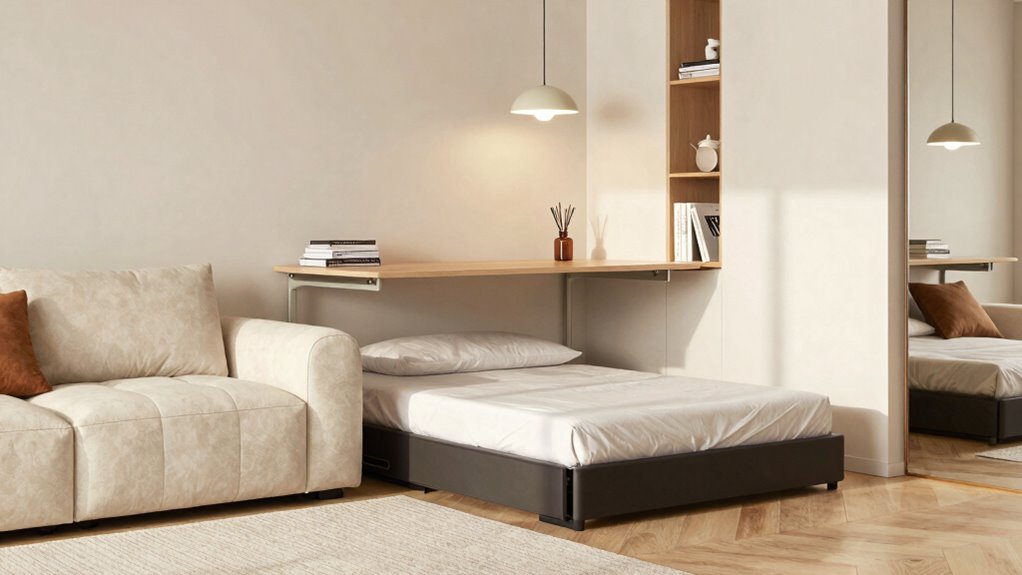
To prevent your multifunctional room from feeling like a compromise, focus on creating a cohesive style that adapts to different uses. Use layered lighting, smart storage, and multi-purpose furniture to keep the space organized and flexible. Stick to a unified aesthetic with textures and personal touches for warmth. Balance decor, lighting, and storage carefully to guarantee harmony. With thoughtful planning, your room can meet multiple needs without sacrificing style—keep exploring to learn how to perfect this balance.

Get furniture and decor delivered free with Prime
- Fast, free delivery on millions of items
- Prime Video, Amazon Music and more included
- Member-only deals all year
Key Takeaways
- Choose a cohesive decorating style that adapts to multiple functions without clashing.
- Incorporate versatile furniture and smart storage solutions to maximize space and organization.
- Use layered lighting to create ambiance and define different zones within the room.
- Add personal touches and textures to create warmth and prevent the space from feeling impersonal.
- Plan the layout carefully to ensure smooth transitions and that each function feels intentional and balanced.
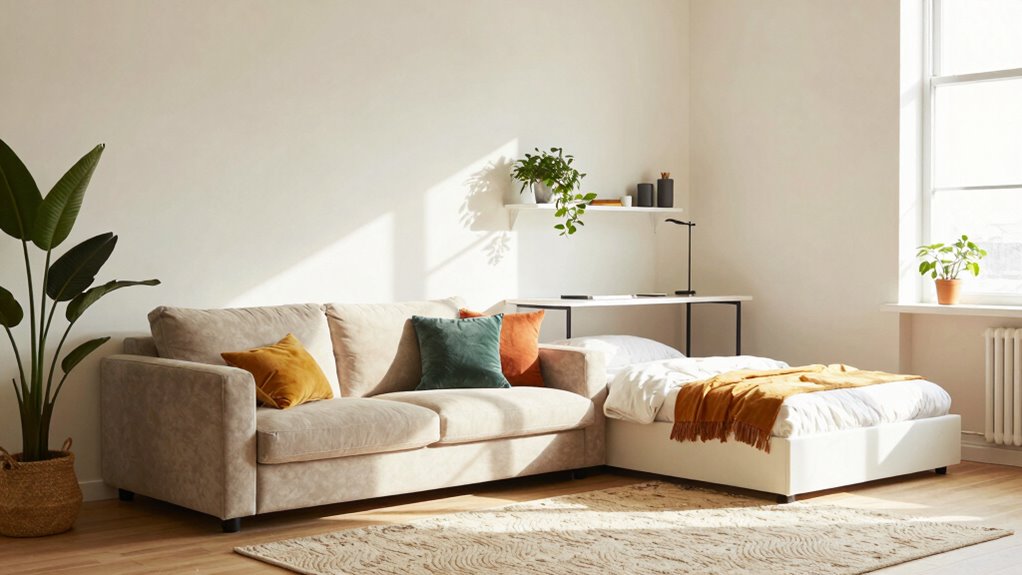
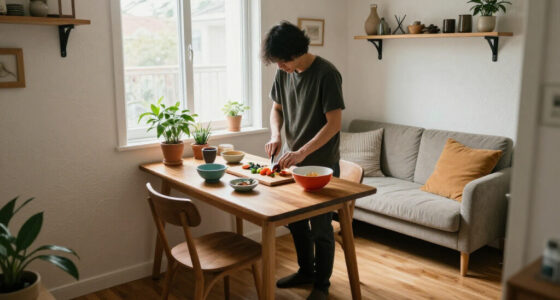
Creating a multifunctional room can be a balancing act, but it doesn’t have to feel like a compromise. When you’re designing a space that serves multiple purposes—say, a home office, a guest bedroom, and a cozy reading nook—you want it to feel cohesive and intentional, not cluttered or disjointed. One of the best ways to achieve this is by carefully choosing your decorating styles. Instead of mixing contrasting themes that clash, opt for a unified aesthetic that can adapt to different functions. For example, a modern minimalist approach with clean lines and neutral tones can make the space feel open and versatile, while adding personal touches like textured throws or artwork helps create warmth. Alternatively, blending Scandinavian simplicity with rustic elements can give your room a cozy, inviting vibe that works whether you’re working or relaxing.
Lighting solutions play an essential role in preventing your multifunctional room from feeling like a compromise. Good lighting defines zones within the space and sets the mood for each activity. Consider layering different types of lighting—ambient, task, and accent—to guarantee every corner is well-lit and functional. Wall-mounted sconces or adjustable pendant lights can provide task lighting for work areas, while soft, warm lamps create inviting spots for reading or unwinding. Using dimmable fixtures allows you to easily change the ambiance, making the room adaptable to your needs throughout the day. Incorporate natural light whenever possible by choosing window treatments that let in sunlight but still offer privacy. Mirrors can also amplify daylight, making the room feel larger and more open.
To keep the room feeling intentional rather than cluttered, invest in smart storage solutions that blend seamlessly with your decorating style. Built-in shelves, multi-purpose furniture, and concealed storage keep your space tidy and visually appealing. This approach prevents your room from feeling like a compromise by ensuring each function has its designated area without sacrificing style. When all these elements—decorating styles, lighting solutions, and storage—work together harmoniously, your multifunctional room becomes more than the sum of its parts. It’s a space where you can smoothly shift from work to relaxation without feeling like you’re settling for less. Instead, you create a versatile environment that reflects your personality and meets all your needs with elegance and purpose.
multi-purpose furniture for small rooms
As an affiliate, we earn on qualifying purchases.
As an affiliate, we earn on qualifying purchases.
Frequently Asked Questions
How Do I Choose the Best Furniture for Multiple Functions?
Choose versatile furniture that can serve multiple purposes, like a sofa bed or a fold-out table. Think about furniture arrangement to maximize space and maintain style cohesion, ensuring pieces complement each other in color and design. Opt for storage solutions that blend seamlessly into your decor. This way, your multifunctional room feels intentional and stylish, not like a compromise, providing flexibility without sacrificing aesthetic appeal.
What Colors Work Best in a Multifunctional Room?
You should opt for colors based on color psychology that promote flexibility and calm, like soft neutrals or muted tones. A neutral palette works best because it creates a versatile backdrop, allowing you to easily switch between different functions without feeling overwhelmed. Incorporate subtle accents or bold accessories to add personality, but stick to calming hues to keep the space balanced, functional, and visually cohesive.
How Can I Maximize Storage Without Cluttering the Space?
To maximize storage without cluttering your space, invest in smart storage solutions like multi-purpose furniture, wall-mounted shelves, and hidden compartments. Keep clutter control in mind by regularly sorting and donating items you no longer need. Use bins and baskets to organize smaller items, and prioritize vertical storage to free up floor space. These strategies help you maintain a tidy, functional room without sacrificing style or comfort.
What Lighting Options Enhance a Multifunctional Room?
Imagine your room as a living painting, where lighting breathes life into every corner. Use layered ambient lighting to cast a warm glow, creating a cozy, inviting atmosphere. Complement this with task lighting—like sleek desk lamps or under-cabinet lights—to focus on specific areas. Combining these options lets your space transform seamlessly from work zone to relaxation haven, ensuring each function shines without feeling forced or cluttered.
How Do I Create Separate Zones Without Physical Partitions?
You can create separate zones using flexible dividers, like open shelving or curtains, that don’t physically block the space but define areas. Incorporate visual cues such as different rugs, lighting, or wall art to signal distinct zones. By strategically arranging furniture and using these cues, you’ll establish clear boundaries without sacrificing the room’s open feel, making it functional and inviting for multiple activities.
Conclusion
By thoughtfully designing your multifunctional room, you create a space that’s both versatile and inviting. Instead of feeling like a compromise, it becomes a sanctuary where work, relaxation, and creativity coexist seamlessly. The trick is balancing form and function, blending style with practicality. When you make intentional choices, your room transforms from a patchwork of purposes into a harmonious retreat—proof that versatility doesn’t mean sacrificing comfort or aesthetics.
Halloween Picks
halloween
As an affiliate, we earn on qualifying purchases.