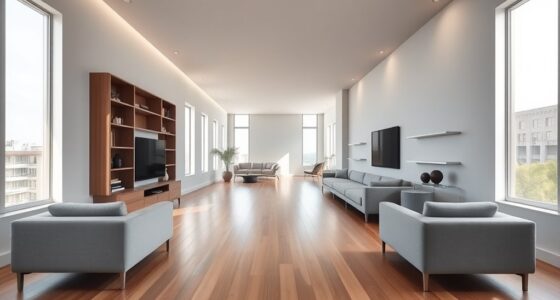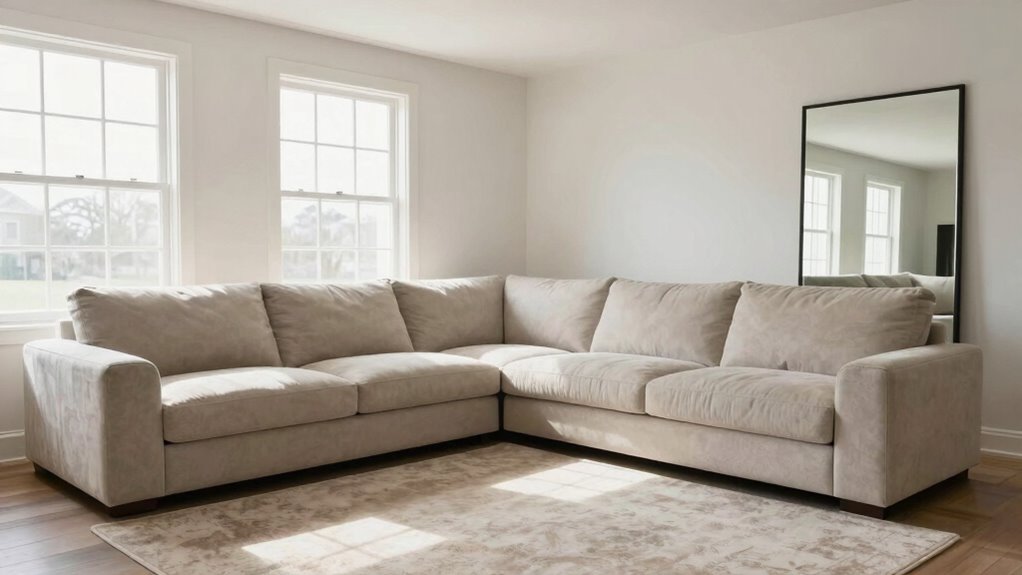
To make a small room feel bigger, position your sectional against walls or in a corner to define zones and create natural pathways. Pick a compact, streamlined shape and avoid oversized pieces that clutter the space. Use light colors, mirrors, and layered lighting to enhance openness visually. Carefully arrange furniture to highlight architectural features and maintain clear walkways. Keep decor minimal and strategic. If you’re enthusiastic to learn more about mastering this clever layout trick, keep exploring this guide.
Key Takeaways
- Position the sectional against walls or in corners to define zones and maximize floor space.
- Use light colors and strategic placement to create an open, airy atmosphere that visually expands the room.
- Incorporate mirrors or reflective surfaces to bounce light and add depth to the space.
- Choose modular or compact sectional designs to fit the room proportionally without overwhelming it.
- Arrange furniture to maintain clear pathways and highlight architectural features, enhancing perceived spaciousness.
How to Make Small Rooms Feel Spacious With a Simple Sectional Trick
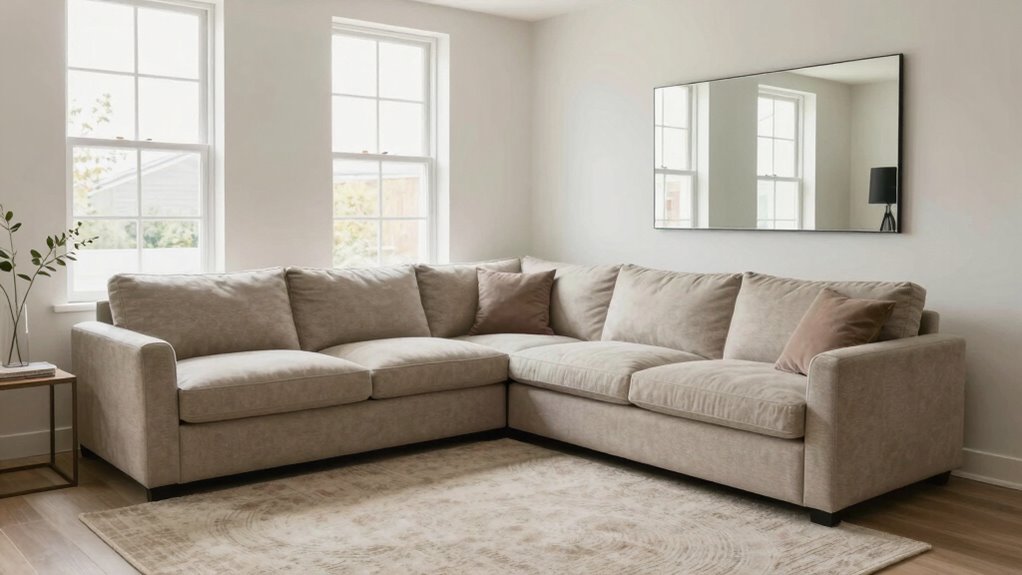
Even in small rooms, you can create a sense of openness by strategically placing a sectional sofa. Opt for light color schemes like soft neutrals or pastels to brighten the space and make it feel larger. Incorporate decorative accents, such as mirrors or sleek lighting, to reflect light and add depth. Keep the area around the sofa uncluttered, choosing compact or multi-functional furniture to maximize space. Avoid heavy, dark-colored furniture that can make the room feel cramped. Instead, focus on clean lines and cohesive color palettes that unify the space. Small decorative accents, like throw pillows or art, add personality without overwhelming the room. Additionally, furniture arrangement plays a crucial role in enhancing the perceived size of a room. A well-planned layout can also optimize space and improve overall comfort. Paying attention to lighting techniques can further boost the room’s spacious feel. Using visual tricks, such as strategic placement of furniture and accessories, can significantly enhance the feeling of openness. Incorporating proper scale in your furniture choices ensures the space remains balanced and inviting. This simple sectional trick enhances the feeling of spaciousness and creates a welcoming, airy atmosphere.
The Key Principles for Maximizing Space With a Sectional Sofa
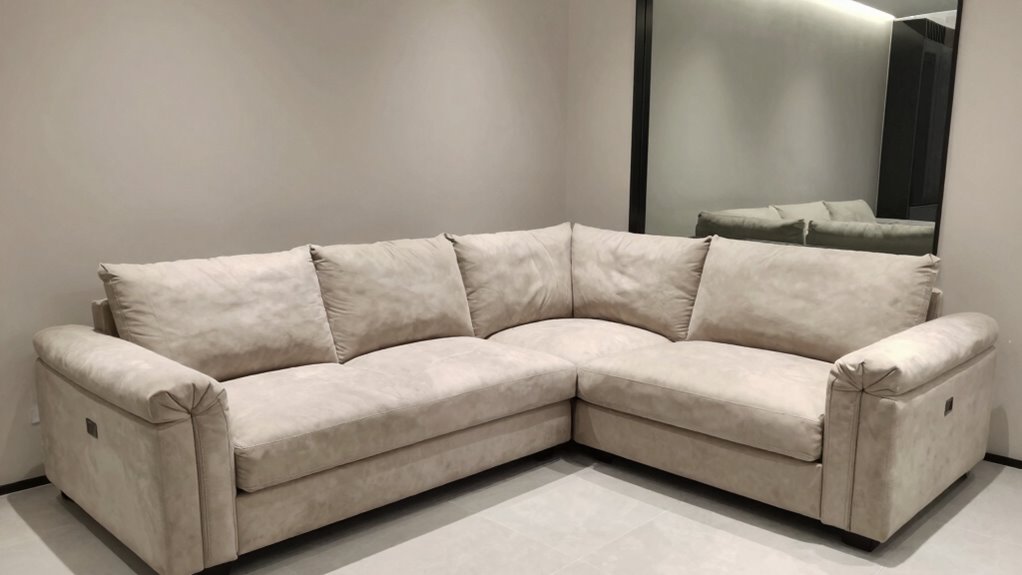
To maximize space with a sectional sofa, you need to focus on ideal placement strategies that make the most of your room’s layout. Choosing the right size is equally important; a too-large sectional can overwhelm, while a too-small one might feel out of place. By balancing these principles, you can create a functional and inviting small-room setup. Additionally, incorporating multifunctional features into your furniture can further enhance space efficiency and versatility. For example, selecting a modular sectional allows you to customize your layout as needed, making the most of limited space. Using smart furniture solutions can also optimize storage and improve organization in tight spaces. Employing space-saving design techniques can help you make the most of every square inch, ensuring your small room feels open and comfortable. Utilizing foam rolling techniques can also contribute to your overall recovery and well-being, helping you stay comfortable and flexible in your living space.
Optimal Placement Strategies
Maximizing space with a sectional sofa starts with strategic placement. Position your sofa to define zones without cluttering the room, ideally anchoring it against a wall or in a corner. This opens up pathways and makes the space feel larger. Pay attention to color coordination; choosing a sectional in a neutral or light hue can help it blend seamlessly, creating an airy vibe. Incorporate texture mixing by adding cushions or throws with different fabrics—like soft knits or smooth linens—to add visual interest without overwhelming the space. Keep furniture placement balanced, ensuring the sectional doesn’t dominate the room. Use placement to highlight architectural features or views, making the room feel more expansive and inviting. Proper positioning maximizes functionality while enhancing your room’s perceived size. Additionally, understanding space-enhancing design principles can guide you in making the most of your layout choices. Being mindful of visual flow can also help to create a more open and spacious atmosphere. Moreover, considering furniture arrangement can further optimize your room’s openness and functionality. Incorporating these spatial strategies can significantly improve the overall perception of your space. Being aware of color theory for water/tile can also influence the visual harmony of your design, further enhancing the sense of openness.
Choosing the Right Size
Choosing the right size for your sectional sofa is essential to making the most of your small room. Start by measuring your room dimensions carefully to understand the available space. Consider furniture scale—select a sectional that fits comfortably without overwhelming the area. A too-large sofa can make the room feel cramped, while a too-small one may seem lost. Look for a sectional that complements your space, providing enough seating without sacrificing flow or access. Think about the layout and how much walking space you need around the furniture. Selecting a size that balances comfort and proportion ensures your small room feels open and inviting. Remember, the goal is to maximize space without sacrificing style or functionality. Incorporating aromatherapy benefits can also create a calming atmosphere that enhances your cozy space. Additionally, paying attention to furniture arrangement can help optimize the room’s openness and functionality. Proper space planning can further ensure your furniture choices support a spacious and comfortable environment.
Choosing the Best Sectional Shape for Small Spaces

Choosing the right sectional shape can make or break your small room’s layout. You need to contemplate space planning strategies that maximize seating without crowding the area. The ideal shape will fit seamlessly and keep your space feeling open and functional. Additionally, selecting a shape that aligns with modern web design principles can enhance the overall aesthetic and usability of your space. Considering wall surfaces and finishes can also influence how the sectional integrates with the room’s decor and lighting, creating a cohesive and balanced environment.
Optimal Shape Selection
When choosing the best sectional shape for a small room, it’s essential to take into account how the furniture will fit and flow within the space. Opt for compact, streamlined shapes like L-shaped or armless sections to maximize floor area. These shapes create a sense of openness and prevent the room from feeling crowded. Consider how color coordination can enhance the illusion of space—light, neutral tones make the sectional blend seamlessly with walls and help the room appear larger. Wall treatments, such as simple paint or minimal patterns, prevent visual clutter and emphasize the sectional’s shape. The right shape, combined with thoughtful color and wall choices, transforms your space into a more expansive, inviting area. Additionally, maintaining proper indoor air quality and humidity can improve overall comfort and make small spaces feel more spacious. Paying attention to emotional regulation and avoiding clutter can also contribute to a calmer, more open atmosphere in your room. Incorporating good clutter management practices can further enhance the sense of spaciousness and tranquility. Moreover, understanding the Gold IRA markets can inspire strategic planning and investment, paralleling how thoughtful design maximizes small spaces.
Space Planning Strategies
Selecting the right sectional shape can substantially improve the functionality and flow of a small room. Opt for a compact, curved, or modular sectional to maximize space without clutter. These shapes encourage better traffic flow and create a cozy, inviting atmosphere. When planning your layout, consider color schemes that enhance openness—light, neutral tones reflect light and make the space appear larger. Wall decorations should be strategically placed to avoid overcrowding; choose artwork and mirrors that draw the eye upward or outward, expanding the room visually. Position your sectional to face focal points like a TV or fireplace, ensuring easy movement around it. Effective space planning balances shape, color, and decorations, making your small room feel much more spacious and comfortable.
How to Arrange Your Sectional for Better Flow and Openness
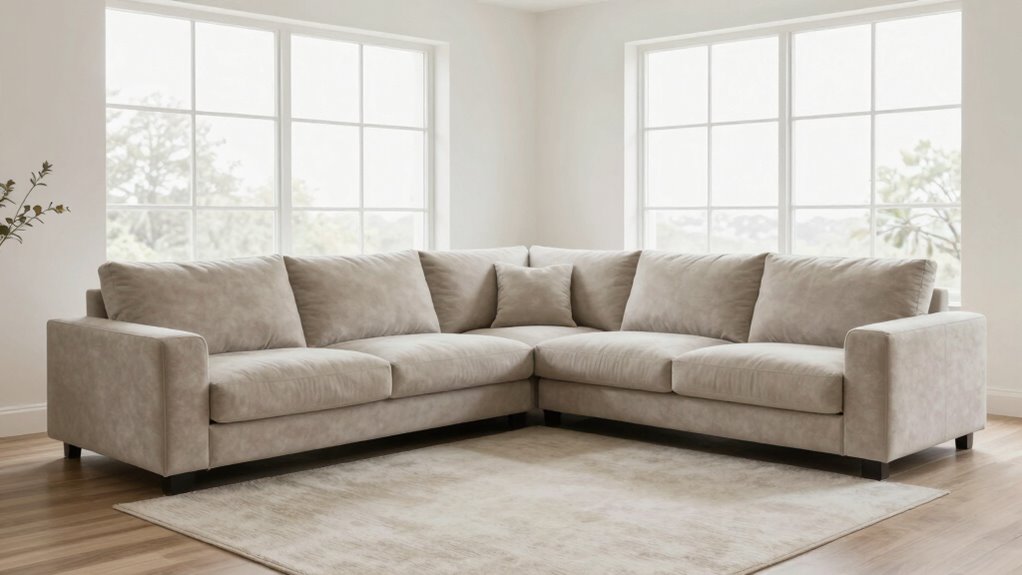
To improve flow and create a sense of openness in a small room, how you arrange your sectional is essential. Start by positioning the sectional to maximize space, avoiding blocking pathways or windows. Keep decor items spaced out to maintain a sense of distance decor, which prevents the room from feeling cramped. Use color contrast strategically; choosing a sectional in a light hue against darker walls can make the piece stand out without overwhelming the space. Avoid pushing the sectional directly against walls; instead, float it slightly to create a natural traffic flow. This arrangement encourages movement around the room, enhancing openness. By thoughtfully placing your sectional, balancing decor distances, and leveraging color contrast, your small room will feel more spacious and inviting.
Using Lighting and Visual Cues to Enhance the Illusion of Space
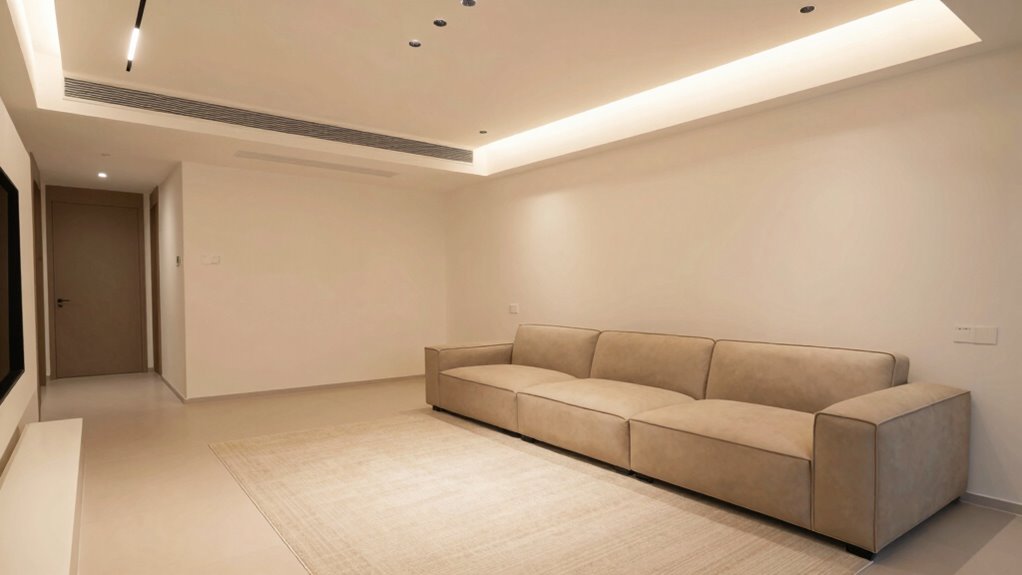
Lighting and visual cues play a essential role in making a small room appear larger and more open. Proper ambient lighting creates a soft, uniform glow that eliminates dark corners, making the space feel airy. Using color contrast wisely can draw the eye and give the illusion of depth, such as pairing light walls with darker furniture. You can also enhance the sense of space by:
Strategic lighting and color contrast make small rooms feel airy and spacious.
- Incorporating layered lighting to add dimension
- Choosing bright, reflective surfaces to bounce light around
- Using light-colored or neutral tones for walls and furniture
- Installing fixtures that direct light upward to emphasize height
- Avoiding heavy, dark curtains that block natural light
These strategies help your eyes perceive more space, making your room feel bigger and more inviting.
Tips for Creating Zones and Depth With Your Sectional
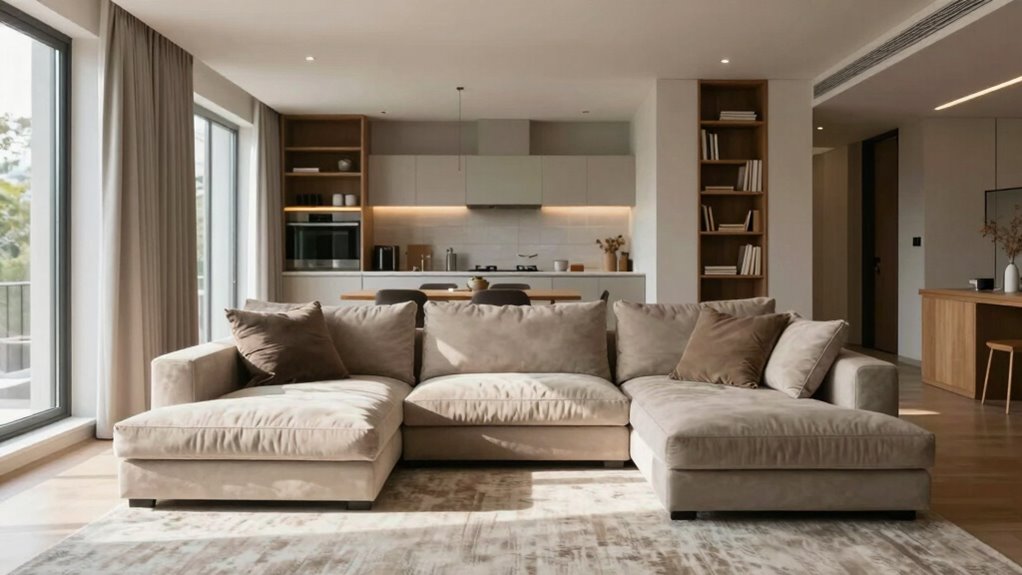
To create distinct zones and add depth, you should clearly define each area with furniture placement. Using rugs helps visually separate spaces and guides the eye through the room. Strategically arranging your sectional and surrounding pieces enhances flow and makes the space feel larger.
Define Separate Zones Clearly
Creating distinct zones within a small room is essential for making the space feel organized and functional. Clear boundaries help define areas for relaxing, working, or entertaining, enhancing flow and usability. To effectively separate zones, consider using visual cues like color coordination and style consistency. These elements create a cohesive look while highlighting different functions.
- Use contrasting or harmonious colors to distinguish each zone
- Maintain consistent style elements for unity
- Arrange furniture to naturally separate spaces
- Incorporate subtle dividers like open shelving or screens
- Keep accessories aligned with each zone’s purpose
Use Rugs for Depth
Rugs are a simple yet effective way to define and enhance different zones within a small room. Using area rugs strategically can create a sense of visual depth, making your space feel larger and more layered. Place a rug underneath your sectional to anchor the seating area, adding dimension and separating it from other parts of the room. Layering different-sized rugs can also emphasize different zones, guiding your eye across the space. Opt for rugs with patterns or textures that contrast with your flooring to add visual interest. By carefully selecting and positioning area rugs, you’ll create a multi-dimensional environment that tricks the eye into perceiving greater depth. This technique helps your small room feel more expansive and inviting.
Arrange Furniture Strategically
Strategic furniture arrangement can considerably enhance the sense of depth and organization in a small room. Position your sectional to define distinct zones, such as a reading nook or conversation area. Use color coordination to unify the space, making it feel larger and more cohesive. Incorporate wall decor thoughtfully—art and mirrors can reflect light and create visual depth. Consider these tips:
- Place the sectional to maximize open space and flow
- Use contrasting colors for furniture and walls to add dimension
- Position wall decor to draw the eye deeper into the room
- Arrange furniture to create layers and visual interest
- Keep pathways clear to prevent a cramped feel
Common Mistakes to Avoid When Arranging Sectionals in Small Rooms
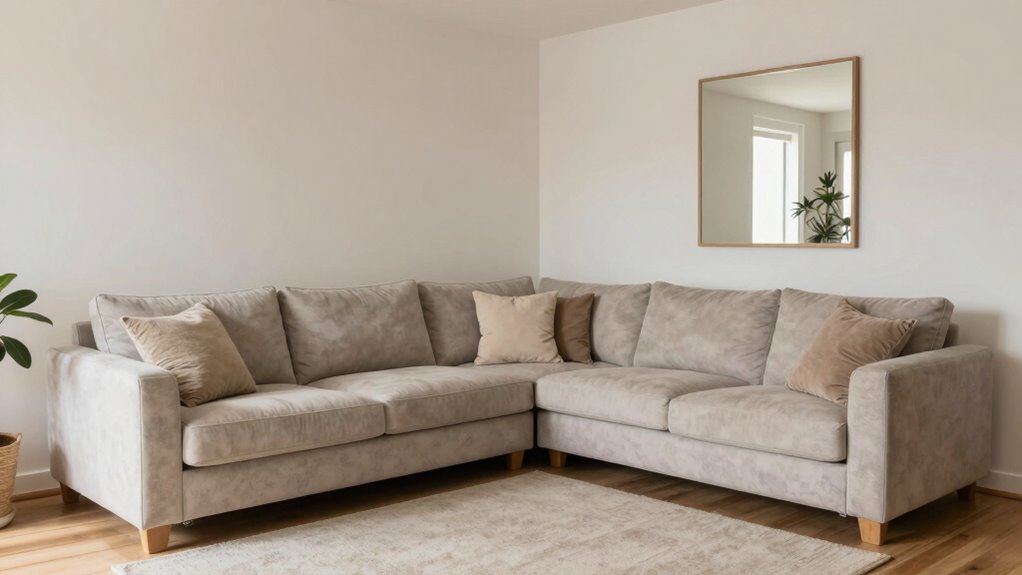
One of the most common mistakes when arranging sectionals in small rooms is overcrowding the space, which can make the room feel cramped and cluttered. Avoid this by choosing a sectional with a scale that fits the room’s size. Be mindful of color coordination; using overly dark or heavy hues can shrink the visual space. Instead, opt for light, neutral tones that reflect light and create an airy feel. Wall treatments also matter—busy patterns or dark accent walls can close in a small room. Keep wall decor simple and minimal to prevent overwhelming the space. Remember, the goal is to make the room feel open, so choose furniture and finishes that enhance spaciousness rather than detract from it.
How to Incorporate Multi-Functional Elements With Your Sectional
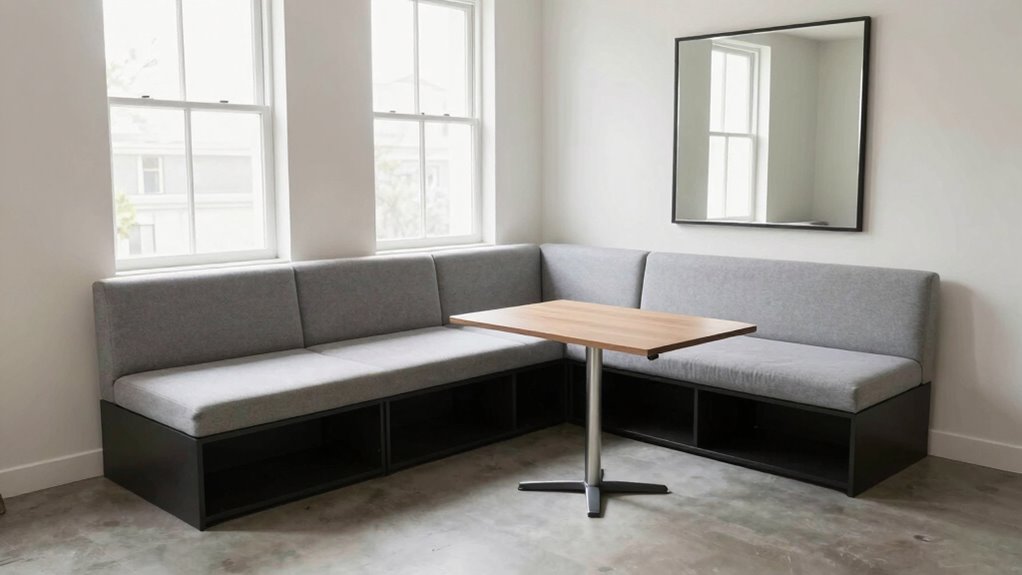
To maximize space and functionality in a small room, integrating multi-functional elements into your sectional is essential. Multifunctional furniture offers space-saving solutions that keep your room open and versatile. Consider sectionals with built-in storage to hide clutter, or those that fold out into beds for guests. Opt for models with adjustable components, like chaise lounges that double as desks or hidden compartments for remote controls. Incorporate pieces that serve dual purposes, such as ottomans with storage or corner units with shelves. These elements help you make the most of limited space while maintaining a stylish look. Remember, the goal is to combine comfort with practicality, creating a room that feels larger and more inviting without sacrificing functionality.
Real-Life Examples of Small Rooms Transformed With This Layout Trick
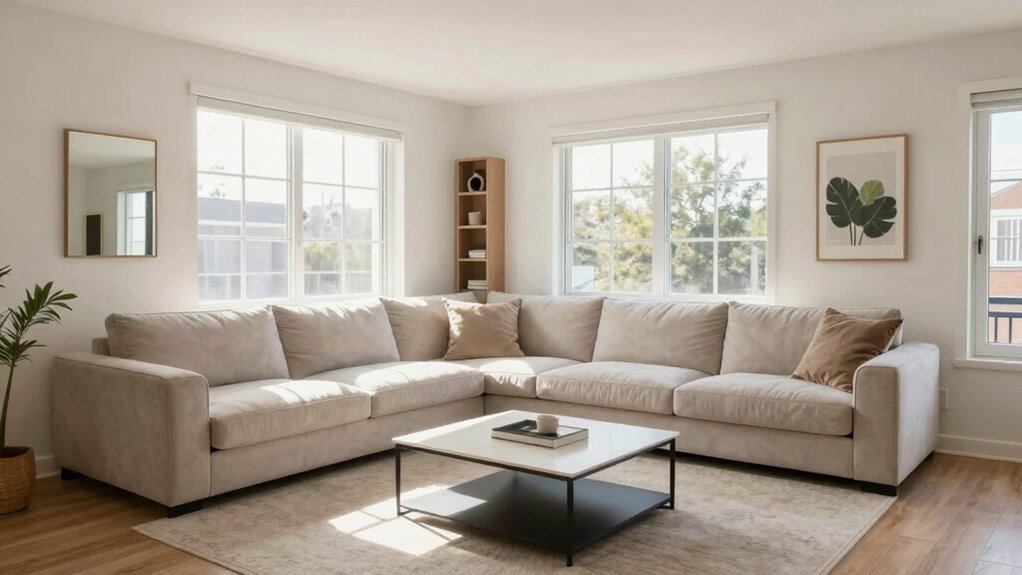
Transforming small rooms with multifunctional sectionals proves how clever design can maximize limited space. One effective trick is using color contrast to define zones, making the room appear larger and more organized. For example, a dark-colored sectional against light walls creates visual depth, emphasizing the seating area without overwhelming the space. Artwork placement also plays a key role; hanging a bold piece above the sectional draws the eye upward, enhancing vertical space and making the room feel bigger. In real-life examples, homeowners have successfully used these techniques to create cozy yet spacious environments. By thoughtfully choosing contrasting colors and strategic artwork placement, small rooms become inviting and visually expansive, proving that small space design is all about clever, intentional choices.
Quick Tips to Implement This Layout Trick in Your Space Today
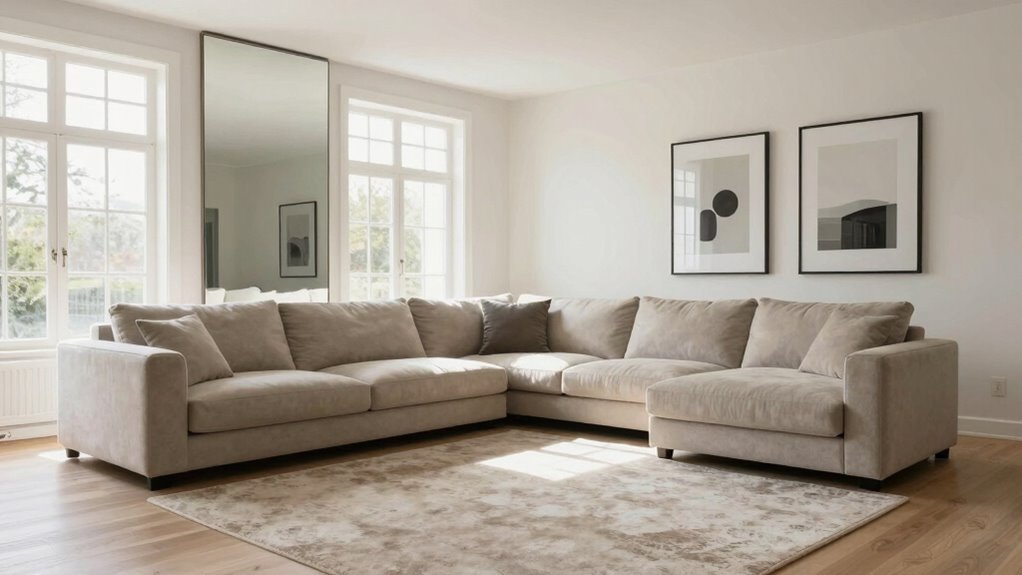
If you’re enthusiastic to apply this layout trick quickly, start by selecting a bold, contrasting color for your sectional that stands out against your wall color. This immediately draws the eye and creates a sense of depth, making the room feel larger. Next, incorporate eye-catching wall art that complements your sectional’s color contrast—large-scale pieces work best. Arrange furniture to define the sectional as the room’s focal point, enhancing spaciousness. Use lighting to highlight your wall art and sectional, adding dimension. Finally, keep clutter minimal to maintain an open feel.
- Choose a vibrant sectional color for contrast
- Opt for large, statement wall art
- Position furniture to maximize space
- Use lighting to accentuate focal points
- Keep decor simple for a spacious vibe
Frequently Asked Questions
Can This Sectional Layout Trick Work in Open-Plan Living Areas?
Yes, this sectional layout trick can work in open-plan living areas. By using a sectional to create subtle room divisions, you enhance visual flow and define different zones without walls. This approach keeps the space feeling open yet organized, making it easier to navigate and enjoy. Just make sure the sectional placement maintains a natural flow, so the room feels spacious and cohesive rather than segmented and cluttered.
How Do I Choose the Right Color Scheme to Enhance Space?
To enhance space, choose a light, neutral color scheme with strategic color contrast. Use soft shades on walls to make the room feel larger, and add an accent wall in a darker or bolder hue to create depth. This contrast draws the eye and adds visual interest without overwhelming the space. Keep furniture and decor in complementary tones to maintain an open, airy vibe and maximize the room’s feeling of spaciousness.
What Materials Are Best for Small Space Sectionals?
For small space sectionals, choose fabric options like microfiber, linen, or tightly woven cotton for comfort and style. Opt for materials that offer good durability, ensuring your sectional withstands daily use. Leather or faux leather also work well, providing a sleek look and easy maintenance. Prioritize lightweight frames and slim profiles to maximize space. Durable, easy-care fabrics combined with sturdy construction create a functional, stylish sectional perfect for small rooms.
Is This Trick Effective for High-Ceiling Rooms?
Absolutely, this trick works well in high-ceiling rooms. Imagine your vertical space as a canvas—by using strategic lighting techniques and arranging your sectional to draw the eye upward, you create a sense of grandeur. I once worked in a room with towering ceilings, and adding tall lamps and wall-mounted lights made the space feel cozy yet expansive, proving that leveraging vertical space enhances the illusion of size.
How Do I Maintain a Clutter-Free Look With This Layout?
To keep your space clutter-free, choose smart storage solutions like ottomans with hidden compartments or wall-mounted shelves. Limit decorative accents to a few meaningful pieces that add personality without overwhelming the room. Regularly declutter and organize your belongings, ensuring everything has a designated spot. This approach maintains a clean, open feel, highlighting your layout’s spaciousness while adding style through carefully curated decorative accents.
Conclusion
Think of your small room as a canvas—sometimes, all it takes is a clever layout to turn it into a masterpiece. I once helped a friend transform her cramped living room into a spacious retreat using just a sectional and smart arrangement. Remember, small spaces aren’t limitations—they’re opportunities for creativity. With these tricks, you’ll discover that even the tiniest room can feel like a grand oasis, proving that good design makes all the difference.