Before buying a sectional, you need to measure five key things: your room and doorway dimensions to guarantee it fits and can be delivered easily, the right size of the sectional based on your space and layout, the ceiling height to choose a style that complements your room, clear walking space to keep movement comfortable, and access points like stairs or tight corners to avoid delivery hassles. Get these measurements right first; keep going to discover how each step helps you pick the perfect piece.
Key Takeaways
- Measure doorways, hallways, and stairwells to ensure the sectional can be delivered and moved into your space.
- Confirm the room’s dimensions and layout to select a size that fits comfortably without blocking walkways or windows.
- Check ceiling height and architectural features to choose a sectional that complements the room’s proportions.
- Maintain at least 30-36 inches of clearance around the sectional for easy movement and access.
- Verify material durability, stain resistance, and compatibility with existing decor and space features before purchasing.
Measure Your Room and Doorways to Ensure Your Sectional Fits
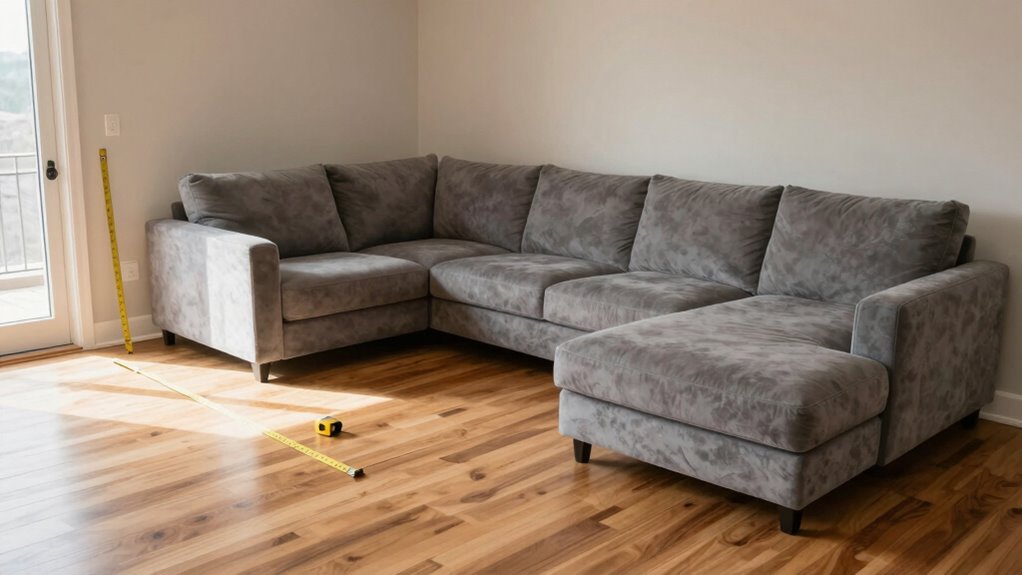
Before purchasing a sectional, you need to measure your room and doorways to make sure it will actually fit. Start by measuring the space where you plan to place the sectional, leaving enough room for movement and comfort. Don’t forget to check the width and height of doorways, hallways, and stairwells to guarantee delivery and installation aren’t a problem. When choosing your sectional, consider color coordination with your existing decor for a cohesive look. Also, think about material durability—opt for sturdy fabrics or leather that can withstand daily use. Accurate measurements prevent purchasing a piece that’s either too big or too small, saving you hassle and ensuring your new sectional seamlessly integrates into your space. Proper planning makes the entire process smoother and more satisfying. Measuring doorways and hallways is especially important to avoid delivery issues. Additionally, understanding your home’s airflow and ventilation can help you select furniture that doesn’t obstruct air circulation or airflow pathways. Ensuring you know your doorway dimensions helps prevent surprises during delivery and setup. Being aware of furniture size limits can also help you choose a sectional that fits comfortably without overcrowding the room. Knowing your space utilization can assist in arranging your furniture to maximize comfort and functionality.
Decide the Right Sectional Size Based on Your Space and Layout

Choosing the right sectional size depends on how much space you have and how you plan to use it. Start by considering your room’s layout and how the sectional will fit with other furniture. Proper sectional placement is key; avoid blocking walkways or windows. Think about the flow of the room and guarantee there’s enough space to move comfortably around the piece. Measure the dimensions carefully, including the length and depth, to prevent a mismatch. Also, consider color coordination—select a size that complements your room’s proportions and style. A sectional that’s too large can overwhelm a space, while one too small might look out of place. Finding the right size balances functionality with aesthetics, making your living area both inviting and practical.
Assess Ceiling Height and Room Features for Style Choices
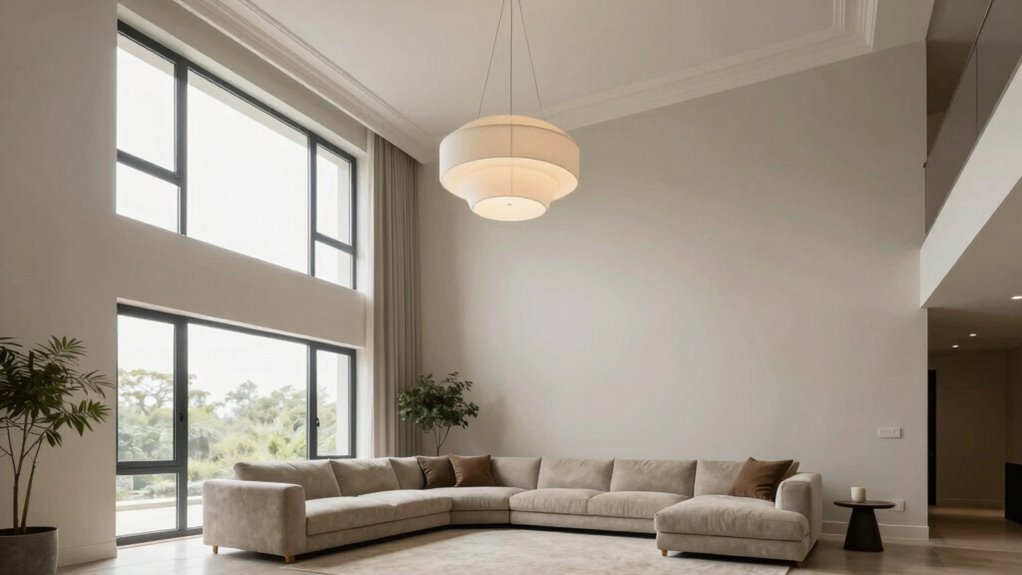
Your room’s ceiling height and architectural features play a crucial role in selecting a sectional style that enhances your space. Ceiling height considerations help determine whether you should opt for low-profile sofas or taller sectional pieces. For rooms with high ceilings, consider oversized or statement sections to fill the space without overwhelming it. Conversely, in rooms with standard or lower ceilings, streamlined designs work better to avoid feeling cramped. Incorporating design principles can further help you create a cohesive look. Considering room proportions ensures your sectional fits harmoniously within the space. Paying attention to architectural details can add character and help you choose the most appropriate style for your room. Additionally, understanding furniture scale is essential to selecting a sectional that complements your room’s dimensions. Being mindful of visual balance can help you achieve a well-proportioned and inviting layout. Here’s a quick guide:
| Ceiling Height | Suitable Style | Room Features Compatibility |
|---|---|---|
| High | Tall, oversized | Architectural details like crown molding |
| Standard | Medium profile | Neutral space for flexibility |
| Low | Low-profile, sleek | Maximize openness without clutter |
Plan Clearance and Walking Space Around Your New Sectional
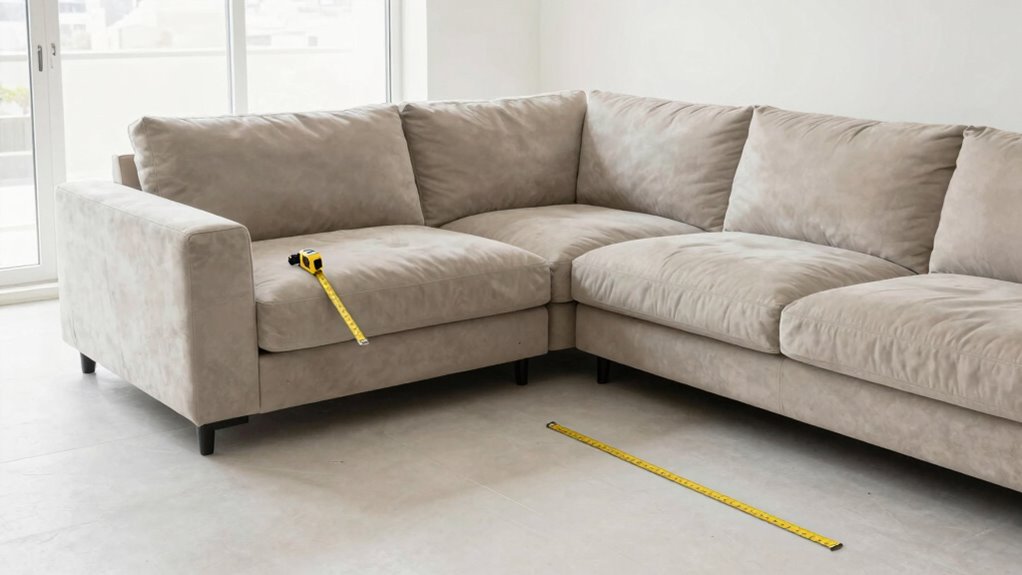
Ensuring there’s enough clearance around your sectional is key to maintaining a comfortable and functional living space. Aim for at least 30-36 inches of walking space to avoid congestion and make movement easy. When planning, consider how color coordination affects the flow; neutral tones can make the space feel more open, while bold colors might require more room to breathe. Also, think about furniture material—sleek, low-profile pieces can maximize space, while plush, bulky materials might need extra clearance. Keep pathways clear of clutter and avoid placing the sectional too close to doorways or walkways. Proper planning guarantees you can move freely, enjoy your space, and create a cohesive look that complements your room’s overall design. Additionally, measuring the room accurately helps ensure that your furniture fits comfortably without overcrowding the area. To make informed decisions when choosing a battery inverter generator, understanding your watt-hours and capacity needs is essential. Incorporating smart home technology can further optimize your space by allowing you to control lighting and climate for a more comfortable environment. Furthermore, understanding automotive performance parts such as flywheels and engine upgrades can inspire creative ways to enhance your vehicle’s efficiency and power.
Also, considering space planning principles can help you utilize your room’s layout more effectively, making sure every piece serves a purpose without sacrificing comfort.
Confirm Your Measurements and Access Before Buying

Before purchasing a sectional, it’s essential to double-check your measurements and access points. Measure doorways, hallways, and stairwells to ensure the piece can fit through without damage. Also, consider the material durability; some fabrics withstand heavy use better than others. Verifying your chosen color matches your existing decor is key for seamless color coordination. Use this quick reference:
| Access Check | Material & Color Considerations |
|---|---|
| Doorway width | Fabric durability and stain resistance |
| Hallway clearance | Color harmony with room accents |
| Staircase dimensions | Material texture and maintenance needs |
| Furniture placement | Overall style and fabric longevity |
Additionally, ensuring your vehicle accessories are compatible with your space can prevent unnecessary returns or adjustments. Confirm these details before buying to avoid surprises and guarantee your sectional fits perfectly in both space and style. Properly assessing space requirements can help you avoid costly mistakes and ensure smooth delivery and setup. For example, doorway width is often overlooked but critical for successful delivery. It’s also wise to consider access points such as electrical outlets or lighting fixtures that may impact furniture placement. Moreover, checking projector compatibility with your room’s layout and available connections can enhance your home cinema experience.
Frequently Asked Questions
What Are Common Mistakes to Avoid When Measuring My Space?
To avoid measurement mistakes and layout errors, you should double-check your measurements before shopping. Don’t forget to include space for walkways and doorways, and measure the height, width, and depth of your available area. Avoid rushing the process, and use a level or tape measure for accuracy. This prevents buying a sectional that’s too big or awkwardly placed, ensuring your furniture fits perfectly in your space.
How Do I Choose the Best Sectional Style for My Room?
To select the best sectional style for your room, consider your room layout and how much space you have. If you want a cozy feel, go for a compact L-shape or curved sectional. For open spaces, a U-shape or modular style works well. Think about your lifestyle—do you entertain often or need extra seating? Matching sectional styles to your room’s dimensions guarantees comfort and style without crowding.
What Tools Should I Use to Measure Accurately?
Did you know that using the right measuring tools can improve accuracy by up to 90%? For precise measurement techniques, grab a tape measure or a laser distance measurer. A tape measure is versatile for quick, manual checks, while a laser device offers quick, accurate readings over longer distances. Always double-check your measurements and use a level if needed to make certain your sectional fits perfectly in your space.
Can I Modify My Sectional if It Doesn’t Fit Perfectly?
Yes, you can modify your sectional if it doesn’t fit perfectly. You might consider changing fabric options to better match your space or updating cushions for comfort. To improve color coordination, add throws or accent pillows that complement your decor. Keep in mind, some modifications may require professional help, especially for structural changes. Always measure carefully before making adjustments to ensure a seamless fit and cohesive look.
How Long Should I Wait Before Purchasing After Measuring?
Think of your space as a garden waiting to bloom; rushing your purchase can stunt its growth. You should wait at least 24 to 48 hours after measuring before buying, giving you enough time to contemplate timing considerations. This purchase delay ensures your measurements are accurate, helping you avoid costly mistakes. Patience now means your sectional will fit perfectly, transforming your room into a cozy haven.
Conclusion
By measuring carefully, you’re painting a clear picture of your perfect sectional—like a master artist sketching their masterpiece. Don’t let guesswork be the thief of your dream space; instead, let your measurements be the guiding brushstrokes that lead to a flawless fit. When you know these five key things, you’ll avoid costly surprises and create a room that’s both stylish and functional. Remember, precision is your secret weapon in furniture shopping.