
TL;DR
A DIY design shared by TikTok user Emily Shaw uses painted 1-inch PVC pipe, fittings and wood boards to make industrial-style storage shelves. The build is presented as a lower-cost alternative to steel framing, but safe installation depends on properly anchoring the wall supports and following PVC cement instructions.
In a project described by Hunker, TikTok user Emily Shaw shares a design for industrial-style shelves built with painted PVC pipe, offering a lower-cost alternative to metal framing for home storage. The five-step project pairs 1-inch pipe and fittings with wood shelves, but the design also calls for secure floor and wall attachments to support stored items.

Get furniture and decor delivered free with Prime
- Fast, free delivery on millions of items
- Prime Video, Amazon Music and more included
- Member-only deals all year
1. Plan the frame and gather materials. Hunker’s account of Shaw’s layout describes three upright sections, floor-mounted flanges and horizontal supports that reach back to the wall. The materials listed include 1-inch PVC pipe, tees and elbows, slip caps, flanges, PVC cement and wood boards. Hunker reports a price of $5.91 for a 10-foot length of 1-inch pipe at Lowe’s; prices can vary by location and date.
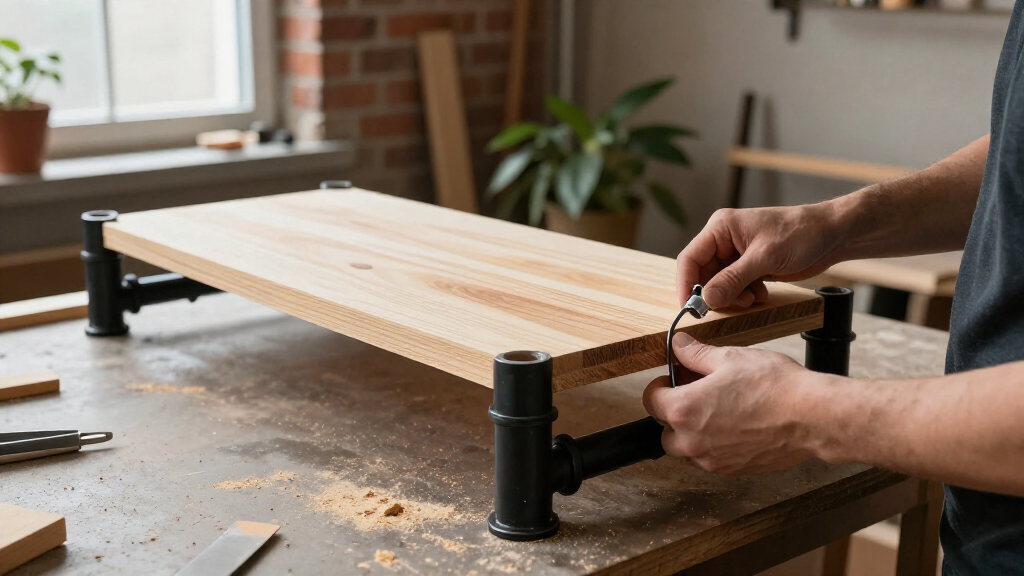
2. Cut the pipe, then 3. finish it. According to the project account, Shaw cut the pipe to length on a table saw and painted it black with Rust-Oleum enamel to resemble steel. A PVC pipe cutter is another option and can produce clean cuts with less cleanup. The account says Shaw painted before assembly, but warns that paint on connection surfaces can interfere with PVC cement bonding. Keeping joining surfaces unpainted and following the cement maker’s directions is important.
4. Assemble and mark the frame. In Hunker’s description, tees connect the upright pieces to horizontal supports, while elbows finish the top. With the sections held in place, Shaw and a helper marked locations for the floor flanges and wall supports. The flanges were screwed to the floor, with PVC bushings fitted into them to receive the uprights. 5. Attach the wall supports and add shelves. Shaw drilled holes through 1-inch slip caps, secured the caps to the wall and inserted the support pipes into them. The wood boards sit on the completed frame; the account does not specify their dimensions or a rated load.
PVC pipe shelving in five steps
Emily Shaw’s design uses painted PVC pipe and wood boards as a lower-cost alternative to steel framing. Secure attachments and careful cementing matter; the design has no tested load rating.
Gather and plan
The described frame has three upright sections, floor flanges and supports reaching back to the wall.
PVC and fittings
Gather 1-inch pipe, tees, elbows, slip caps, flanges and PVC cement.
Wood boards
The boards rest on the completed frame; dimensions are not specified.
Build the frame
Measure the space and gather the listed materials.
Use a table saw as described, or a PVC pipe cutter.
The project uses black enamel to resemble steel; keep joining surfaces clear for cement.
Connect uprights with tees and supports, finish the top with elbows, then mark attachment points.
Secure floor flanges and wall caps, insert support pipes, then place the boards.
Check the attachments
The wall supports are part of the structure and need suitable fastening for the wall and intended use.
- Choose anchors suited to the wall or fasten to framing where appropriate.
- Secure floor flanges to a suitable substrate.
- Follow PVC cement instructions, including preparation and curing.
- Inspect joints and attachments before adding weight cautiously.
A Lower-Cost Route to Storage
The design addresses a familiar storage problem: belongings become harder to reach when they accumulate without a sturdy shelving system. Hunker presents PVC as a substitute for steel framing that can lower material costs and make cutting and joining more accessible to a home DIYer. Its reported pipe price illustrates the project’s budget appeal, though it is a local price observation, not a current national comparison.
Cost and appearance do not establish how much weight a finished unit can safely carry. Wall and floor attachments, pipe dimensions, board span and the quality of assembly all affect performance. The project is best understood as a design idea, not a tested load specification.
Products Worth Considering

Hisense 55-Inch E6SR Series 4K UHD Hi-QLED Roku Smart TV (2026 Model)

Google Nest Learning Thermostat Pro Edition (4th Gen, 2024) with Temperature Sensor, Polished Silver

Shark AV2501S AI Ultra Robot Vacuum with Matrix Clean and Self-Empty Base
As an affiliate, we earn on qualifying purchases.
How the PVC Frame Is Joined
Hunker’s project description shows standard PVC fittings used for right-angle connections: tees branch the uprights into shelf supports, and elbows turn the pipe at the top. PVC sections slide into compatible fittings and can be joined with PVC cement, avoiding the threaded assembly used in many metal-pipe shelving systems. The account describes the material as much less expensive than steel pipe, but provides no dated, like-for-like price comparison beyond its cited Lowe’s pipe listing.
Shaw’s arrangement also differs from a freestanding rack: horizontal supports extend to the wall and are held in caps attached there. That connection is part of the structure, not merely a way to keep the unit aligned. As Hunker cautions, drywall screws alone may not hold securely under load; suitable anchors or attachment to wall framing may be needed, depending on the wall and the design. The account specifically says drywall anchors are essential to reduce the risk of screws pulling out.
Load Limits and Wall Fixings
Hunker’s account gives no tested weight rating, shelf dimensions, spacing, pipe schedule or engineering assessment. It also does not identify the wall construction or specify the type and size of anchors used. Readers therefore cannot infer a safe load from the material list or from the description of the shelves as heavy-duty.
It is also unclear whether the pipe price remains current, and the project description does not provide a complete cut list or detailed measurements. Paint and cement compatibility depends on the products and application; the cement manufacturer’s instructions should govern preparation and curing. The design should not be treated as suitable for heavy, fragile or hazardous items without an appropriately verified structure and fastening method.
Check the Site Before Building
Anyone adapting the design should measure the intended space, confirm the pipe and fitting sizes match, and determine what lies behind the wall surface before choosing fasteners. Use anchors suited to the wall or fasten into framing where appropriate, and attach the floor flanges to a suitable substrate. Cut pipe with an appropriate tool, protect eyes and hands, and work with paint and PVC cement according to their labels, including ventilation and curing guidance.
Before loading the shelves, inspect every joint and attachment and add weight cautiously. Because Hunker’s project description does not give a tested capacity, the amount the shelves can safely hold remains unverified. The next practical step is to check the project measurements, local material prices and fastening requirements for the specific room and intended contents.
Source: Hunker
Key Questions
What materials does the PVC shelf design use?
Hunker’s account lists 1-inch PVC pipe, tees, elbows, slip caps, floor flanges, PVC cement and wood boards. The design also requires suitable fasteners for securing the frame to the floor and wall.
How does the frame attach to the wall?
In Hunker’s description, Shaw drilled holes in PVC slip caps and fastened them to the wall, then inserted horizontal support pipes into the caps. The account warns that drywall screws without appropriate anchors may pull out under load.
How much weight can the shelves hold?
Hunker provides no tested load capacity. Safe capacity depends on the pipe and fittings, shelf dimensions, joints, wall construction and fasteners, so the description does not support a specific weight limit.
Should the pipe be painted before assembly?
The project account says Shaw painted the pipe before assembly, but also warns paint can interfere with PVC cement adhesion. Keep joining surfaces prepared as directed by the cement manufacturer and follow product instructions.
Source: hunker.com