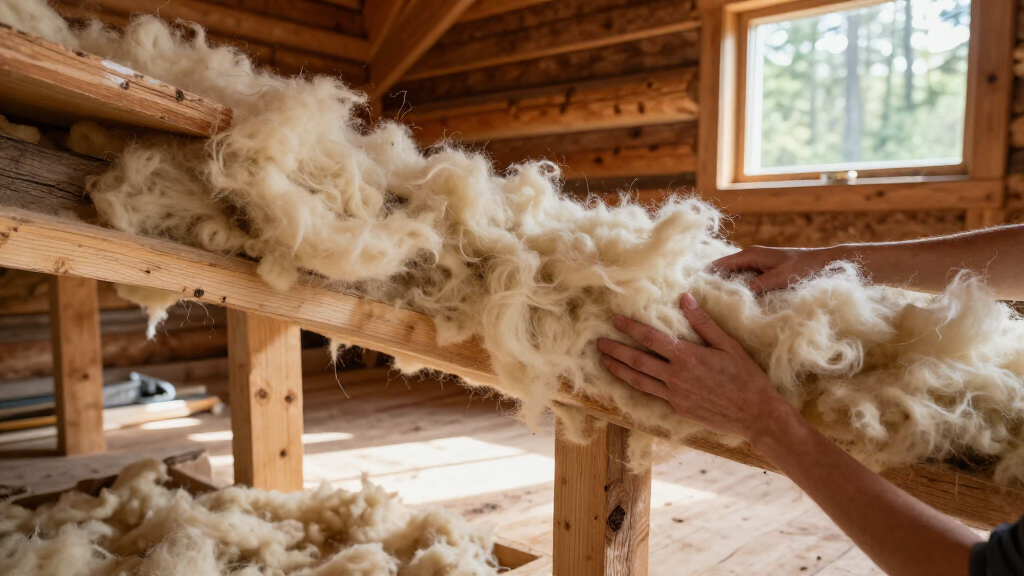

The best log cabin insulation depends on your wall assembly, local climate, and how much installation work you can take on. My best overall pick is Owens Corning R-19 Unfaced Fiberglass for its stated R-value and straightforward fit in framed cavities; Johns Manville R-19 Kraft-Faced Batts stand out when a facing is appropriate, while Y’allCanDIY Spray Foam suits buyers who need to seal irregular gaps. The main tradeoff is between cavity insulation, which provides a familiar path to thermal resistance, and reflective products, which need suitable air space to perform as intended. Spray foam can address awkward spaces but calls for careful application and safety precautions. Read on for the full breakdown and guidance on matching an insulation type to your cabin’s construction.

Get furniture and decor delivered free with Prime
- Fast, free delivery on millions of items
- Prime Video, Amazon Music and more included
- Member-only deals all year
Complete the kit


Key Takeaways
- Fiberglass batts lead this lineup for framed walls: the Owens Corning and Johns Manville R-19 options provide a stated thermal rating, while reflective rolls are not direct substitutes for cavity insulation.
- Reflective insulation depends on installation conditions: SmartSHIELD, EcoFoil, and Reflectix need an adjacent air space for radiant performance; a roll’s advertised R-value should not be treated as a stand-alone wall rating.
- Faced and unfaced batts serve different assemblies: Johns Manville’s kraft facing can support installation where the wall design calls for it, while unfaced Owens Corning avoids adding a facing layer.
- Spray foam is the gap-filling specialist, not the default whole-wall answer: Y’allCanDIY and BEEST can suit localized sealing, but coverage, application skill, and protective measures affect the result.
- The best pick changes with the cabin’s construction: denim may appeal where handling comfort matters, while compact Reflectix or single-bubble rolls make more sense for targeted reflective applications than for replacing cavity insulation.


| log cabin insulation | Material | Thickness | Dimensions | Coverage |
|---|---|---|---|---|
| SmartSHIELD 5mm x 16” x 50ft | Foam core with engineered foil | 5 mm | 16 in x 50 ft | — |
| Y’allCanDIY 18-Can Spray Foam | Polyurethane foam | — | — | — |
| Owens Corning R-19 Unfaced Fib | Fiberglass | 6.5 in | — | 77.5 sq ft |
| EcoFoil Single Bubble Reflecti | — | 3.175 mm (approximately 1/8 in) | 48 in x 125 ft | 500 sq ft |
| BEEST FullStop Spray Foam Insu | — | — | — | Up to 240 board feet |
| Reflectix BP24025 24-Inch by 2 | Aluminum foil, polyethylene, and insulating bubbles | 0.31 in (5/16 in) | 300 in L x 24 in W | 7,200 sq in |
| Frost King CF1 No-Itch Recycle | 100% recycled denim | — | 16 x 1 x 48 in | — |
| Johns Manville R-19 Kraft-Face | Fiberglass | 6.25 in | 93 in L x 15 in W | — |
| EcoFoil Double Bubble Reflecti | Polyethylene | 0.25 in (approximately 6.35 mm) | 48 in W x 75 ft L | 300 sq ft |
| Owens Corning RU41 Pink Fiberg | Fiberglass | 0.25 in | 93 in L x 23 in W | — |
More Details on Our Top Picks
SmartSHIELD 5mm x 16” x 50ft R17 Reflective Insulation Roll, Foam Core Radiant Barrier
SmartSHIELD is a reflective layer first, not a substitute for thick cavity insulation. Its foam core and dual foil faces are rated R-17 in the supplied product data and reflect 95% of radiant energy, while the material also acts as a vapor barrier. That makes it a fit for cabin assemblies where radiant heat and moisture management are key concerns, provided the installation follows the required mounting method.
Compared with EcoFoil Single Bubble Reflective Insulation, SmartSHIELD has a foam core rather than a single-bubble construction, but its roll is narrower and covers less area. Like the EcoFoil option, it is most useful when installed with the appropriate air space; it offers less help against conductive heat loss than fiberglass batts such as Owens Corning R-19. The fire-rating installation requirements and radiant-focused performance are the main tradeoffs.
Pros:- Dual foil layers are specified to reflect 95% of radiant energy.
- Acts as a vapor barrier and resists humidity and condensation.
- Tear- and puncture-resistant material can still be cut with utility scissors.
- Meets ASTM C1313 and carries a Class A fire rating when installed as required.
Cons:- Radiant performance does not replace insulation designed to limit conductive heat loss.
- The 16-inch-wide roll covers less area than EcoFoil’s 48-inch-wide roll.
- Installation must follow specific mounting methods to maintain the stated fire rating.
Best for: Cabin owners adding a reflective layer where radiant heat and humidity control matter, and who can follow the specified installation method.
Not ideal for: Buyers looking for stand-alone cavity insulation against conductive heat loss, or anyone unable to meet the mounting requirements tied to its fire rating.
- Thickness:5 mm
- Dimensions:16 in x 50 ft
- Listed R-value:R-17
- Material:Foam core with engineered foil
- Radiant energy reflection:95%
- Standard:ASTM C1313
Our verdict“Choose SmartSHIELD for a moisture-resistant reflective layer when you can install it correctly, but pair it with cavity insulation for broader thermal protection.”
Y’allCanDIY 18-Can Spray Foam Insulation Kit with Gun, Cleaner, and Safety Gear
This kit is aimed at sealing gaps, not filling an entire cabin wall. Its 18 aerosol cans, foam gun, cleaner, accessories, and protective gear give a DIY owner the main application pieces in one package. The foam expands into cracks and adheres to a broad range of clean, dry building materials, making it useful around framing penetrations and other draft paths where batt insulation cannot seal the edges.
Against the BEEST FullStop 12-can kit, Y’allCanDIY supplies more cans and lists a wider application temperature range, but it does not provide a stated total board-foot coverage figure in the supplied data. Both require careful application, and Y’allCanDIY’s up-to-R-8 rating applies at a recommended 2-inch thickness—not a guarantee of the same result in every gap. I would skip it for large, open wall cavities where Owens Corning R-19 batts are a more direct fit.
Pros:- Includes a foam gun, cleaner, application accessories, and protective gear.
- Expands to fill cracks and help block drafts.
- Adheres to wood, concrete, metal, drywall, OSB, and other listed materials.
- Recommended application temperature range is 60–90°F.
Cons:- Coverage varies with application technique, conditions, and foam depth.
- The stated up-to-R-8 performance requires a recommended 2-inch thickness.
- Surfaces need preparation, and foam should be applied in thin layers.
Best for: DIY cabin owners who need to seal scattered cracks and penetrations and want a kit with application tools and protective equipment included.
Not ideal for: People insulating large wall areas or seeking predictable coverage without managing application depth, temperature, and surface preparation.
- Material:Polyurethane foam
- Can quantity:18
- Can volume:33.8 fl oz (1,000 ml) each
- Thermal resistance:Up to R-8 at 2-inch thickness
- Recommended application temperature:60–90°F (15–32°C)
- Included accessories:Foam gun, cleaner, gloves, safety glasses, respiratory mask, coverall, straws, spreaders, and nozzles
- Compatible materials:Wood, concrete, metal, glass, brick, drywall, masonry, stone, OSB, plywood, and lumber
Our verdict“Pick Y’allCanDIY for assorted air-sealing jobs when you want tools and safety gear in the kit, not as the main insulation for broad cabin walls.”
Owens Corning R-19 Unfaced Fiberglass Insulation, 15 x 93 in, 77.5 sq ft
For framed cabin walls, these R-19 batts are the most direct cavity-insulation option in this group. Each batt is 6.5 inches thick and sized for 2×6 framing, so the product suits open cavities where a flexible reflective roll would not provide the same kind of fill. The eight-batt bag covers 77.5 square feet, and the fiberglass can also be used in floors or attics and helps reduce sound transmission.
The key compromise is its unfaced construction: unlike a kraft-faced batt such as the listed Johns Manville R-19, this product supplies no vapor barrier. Cabin owners need to plan the assembly’s vapor control separately rather than treating the insulation as a complete wall system. It also fits deeper framing or retrofit spaces, so it is a poor match for shallow cavities. Compared with spray foam kits, it covers broad framed areas more simply but does not seal irregular cracks on its own.
Pros:- R-19 rating is suited to 2×6 framing cavities.
- Eight batts cover 77.5 square feet per bag.
- Can be used in walls, floors, and attics.
- Helps reduce sound transmission as well as heat flow.
Cons:- Unfaced batts do not provide a vapor barrier.
- The 6.5-inch thickness is intended for deeper framing or retrofit spaces.
- Unlike spray foam, batts do not expand to seal cracks and penetrations.
Best for: Cabin builders or renovators with open 2×6 wall, floor, or attic cavities who need batt insulation and can address vapor control separately.
Not ideal for: Owners with shallow framing, irregular gaps that need air sealing, or a project requiring insulation with an integrated vapor barrier.
- Brand:Owens Corning
- Material:Fiberglass
- R-value:R-19
- Thickness:6.5 in
- Batt dimensions:93 x 15 in
- Coverage:77.5 sq ft
- Quantity and facing:8 unfaced batts; no vapor barrier
- Model:E55
Our verdict“Choose these batts for broad, accessible 2×6 cabin cavities when you have a separate plan for vapor control and air sealing.”
EcoFoil Single Bubble Reflective Insulation Roll, 48 in x 125 ft, 500 sq ft, White/Foil
EcoFoil’s main advantage is coverage per roll: its 48-inch width and 125-foot length provide 500 square feet, making it better suited than SmartSHIELD’s 16-inch roll to covering broad surfaces with fewer strips. The lightweight single-bubble material reflects 96% of radiant heat and can be cut with scissors or a utility knife. Properly installed with sealed seams, it can also act as a vapor barrier.
This is a reflective layer, not a replacement for cavity batts such as Owens Corning R-19; the product data emphasizes radiant heat rather than a broad conductive-insulation role. Its single-bubble construction is also thinner than SmartSHIELD’s 5mm foam core, while the larger roll can be less convenient in confined spaces. Seams need tape for moisture control, and the product is described as best suited to warmer regions with minimal snow or ice. That limits its appeal for cabins facing harsh winter conditions.
Pros:- A 500-square-foot roll covers more area than the SmartSHIELD roll.
- Reflects 96% of radiant heat.
- Lightweight material can be cut with scissors or a utility knife.
- Can act as a vapor barrier when installed with sealed seams.
Cons:- Best suited to warmer regions with minimal snow or ice.
- Seams must be taped to provide a moisture barrier.
- Radiant-barrier performance does not replace cavity insulation such as fiberglass batts.
Best for: Cabin owners covering large, accessible surfaces in warmer regions who want a lightweight radiant barrier and can seal the seams.
Not ideal for: Buyers seeking stand-alone insulation for cold, snowy climates, or a material designed to fill framed wall cavities.
- Dimensions:48 in x 125 ft
- Coverage:500 sq ft
- Thickness:3.175 mm (approximately 1/8 in)
- Facing:White/foil
- Radiant heat reflectivity:96%
- Emissivity:4%
- Item weight:21 lb
- Material properties:Non-toxic, non-carcinogenic, fiber-free, and no off-gassing
Our verdict“Choose EcoFoil for wide-area radiant coverage in a suitable climate, but use separate cavity insulation for a cabin’s broader thermal needs.”
BEEST FullStop Spray Foam Insulation Kit, 12 Cans, Up to 240 Board Feet
BEEST is the more quantified spray-foam choice for cabin repairs and air-sealing work: the kit lists up to 240 board feet of coverage and an R-value of 8.24 at 2-inch thickness. Its 12 cans come with a gun, cleaner, gloves, goggles, and a coverall, and the foam bonds to common surfaces including wood, drywall, concrete, and brick. The listed Class A surface-burning criteria add a useful specification for buyers comparing foam kits.
Compared with the Y’allCanDIY 18-can kit, BEEST provides a stated coverage figure and a narrower recommended application range of 68–77°F, while Y’allCanDIY includes more cans and a broader temperature range. Neither should be treated as a substitute for broad-area batts such as Owens Corning R-19. BEEST also calls for careful application and protective gear; its temperature window can make scheduling harder in an unheated cabin.
Pros:- Lists coverage of up to 240 board feet.
- R-value is specified as 8.24 at 2-inch thickness.
- Includes an applicator gun, cleaner, gloves, goggles, and coverall.
- Bonds to wood, metal, drywall, concrete, and brick and is tested to meet Class A surface-burning criteria.
Cons:- Recommended application temperature is limited to 68–77°F.
- Coverage is stated as up to 240 board feet, not a guaranteed result for every application.
- Requires protective gear and careful application.
Best for: Cabin owners sealing a defined set of gaps who value a stated maximum coverage figure, included safety gear, and foam compatible with common building materials.
Not ideal for: Buyers insulating large wall cavities, working outside the 68–77°F application range, or unwilling to manage careful foam application and protective equipment.
- Brand and manufacturer:BEEST; Petra
- Can quantity:12
- Coverage:Up to 240 board feet
- R-value:8.24 at 2-inch thickness
- Application temperature:68–77°F
- Flame spread index:0
- Smoke developed index:120
- Included components:12 foam cans, foam gun, foam cleaner, glasses, coverall, and gloves
Our verdict“Pick BEEST for defined air-sealing jobs where its listed coverage helps with planning, provided the work area stays within its recommended temperature range.”
Reflectix BP24025 24-Inch by 25-Feet Reflective Bubble Pack Insulation
I’d choose the Reflectix BP24025 when a cabin project needs a thin, easy-to-handle radiant barrier rather than deep cavity insulation. Its seven-layer foil-and-bubble construction is listed as reflecting 97% of radiant heat, and the 24-inch width suits narrower runs better than the 48-inch EcoFoil Double Bubble roll. At just 5/16 inch thick, though, it should not be treated as a replacement for a substantial batt in an exterior wall; its strongest role is controlling radiant transfer in an appropriate assembly. The fiber-free material is easier to handle than fiberglass, but reflective products depend on installation details and an adjacent air space to work as intended. I’d also weigh the short 30-day reporting window for warranty issues before buying.
Pros:- Seven-layer foil, polyethylene, and bubble construction
- Listed as reflecting 97% of radiant heat
- Lightweight and fiber-free for easier handling
- 24-inch width can suit narrower installation runs
Cons:- Only 5/16 inch thick, so it is not a substitute for deep cavity insulation
- Radiant-barrier performance depends on suitable installation details, including an air space
- Warranty issues must be reported within 30 days of receipt
Best for: Cabin owners lining narrow bays, crawl spaces, or other areas where a thin, fiber-free radiant barrier is the main need.
Not ideal for: Buyers insulating full-depth exterior wall cavities who need a stated cavity R-value or a thick thermal batt.
- Model:BP24025
- Dimensions:300 in L x 24 in W
- Thickness:0.31 in (5/16 in)
- Coverage:7,200 sq in
- Material:Aluminum foil, polyethylene, and insulating bubbles
- Construction:7 layers
- Radiant heat reflected:97%
- Weight:16 oz
Our verdict“Choose Reflectix for narrow, fiber-free radiant-barrier applications, not as the sole insulation for a cabin’s exterior walls.”
Frost King CF1 No-Itch Recycled Denim Multi-Purpose Insulation, 16 x 1 x 48 Inches
The Frost King CF1 has a different purpose from the larger wall-insulation options: it is a small piece of recycled denim for minor gaps, cushioning, and noise dampening. Its 16-by-48-inch format can be cut or torn to fit around pipes and ducts, and the product is described as nonirritating to handle without gloves, goggles, or a mask. That makes it more approachable for a small repair than fiberglass batts such as the Johns Manville R-19. The tradeoff is scale and thermal capacity: at only 1 inch thick, one piece will not insulate a cabin wall cavity or cover much area. I’d treat it as a supplemental material for targeted tasks, not a primary cabin insulation purchase.
Pros:- Made from 100% recycled denim
- Can be cut or torn to fit small spaces
- Described as nonirritating to handle
- Can serve as insulation, cushioning, and noise dampening
Cons:- Only 1 inch thick, limiting its use as thermal insulation
- Single 16-by-48-inch piece offers very limited coverage
- No R-value is provided in the product data
Best for: Cabin owners handling a small pipe, duct, or sound-dampening project who want a cut-to-fit recycled material.
Not ideal for: Anyone insulating broad wall, floor, or ceiling areas; the single 16-by-48-inch piece is only 1 inch thick.
- Model:CF1
- Material:100% recycled denim
- Dimensions:16 x 1 x 48 in
- Weight:9.6 oz
- Package quantity:1
- Listed uses:Insulation, cushioning, and noise dampening
Our verdict“Pick Frost King for small, adaptable sound-dampening or cushioning jobs, not for insulating an entire cabin.”
Johns Manville R-19 Kraft-Faced Fiberglass Batt Insulation, 93 in x 15 in, 10 Bags
For a framed cabin with 2×6 exterior walls, the Johns Manville R-19 is the most direct fit in this group: it combines a stated R-19 rating with 6.25-inch fiberglass batts and kraft facing. Compared with the thin Reflectix BP24025, it is designed to fill a wall or floor cavity rather than act as a radiant barrier. The listed 10-bag package claims 871.8 square feet of coverage, but the product title gives a conflicting 775-square-foot figure, so I would verify the quantity before planning a project. The listing also reports an unusually low item weight of 5 ounces, which appears unreliable. This makes the batt a strong format match for framed construction, but the inconsistent package data deserves attention.
Pros:- Stated R-19 thermal rating
- 6.25-inch thickness is specified for 2×6 construction
- Kraft-faced batt format suits wall, floor, and attic assemblies
- Listing specifies a 10-bag package
Cons:- Coverage conflicts between the title’s 775 sq ft and listed 871.8 sq ft
- Listed item weight of 5 oz may be inaccurate
- Fiberglass batts require a framed cavity and do not suit every solid-log wall assembly
Best for: Cabin builders insulating standard 2×6 exterior walls, floors, or attics who want a faced batt with a stated R-value.
Not ideal for: Buyers who need consistent, confirmed package coverage before ordering or whose log walls do not have framed cavities for batts.
- Material:Fiberglass
- R-value:R-19
- Facing:Kraft-faced
- Dimensions:93 in L x 15 in W
- Thickness:6.25 in
- Package quantity:10 bags
- Listed coverage:871.8 sq ft; title states 775 sq ft
- Recommended uses:2×6 exterior walls, floors, or attics
Our verdict“Choose this batt for framed 2×6 cabin assemblies if you can confirm the package coverage before ordering.”
EcoFoil Double Bubble Reflective Insulation Roll, 48 in x 75 ft, 300 sq ft
The EcoFoil Double Bubble suits cabin projects where broad coverage and a reflective surface matter more than a deep cavity fill. Its 48-inch-by-75-foot roll covers 300 square feet, making it more practical for long, open runs than the narrower Reflectix BP24025. The product lists 96% radiant-heat reflection and says taped seams let the material act as a vapor barrier, a useful feature in assemblies where moisture management is part of the plan. That function depends on careful seam taping; untaped joints leave a gap in the barrier. At a quarter-inch thick, it is still a thin reflective layer rather than an R-19 alternative like the Johns Manville batt. I’d choose it for suitable radiant-control applications, not as the cabin’s only thermal insulation.
Pros:- 48-inch width and 75-foot length cover 300 sq ft
- Listed as reflecting 96% of radiant heat
- Double-bubble construction is described as providing moisture and frost protection
- Fiber-free material is easy to cut and handle
Cons:- Only 0.25 inch thick, so it is not a replacement for a high-R-value batt
- Vapor-barrier function depends on taped seams
- Recommended for moderate or colder climates, limiting stated climate suitability
Best for: Cabin owners covering broad runs in a pole building, metal structure, basement, or crawl space who can tape seams carefully.
Not ideal for: Buyers seeking a thick, cavity-filling insulation layer or those unwilling to seal seams for vapor-barrier use.
- Dimensions:48 in W x 75 ft L
- Coverage:300 sq ft
- Thickness:0.25 in (approximately 6.35 mm)
- Material:Polyethylene
- Color:Foil/Foil
- Radiant heat reflected:96%
- Emissivity:4%
- Item weight:22 lb
Our verdict“Choose EcoFoil for wide reflective coverage and taped-seam moisture control, but pair it with suitable cavity insulation where needed.”
Owens Corning RU41 Pink Fiberglass Insulation
The Owens Corning RU41 is the straightforward choice here for buyers who need unfaced fiberglass to control heat and sound in a framed cabin assembly. Its 93-by-23-inch dimensions make it broader than the 15-inch Johns Manville R-19 batt, but the listing gives no R-value, and its stated 0.25-inch thickness does not describe a conventional deep wall batt. I’d check the intended application and actual product configuration before relying on it for a cabin’s main thermal layer. Unlike the kraft-faced Johns Manville option, RU41 has no facing, so it does not provide that facing layer and needs an assembly designed for unfaced insulation. It is described as easy to cut and install, but the sparse specifications make it harder to match confidently to a specific wall cavity.
Pros:- Unfaced fiberglass suits assemblies that call for insulation without kraft facing
- Listed for thermal and acoustic control
- Described as easy to cut and install
- 93-by-23-inch dimensions are provided
Cons:- No R-value is provided in the product data
- Listed 0.25-inch thickness is unusually thin for a primary wall-insulation batt
- Unfaced construction does not include a facing layer
Best for: DIY renovators seeking an unfaced fiberglass material for a specified thermal or acoustic application and able to verify the intended fit.
Not ideal for: Cabin builders who need a clearly stated R-value, a faced batt, or confirmed thickness for a particular wall cavity.
- Brand:Owens Corning
- Model:RU41
- Material:Fiberglass
- Finish:Unfaced
- Color:Pink
- Weight:18 lb
- Thickness:0.25 in
- Dimensions:93 in L x 23 in W
Our verdict“Consider RU41 only when an unfaced fiberglass product matches your assembly and you have verified its actual thickness and R-value.”

How We Picked
I ranked these products by how well their format and stated details match common log cabin insulation jobs: filling framed cavities, sealing small gaps, or adding a reflective layer in an assembly designed for it. I gave more weight to clearly stated R-values and practical fit for wall cavities than to broad performance claims that depend on installation conditions. I also considered product form, coverage information, handling demands, and whether a typical buyer could identify the intended role before purchasing.
The ranking favors options with a clearer path to dependable cavity insulation, then distinguishes products by facing, application, and specialized use. Reflective rolls rank lower as primary wall insulation because their radiant performance depends on an air space and cannot be inferred from a roll description alone. Spray foam kits remain useful for specific sealing tasks, but application demands and coverage limits make them less straightforward as a whole-cabin solution. Since log walls, framed interiors, roofs, and floors call for different assemblies, I treat these products as candidates for particular jobs rather than interchangeable materials.
Factors to Consider When Choosing Best Log Cabin Insulation
Before choosing a roll, batt, or foam kit, start with the cabin’s actual wall and roof assembly. The right material for a framed interior wall may be poorly suited to exposed log walls, and adding insulation without a moisture plan can create problems behind the finish. These factors help narrow the options before you buy.
Match the insulation to the wall assembly
Find out whether your cabin has framed stud cavities, solid log walls, or a secondary interior frame before choosing insulation. Batts are made to fit cavities, so gaps, compression, or cutting around obstacles can reduce the benefit of an otherwise suitable product. Reflective rolls work differently and need an air space next to the reflective surface to provide radiant-barrier performance. Do not assume a reflective roll’s stated R-value describes the performance of a complete cabin wall. For solid-log construction, check the assembly design and local requirements before adding an interior layer. This step can prevent buying a product that fits the room but not the building.
Plan for moisture and drying
Cabins can face moisture from rain, ground contact, indoor humidity, and seasonal temperature swings. Insulation changes how heat and water vapor move through a wall, so adding material without considering the existing layers may trap moisture against wood. Kraft-facing is not a universal vapor-control solution; whether it belongs in the assembly depends on climate, placement, and other layers. Avoid installing insulation over damp or damaged timber, and address leaks and drainage first. When the wall build-up is uncertain, a local building professional can help identify a safe approach. A little assembly planning is more useful than selecting a product from its label alone.
Compare stated R-value with the installed result
An insulation rating describes a material under specified conditions, not the performance of every finished wall. Poorly fitted batts, thermal bridges through framing, and gaps around windows can lower real-world comfort. Reflective products add another variable because their performance depends on adjacent air space and installation orientation. Look for documentation that explains the rating and the test or assembly behind it, rather than comparing numbers from unlike product types. Plan to seal penetrations and fit insulation carefully before closing the wall. If the project needs a whole-wall target, assess the complete assembly rather than adding product ratings together casually.
Choose a facing and finish plan deliberately
Faced batts can be easier to position in some framed assemblies, while unfaced batts give the builder more control over the rest of the wall’s vapor and finish layers. The facing should follow the assembly plan, not simply face whichever direction seems convenient. A separate vapor-control layer may be needed in some climates and inappropriate in others. Also check whether the batt dimensions match the framing depth and spacing; forcing an oversized batt into a cavity can compress it. Think through how wiring, outlets, and future access will be handled before closing the wall. These choices matter as much as the insulation label for a clean, durable installation.
Decide whether DIY installation fits the job
Batts and rolls usually require careful measuring and cutting, while spray foam kits add application technique, curing, cleanup, and protective-equipment demands. A spray product may be convenient for a limited number of irregular gaps, but estimating coverage for a large project can be difficult. Read the kit instructions and safety information before buying, and do not treat a small-can or kit format as proof that it suits an entire cabin. For reflective rolls, clean attachment and preserving the designed air space are key parts of the work. If the project involves large wall areas, hidden wiring, or uncertain moisture conditions, professional advice may save rework. Choose based on the full installation task, not just the material’s advertised convenience.
Budget by coverage, waste, and the whole assembly
Compare the area each package covers with the measured area of the project, then allow for cuts, corners, openings, and mistakes. Coverage figures for spray foam can depend on application conditions, so use the manufacturer’s stated assumptions rather than planning around a best-case estimate. A roll may cover a large surface yet still require framing, an air gap, and a separate cavity strategy. Batts can reduce cutting when their dimensions suit the framing, but mismatched sizes may create waste. Include tapes, fasteners, protective gear, and finish materials in the project plan. The least complicated material to install correctly may deliver better value than a product that needs extra layers or specialized work.
Frequently Asked Questions
Can reflective insulation rolls replace fiberglass batts in a log cabin wall?
Usually, not as a direct swap. Reflective products rely on an adjacent air space for radiant performance, while cavity batts insulate by filling a framed space with material that resists heat flow. A reflective roll may be part of a planned wall or roof assembly, but its label alone does not establish the performance of the finished wall. Check the manufacturer’s installation details and the cabin’s assembly before relying on it as the only insulation. If you need a wall thermal target, evaluate the complete assembly rather than comparing roll and batt figures in isolation.
Should I choose faced or unfaced fiberglass for my cabin?
Choose based on the wall’s planned moisture-control layers, not on a general preference for one facing. Kraft-faced batts can suit assemblies designed for that facing, while unfaced batts leave the vapor-control decision to the rest of the wall design. Climate, interior finishes, exterior layers, and the direction of seasonal drying all affect the choice. Installing facing in the wrong position or adding redundant vapor barriers can limit drying. If you cannot identify the existing layers, get the assembly reviewed before closing the wall.
Is spray foam a good choice for insulating an entire log cabin?
Spray foam kits in this roundup are more naturally suited to targeted sealing or smaller jobs than to assuming a full-cabin installation will be simple. Coverage, consistent application, protective equipment, curing, and cleanup all affect the finished result. Large areas may call for a different product format or a qualified installer, especially when the wall construction and moisture behavior are unclear. Foam can also make future access to concealed areas more difficult. Match the kit’s stated coverage and instructions to a specific task before treating it as a whole-house solution.
How can I tell whether insulation is suitable for solid log walls or only framed cavities?
Check the product’s intended installation method and compare it with the physical construction of your wall. Batts generally need a framed cavity of a suitable depth and width; solid logs do not provide that cavity by themselves. Rolls and reflective barriers also need the supporting layers and air space specified for their intended use. If you plan to add an interior frame over solid logs, the new wall becomes a separate assembly whose moisture behavior needs review. Product descriptions alone cannot confirm that a material is appropriate for every log-wall design.
What should I fix before adding insulation to a drafty cabin?
First locate water leaks, damaged wood, and sources of persistent dampness, since insulation will not correct those problems. Then identify drafts around doors, windows, floor edges, and service penetrations; sealing these areas can complement insulation and improve comfort. Check that ventilation and any combustion appliances can operate safely after air leakage is reduced. Decide whether the issue comes from air movement, low insulation, or both, rather than covering every surface with a new layer. A careful inspection helps avoid hiding defects behind finished walls.
Conclusion
For a framed cabin wall, my best overall choice is Owens Corning R-19 Unfaced Fiberglass because it pairs a clear stated R-value with a familiar cavity-batt format. Best value for a planned faced assembly is Johns Manville R-19 Kraft-Faced Fiberglass, provided its facing suits the wall design. For beginners handling a small sealing job, the Y’allCanDIY kit offers a gun and cleaner, though foam application still calls for close attention to instructions and safety. I’d choose a reflective roll such as SmartSHIELD, EcoFoil, or Reflectix only for an assembly designed around its air-space requirement, not as a casual batt replacement. For specific handling preferences, Frost King’s recycled denim offers a non-fiberglass alternative, while the BEEST kit is a candidate for localized foam work. The right choice starts with the cabin’s construction: confirm the cavity, moisture plan, and installation method before buying.