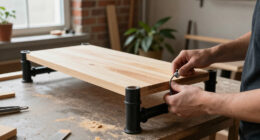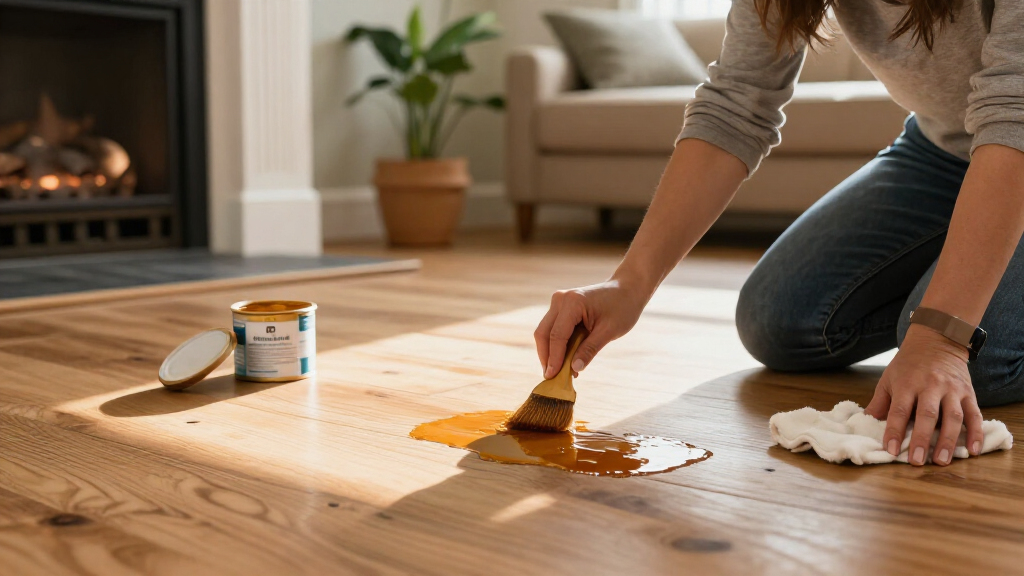

The best honey wood floor stain depends on the wood species, your preferred application, and whether you want stain alone or a built-in finish. I rank Minwax PolyShades Honey Pine first for its stain-and-polyurethane combination, while Minwax Wood Finish Honey and General Finishes Honey Maple stand out for buyers who prefer a separate protective topcoat. Gel formulas offer another route when uneven absorption is a concern, but they can look less like a traditional penetrating stain. Read on for the full comparison, including the tradeoffs between color control, ease of application, and floor suitability.

Get furniture and decor delivered free with Prime
- Fast, free delivery on millions of items
- Prime Video, Amazon Music and more included
- Member-only deals all year
Complete the kit


Key Takeaways
- PolyShades Honey Pine leads for convenience because it combines color and polyurethane, though its built-in finish limits the flexibility of applying protection separately.
- Several products use Honey Maple rather than Honey, so the shade name alone does not promise a close match; test samples on the actual floor wood before committing.
- Gel stains form a distinct option for surfaces that absorb stain unevenly, but their application and appearance differ from conventional penetrating stains.
- The lineup includes interior stains and exterior-oriented products; Gemini TWP Honeytone and Valspar Transparent Honey Gold should not be treated as interchangeable with indoor floor stains.
- Small containers suit color trials and compact projects, while a room-sized floor job calls for checking coverage, product compatibility, and container quantity before purchase.
| Minwax PolyShades Wood Stain and Polyurethane Finish, Quart, Honey Pine, Satin |  | Best All-in-One Interior Finish | Brand: Minwax | Color: Honey Pine | Sheen: Satin | VIEW LATEST PRICE | See Our Full Breakdown |
| Gemini TWP 1-Gallon Honeytone Wood Preservative |  | Best for Exterior Decks | Brand: Gemini | Model: TWP1515-1 | Color: Honeytone | VIEW LATEST PRICE | See Our Full Breakdown |
| General Finishes Oil-Based Penetrating Wood Stain, Honey Maple, 1/2 Pint |  | Best for Controlled Small Projects | Brand: General Finishes | Color: Honey Maple | Volume: 8 fluid ounces (1/2 pint) | VIEW LATEST PRICE | See Our Full Breakdown |
| Minwax Wood Finish Oil-Based Interior Wood Stain, Honey, 1 Quart |  | Best Overall for Honey-Toned Interior Floors | Brand: Minwax | Model number: 700494444 | Color: Honey | VIEW LATEST PRICE | See Our Full Breakdown |
| Minwax Gel Stain, Honey Maple, 1 Quart |  | Best for Vertical Woodwork and Mixed Materials | Brand: Minwax | Model number: 66040000 | Color: Honey Maple | VIEW LATEST PRICE | See Our Full Breakdown |
| Valspar Transparent Honey Gold Stain & Sealer, 1 Quart |  | Best for Stain-and-Sealer Simplicity | Brand: Valspar | Model: VL1028071-14 | Size: 1 quart | VIEW LATEST PRICE | See Our Full Breakdown |
| Minwax Wood Finish Oil-Based Wood Stain, Honey, 0.5 pt. |  | Best for Small Honey-Tone Touch-Ups | Brand: Minwax | Color: Honey | Finish: Semi-transparent | VIEW LATEST PRICE | See Our Full Breakdown |
| Bartley Honey Gel Stain, Quart |  | Best for Custom Honey-Tone Mixing | Brand: WOODNSHOP | Manufacturer: Seagrave Coatings | Size: Quart | VIEW LATEST PRICE | See Our Full Breakdown |
| Minwax Honey Maple Wood Stain, 32 fl oz |  | Best for Interior Cabinets and Larger Wood Projects | Brand: Minwax | Model: 66040-Qt | Color: Honey Maple | VIEW LATEST PRICE | See Our Full Breakdown |
| Varathane Premium Fast Dry Wood Stain, Honey Maple, Half Pint |  | Best for Faster Interior Projects | Brand: Varathane | Color: Honey Maple | Formula: Oil-based | VIEW LATEST PRICE | See Our Full Breakdown |
| General Finishes Wood Stain, Honey Maple, 1/2 Pint |  | Best for Small Raw-Wood Floor Projects | Brand: General Finishes | Color: Honey Maple | Container size: 1/2 pint | VIEW LATEST PRICE | See Our Full Breakdown |
| honey wood floor stain | Brand | Color |
|---|---|---|
| Minwax PolyShades Wood Stain a | Minwax | Honey Pine |
| Gemini TWP 1-Gallon Honeytone | Gemini | Honeytone |
| General Finishes Oil-Based Pen | General Finishes | Honey Maple |
| Minwax Wood Finish Oil-Based I | Minwax | Honey |
| Minwax Gel Stain | Minwax | Honey Maple |
| Valspar Transparent Honey Gold | Valspar | Honey gold |
| Minwax Wood Finish Oil-Based W | Minwax | Honey |
| Bartley Honey Gel Stain | WOODNSHOP | Honey |
| Minwax Honey Maple Wood Stain | Minwax | Honey Maple |
| Varathane Premium Fast Dry Woo | Varathane | Honey Maple |
| General Finishes Wood Stain | General Finishes | Honey Maple |
More Details on Our Top Picks
Minwax PolyShades Wood Stain and Polyurethane Finish, Quart, Honey Pine, Satin
For a honey-toned interior floor project where fewer finishing steps matter, PolyShades Honey Pine pairs stain with a satin polyurethane finish. That sets it apart from Minwax Wood Finish Oil-Based Interior Wood Stain, Honey, which colors the wood but requires a separate protective topcoat. The formula can also go over previously finished interior wood after light sanding, a useful option when refinishing without stripping every layer. Its brush-on application gives it a different feel from wipe-on stains, though careful, even application matters for a consistent result. The tradeoff is the oil-based cleanup: you’ll need mineral spirits, and this is not an exterior deck product. I’d choose it when a combined color-and-protection step fits the project, but skip it if you want a standalone stain or a simple water cleanup.
Pros:- Combines stain and polyurethane protection in one application step
- Can be applied over previously finished interior wood after light sanding
- Honey Pine color and satin sheen provide a warm, low-gloss look
- Works on furniture, doors, cabinets, and other interior woodwork
Cons:- Requires light sanding before application, including over existing finishes
- Oil-based formula requires mineral spirits for cleanup
- Combining color and protection offers less flexibility than applying a separate stain and topcoat
Best for: DIYers finishing interior wood floors or woodwork who want stain and polyurethane protection in one brush-on product.
Not ideal for: Homeowners staining exterior decks or anyone who wants water-based cleanup or separate control over stain and topcoat choices.
- Brand:Minwax
- Color:Honey Pine
- Sheen:Satin
- Container size:Quart
- Base:Oil-based
- Application:Brush-on
- Use:Interior wood surfaces
- Cleanup:Mineral spirits
Our verdict“Choose PolyShades Honey Pine when you want a warm interior color and protective finish in one product, and can work with oil-based cleanup.”
Gemini TWP 1-Gallon Honeytone Wood Preservative
Gemini TWP Honeytone is the exterior specialist in this group, not a substitute for an interior floor stain. Its preservative is described for decks and other exterior wood, with protection aimed at moisture, decay, freeze damage, and mildew; UV-absorbing pigments also help limit graying and fading. That makes it a better match for an outdoor deck in a honey-toned finish than Minwax Wood Finish Oil-Based Interior Wood Stain, Honey, which is intended for indoor surfaces. The distinction matters: a floor stain meant for interior rooms should not be chosen for an exposed deck simply because its color looks right. The main tradeoff is its restricted use: the product is recommended for exterior applications only, so it does not belong on indoor floors. Choose it for outdoor wood protection and skip it for an indoor honey floor project.
Pros:- Made for exterior wood such as decks
- Helps protect wood from decay and moisture damage
- UV-absorbing pigments help reduce graying and fading
- Mildewcides inhibit mold and mildew growth
Cons:- Exterior use only, so it is unsuitable for indoor floors
- A preservative rather than an interior floor stain-and-finish system
- The available product details do not specify application method or drying time
Best for: Deck owners seeking a honey-toned exterior wood preservative with protection against moisture, UV-related fading, and mildew.
Not ideal for: Homeowners staining indoor hardwood floors, since this product is recommended for exterior use only.
- Brand:Gemini
- Model:TWP1515-1
- Color:Honeytone
- Container size:1 gallon
- Recommended surfaces:Decks and wood
- Recommended use:Exterior
- Item weight:8.4 pounds
- Item dimensions:6.5 × 7.5 × 6.5 inches
Our verdict“Pick Gemini TWP Honeytone for an exterior deck, but use an interior-specific stain such as Minwax Honey for indoor floors.”
General Finishes Oil-Based Penetrating Wood Stain, Honey Maple, 1/2 Pint
General Finishes Honey Maple suits smaller interior jobs where application control matters more than having a large container. Its penetrating oil-based formula is designed to promote more uniform color and help prevent streaking and blotching, and it can be brushed on or applied with a clean rag before wiping away excess. Unlike Minwax Gel Stain, Honey Maple, it is a penetrating stain rather than a thick gel, so it is the more fitting pick when you want the product to enter the wood grain. It also accepts either oil- or water-based topcoats, giving you more finishing options than an all-in-one product such as Minwax PolyShades. The limits are its half-pint volume, mineral-spirits cleanup, and variable listed coverage. I’d reserve it for focused floor repairs or smaller wood projects, not a large floor area.
Pros:- Penetrating formula helps promote more uniform color and reduce streaking or blotching
- Can be applied with a brush or clean rag and wiped back
- Compatible with oil- or water-based topcoats
- Compact container suits small projects and touch-ups
Cons:- Half-pint size is limiting for full-floor projects
- Requires mineral spirits for cleanup
- Listed coverage ranges from 45 to 200 square feet
Best for: DIYers matching or staining a small interior floor section who want a penetrating stain with flexible topcoat compatibility.
Not ideal for: People staining a large room or whole-house floor, because the container is only a half pint and listed coverage varies widely.
- Brand:General Finishes
- Color:Honey Maple
- Volume:8 fluid ounces (1/2 pint)
- Base:Oil-based
- Application:Brush or wipe on with a clean rag, then wipe off
- Cleanup:Mineral spirits
- Coverage:45–200 square feet
- Topcoat compatibility:Oil- or water-based products
Our verdict“Choose this stain for a small honey-maple interior project where a penetrating formula and topcoat flexibility matter more than volume.”
Minwax Wood Finish Oil-Based Interior Wood Stain, Honey, 1 Quart
Minwax Wood Finish in Honey is the strongest fit here for buyers who want a straightforward, interior honey-brown stain and plan to choose their own protective topcoat. It penetrates the wood pores and is described as producing even color in one coat; wiping after five to fifteen minutes lets you adjust how much color remains. Compared with Minwax PolyShades Honey Pine, this is a standalone stain, so it takes another finishing step but leaves the topcoat choice open. The quart size also makes it more practical for a larger project than General Finishes Honey Maple in its half-pint container. Its tradeoffs are the interior-only use and the hands-on wipe-off process; drying time is listed at about two hours. I’d start here for a classic honey floor tone, then add a suitable floor topcoat.
Pros:- Penetrates wood pores and enhances natural grain
- One-coat application is described as producing an even honey-brown color
- Color depth can be adjusted by changing wipe-off timing or adding coats
- Quart container is more suitable for larger projects than a half-pint stain
Cons:- Intended for interior wood, not exterior floors or decks
- Excess stain must be wiped away after application
- Requires a separate protective topcoat
Best for: Homeowners staining interior wood floors who want a classic honey-brown color, quart-sized supply, and freedom to select a separate topcoat.
Not ideal for: Those needing an exterior stain or a one-step stain-and-protection product, since this is an interior stain that requires wiping and a separate finish.
- Brand:Minwax
- Model number:700494444
- Color:Honey
- Finish type:Oil-based penetrating stain
- Intended use:Interior wood
- Volume:1 quart (32 fluid ounces)
- Drying time:About 2 hours
- Application tools:Clean cloth or wood stain brush
Our verdict“Choose Minwax Honey for a traditional interior honey floor color when you want to apply protection separately rather than use an all-in-one finish.”
Minwax Gel Stain, Honey Maple, 1 Quart
Minwax Gel Stain in Honey Maple earns its place for controlled application on doors, trim, cabinets, and other upright surfaces. Its thick, non-drip consistency is less likely to run than the penetrating Minwax Wood Finish Oil-Based Interior Wood Stain, Honey, making it easier to manage where gravity can pull a thinner stain. It also works on listed materials beyond wood, including metal, veneer, and fiberglass, giving it broader project use than the floor-focused options. That versatility comes with a qualification: bare wood may need pre-stain conditioner for more uniform color, and the product is not a protective floor finish on its own. The listed directions call for wiping excess after three minutes. I’d choose it for vertical honey-toned details or mixed-material projects, but not as my first pick for staining a broad, bare floor.
Pros:- Thick, non-drip formula helps control application on vertical surfaces
- Can be applied with a cloth, brush, or foam applicator
- Suitable for wood, metal, veneer, fiberglass, and plywood
- Quart volume provides more material than the half-pint General Finishes Honey Maple
Cons:- Bare wood may need pre-stain conditioner for more uniform color
- Requires wiping away excess after three minutes
- Exterior projects require a protective clear topcoat
Best for: DIYers staining vertical interior woodwork, cabinets, doors, or projects that combine wood with veneer, metal, or fiberglass.
Not ideal for: Homeowners staining large areas of bare flooring who want a penetrating stain with predictable floor coverage and no added conditioning step.
- Brand:Minwax
- Model number:66040000
- Color:Honey Maple
- Volume:1 quart (32 fluid ounces)
- Formula:Gel, non-drip
- Application:Clean cloth, stain brush, or foam applicator
- Recommended uses:Woodwork, furniture, doors, molding, trim, cabinets, and accessories
- Compatible materials:Wood, metal, veneer, fiberglass, and plywood
Our verdict“Pick Honey Maple Gel Stain for controlled color on vertical woodwork or mixed materials, rather than as a first choice for a large bare floor.”
Valspar Transparent Honey Gold Stain & Sealer, 1 Quart
Valspar combines a transparent honey-gold stain with a sealer, making it a straightforward pick for buyers who want both functions in one product. Its satin finish keeps the look softer than a glossy coating, while the listed coverage of up to 400 square feet gives this quart a notably broad reach on paper compared with the smaller Minwax Honey stain. The tradeoff is that the product details provide little guidance on durability, application, or floor-specific suitability, so I would not assume it is ready for every high-traffic floor without checking the label. Compared with Varathane Premium Fast Dry Honey Maple, Valspar emphasizes the combined sealer rather than a stated one-hour touch-dry time. It suits projects where a transparent honey tone and simplified coating steps matter more than detailed performance information.
Pros:- Combines stain and sealer in one product
- Transparent honey-gold color lets more wood character show
- Satin finish avoids a high-gloss look
- Lists coverage up to 400 square feet
Cons:- Provided details do not explain performance or durability
- The description does not specify drying time or application method
- Floor-specific suitability is not stated
Best for: DIYers who want a transparent honey-gold stain and sealer in one product for a wood project and can verify its floor suitability on the label.
Not ideal for: Buyers who need documented floor durability, detailed application instructions, or a clearly stated drying schedule before choosing a finish.
- Brand:Valspar
- Model:VL1028071-14
- Size:1 quart
- Color:Honey gold
- Opacity:Transparent
- Finish:Satin
- Coating:Urethane
- Listed coverage:Up to 400 square feet
Our verdict“Choose Valspar if you want a transparent honey-gold stain with sealer in one product and can confirm it suits your floor and project conditions.”
Minwax Wood Finish Oil-Based Wood Stain, Honey, 0.5 pt.
This half-pint Minwax is the small-project pick for buyers who want a semi-transparent honey color without committing to a larger container. Its oil-based formula is suited to wood, and the stated coverage of about 37.5 square feet gives a practical planning figure for a modest job. That capacity is far below the listed coverage for Valspar Transparent Honey Gold, so I would choose Valspar for a broader area and this Minwax for a small furniture piece or limited repair. Compared with Varathane Honey Maple, Minwax does not list a one-hour touch-dry time or one-coat coverage, leaving less information for scheduling. The main limitation is scale: the compact container and wood-only compatibility make it a poor fit for a whole-room floor project unless the required area is very small.
Pros:- Semi-transparent honey color allows some grain to remain visible
- Oil-based formula for compatible wood surfaces
- Coverage is listed at approximately 37.5 square feet
- Small container suits limited projects and touch-ups
Cons:- Half-pint capacity is restrictive for floor-sized projects
- Listed as compatible with wood only
- No drying-time detail is provided
Best for: DIYers staining a small wood furniture piece, trim section, or localized repair who prefer a semi-transparent honey tone.
Not ideal for: Homeowners staining a full room or several large surfaces, since the half-pint size covers about 37.5 square feet.
- Brand:Minwax
- Color:Honey
- Finish:Semi-transparent
- Coating:Oil-based
- Compatible material:Wood
- Size:0.5 pint
- Listed coverage:Approximately 37.5 square feet
- Dimensions:6.1 x 6.1 x 3.4 inches
Our verdict“Pick this Minwax for a small wood project in honey, but choose a larger-format option such as Valspar for broader coverage.”
Bartley Honey Gel Stain, Quart
Bartley’s wipe-on gel is the most flexible color-mixing option here: the honey shade can be blended with other Bartley Gel Stains, and Bartley Gel Varnish can be added for lighter shades. That makes it a better fit for furniture makers adjusting a specific tone than Varathane Honey Maple, which instead highlights grain and lists a one-coat application. Bartley’s semi-transparent opacity and satin/semi-gloss finish offer a different look from the transparent, satin Valspar stain-and-sealer. Its quart size is suited to more than a tiny touch-up, but the product is described for furniture rather than floors, and no drying-time or durability details are supplied. I would favor it for controlled furniture work and custom color development, not a floor job that calls for clear guidance on wear or project coverage.
Pros:- Wipe-on gel format suits controlled furniture application
- Can be mixed with other Bartley Gel Stains for custom colors
- Can be combined with Bartley Gel Varnish to make lighter shades
- Semi-transparent honey color and satin/semi-gloss finish
Cons:- Recommended for furniture rather than specifically for floors
- No coverage or drying-time figure is provided
- Durability details are not stated
Best for: Furniture refinishers and woodworkers who want to adjust a honey shade by mixing compatible Bartley gel products.
Not ideal for: Floor owners seeking stated floor suitability, coverage, drying time, or durability information before starting a larger job.
- Brand:WOODNSHOP
- Manufacturer:Seagrave Coatings
- Size:Quart
- Unit count:32 fluid ounces
- Application type:Wipe-on gel
- Compatible material:Wood
- Color:Honey
- Finish and opacity:Satin/semi-gloss; semi-transparent
Our verdict“Choose Bartley if color-mixing flexibility for furniture matters more than floor-specific performance details.”
Minwax Honey Maple Wood Stain, 32 fl oz
The 32-ounce Minwax Honey Maple is the larger-format interior choice in this group, with cabinets named among its recommended uses. That makes it a more natural match for coordinated indoor woodwork than the half-pint Minwax Honey, which is better suited to small areas. Its oil-based formula and stated high coverage favor buyers tackling more than one small object, though no exact coverage figure is supplied. The finish is described as glossy or smooth, so it may look more reflective than the satin Valspar Transparent Honey Gold. That difference matters if you want a quieter surface appearance. I would shortlist this for interior cabinets and wood surfaces, but not assume it is a complete floor-finishing system: the supplied details do not specify floor use, drying time, or a separate protective topcoat.
Pros:- 32-fluid-ounce container suits projects larger than a small touch-up
- Recommended for interior wood surfaces and cabinets
- Described as providing high coverage on wood
- Honey Maple color offers a distinct alternative to plain Honey
Cons:- Oil-based formula may not suit buyers seeking a different base
- No precise coverage figure is supplied
- Glossy or smooth finish may be shinier than a satin preference
Best for: DIYers staining multiple interior wood surfaces or cabinets who want a larger container in a Honey Maple shade.
Not ideal for: Buyers seeking a satin, low-sheen look or a floor-focused product with stated coverage and drying details.
- Brand:Minwax
- Model:66040-Qt
- Color:Honey Maple
- Volume:32 fluid ounces
- Base:Oil-based
- Recommended surface:Wood
- Recommended uses:Interior surfaces, including cabinets
- Finish:Glossy or smooth
Our verdict“Choose Minwax Honey Maple for a larger interior cabinet or wood project if its oil-based formula and potentially glossy look suit your plan.”
Varathane Premium Fast Dry Wood Stain, Honey Maple, Half Pint
Varathane is the clearest choice for a faster turnaround, with a stated touch-dry time of about one hour and one-coat coverage. Its nano pigments are described as highlighting natural grain, which suits buyers who want the wood pattern to remain a visible part of the honey-maple finish. The half-pint container lists coverage up to 70 square feet—more than the small Minwax Honey stain’s stated 37.5 square feet, but still a limited amount for many full-floor projects. Compared with Valspar, Varathane offers a drying-time detail but does not combine stain and sealer. It is also specified for interior use, and its oil-based formula may not fit every project preference. I would choose it for smaller indoor wood projects where quick handling and grain emphasis matter more than a built-in sealer.
Pros:- Dries to the touch in about one hour
- One-coat coverage is stated
- Nano pigments are described as highlighting natural wood grain
- Lists coverage up to 70 square feet
Cons:- For interior use only
- Oil-based formula
- Half-pint size may be insufficient for larger floor projects
Best for: DIYers working on a smaller interior furniture or wood project who value a stated one-hour touch-dry time and visible grain.
Not ideal for: People staining outdoor wood or large floor areas, since it is interior-only and the half-pint covers up to 70 square feet.
- Brand:Varathane
- Color:Honey Maple
- Formula:Oil-based
- Coverage:Up to 70 square feet
- Drying time:About 1 hour to touch
- Container size:8 fluid ounces (half pint)
- Recommended surface:Furniture
- Use:Interior wood projects
Our verdict“Choose Varathane for a smaller interior project when quick touch-dry timing and grain emphasis matter more than a built-in sealer.”
General Finishes Wood Stain, Honey Maple, 1/2 Pint
For a honey-toned floor project involving a limited amount of bare wood, this oil-based penetrating stain offers a focused alternative to the larger Minwax Wood Finish Oil-Based Interior Wood Stain, Honey, 1 Quart. Its 8-fluid-ounce container suits test boards, small repairs, or a compact project, while the Honey Maple color gives it a warmer direction than a straightforward Honey shade. The formula uses oils, resins, and pigments and is intended for raw wood, so it is not a one-step stain-and-finish product: plan on preparing the surface and applying a separate protective finish. The listed recommended use is cabinets, not floors, so I would treat floor color and compatibility as something to confirm with a sample before committing. Compared with the quart-size Minwax, it produces less leftover stain but offers less coverage for a whole room.
Pros:- Penetrating formula is designed for application to raw wood
- Honey Maple color offers a warm option for a honey-toned palette
- Small 8-fluid-ounce size is practical for samples and limited projects
- Oil, resin, and pigment formulation is suited to wood projects such as cabinets
Cons:- Cabinets are the listed recommended use, so floor suitability should be confirmed before application
- Does not include a protective finish, requiring a separate finishing step
- Half-pint volume may be insufficient for a full-room floor project
Best for: DIYers staining a small area of raw wood or making a floor-color sample who want a honey-maple tone in a compact container.
Not ideal for: Anyone staining an entire room or seeking a floor-specific, one-step stain-and-sealer; the container is small and the listed recommended use is cabinets.
- Brand:General Finishes
- Color:Honey Maple
- Container size:1/2 pint
- Volume:8 fluid ounces
- Stain type:Oil-based penetrating stain
- Recommended surface:Wood
- Recommended use:Cabinets
- Unit count:1
Our verdict“Choose this compact Honey Maple stain for raw-wood samples or small areas, but pick a larger, floor-compatible option for a full floor.”
How We Picked
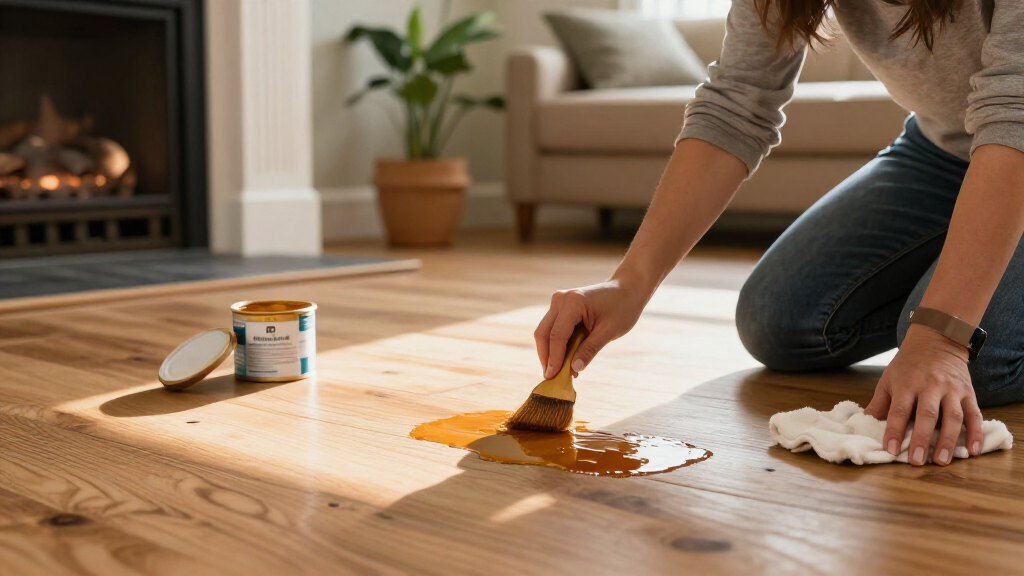
I compared the 11 products by how well their stated format and intended use fit a honey-toned floor project. The ranking gives priority to a clear path to a warm wood color, practical application on flooring, and the ability to build a suitable protective finish. I also weighed whether each formula offers a distinct benefit—such as a combined stain-and-finish layer, a gel consistency, or an exterior-preservative role—rather than treating similar shade labels as proof of equal results.
That is why the products are not ranked by shade name alone. Interior floor suitability and finish flexibility carry more weight than a broad or exterior use claim. Minwax PolyShades ranks first for buyers who value a combined color-and-protection step; separate interior stains follow for people who want more control over the topcoat. Gel products serve buyers facing uneven absorption, while exterior-focused options rank lower for indoor floors unless their label specifically supports the intended use. The listed sizes also matter: sample-scale quantities are more useful for testing than for coating an entire room.
| honey wood floor stain | Brand | Color |
|---|---|---|
| Minwax PolyShades Wood Stain a | Minwax | Honey Pine |
| Gemini TWP 1-Gallon Honeytone | Gemini | Honeytone |
| General Finishes Oil-Based Pen | General Finishes | Honey Maple |
| Minwax Wood Finish Oil-Based I | Minwax | Honey |
| Minwax Gel Stain | Minwax | Honey Maple |
| Valspar Transparent Honey Gold | Valspar | Honey gold |
| Minwax Wood Finish Oil-Based W | Minwax | Honey |
| Bartley Honey Gel Stain | WOODNSHOP | Honey |
| Minwax Honey Maple Wood Stain | Minwax | Honey Maple |
| Varathane Premium Fast Dry Woo | Varathane | Honey Maple |
| General Finishes Wood Stain | General Finishes | Honey Maple |
Factors to Consider When Choosing Best Honey Wood Floor Stains
Choosing a honey stain is as much about the floor and finishing plan as the color label. I would settle these questions before buying: what the wood will do with stain, how much control you want over the protective coat, and whether the product is meant for interior flooring.
Match the stain to the wood species
Honey is a color description, not a guaranteed result across different woods. Oak, pine, maple, and previously finished boards can absorb the same stain differently, shifting the finished floor toward yellow, orange, or brown. Sanding quality and leftover finish also affect absorption, so a stain applied over inconsistent preparation can look patchy. Make test boards from offcuts or use an inconspicuous area prepared exactly like the floor. Compare samples after they dry and after the planned topcoat, since clear finishes can deepen or warm the color. If an exact color match matters, choose by a cured sample rather than by the can label.
Decide whether stain and protection should be separate
A combined stain-and-polyurethane product can reduce the number of application steps, but it gives you less freedom to choose a separate topcoat. A stain-only formula lets you select the protective finish based on sheen, wear needs, and maintenance preferences. The two-step route also means more scheduling, surface preparation, and compatibility checks. Do not assume a stain alone is suitable as a finished walking surface; verify the product instructions and plan an appropriate floor coating where needed. For a large or high-traffic room, flexibility in the protective layer may matter more than saving an application step. Read the full system directions before pairing products.
Treat gel and penetrating stains as different techniques
Penetrating stains color wood by soaking into its surface, while gel products are thicker and can sit more on the surface. That difference can help explain why a gel may be useful on wood that absorbs unevenly, yet look less like a classic grain-enhancing stain. Neither format automatically solves blotching or guarantees uniform color. Follow the label’s application and removal directions, and avoid applying a second coat simply to darken a sample without checking the product guidance. Test the finish on the same species and sanding schedule as the floor. If you want pronounced grain variation, compare dried samples before choosing a gel formula.
Check interior versus exterior labeling
Some honey-toned products are designed for outdoor wood protection, not interior floors. Exterior formulations may have different intended uses and finishing systems, so a matching color is not enough reason to use one inside. Confirm the label explicitly lists the intended surface and location before purchase. This matters especially when comparing broad-use options such as preservatives or stain-and-sealer products with interior wood stains. A product suited to decks or exterior siding may not deliver the wear, appearance, or indoor use guidance you need for a floor. When the label is unclear, choose a product with explicit interior floor directions or contact the manufacturer.
Plan coverage and test quantities realistically
Several products in this roundup come in half-pint or half-pint-equivalent sizes, which can work for samples or small jobs but may not cover a full room. Coverage varies with wood porosity, application method, and how much stain the surface accepts, so use the product label rather than a rough guess. Calculate the floor area and allow for test pieces and touch-ups before buying. A small container can be a sensible way to compare colors, but running short midway through a floor can complicate color consistency if another batch differs. Check whether the product is available in a quantity that suits the project. Keep the same preparation and application method across the whole floor.
Choose sheen and maintenance as part of the color decision
The stain color is only one part of the finished floor; the clear coat’s sheen changes how honey tones read under room lighting. Satin can soften reflections, while glossier finishes can make the surface appear brighter and emphasize texture or scratches. A stain-and-finish product combines those decisions, whereas a separate system lets you choose them independently. Think about the room’s light, traffic, and the appearance of nearby wood before committing. Also check the maintenance instructions for the full finishing system, not just the stain. A color sample viewed under the room’s daylight and evening lighting can prevent a mismatch after installation.
Frequently Asked Questions
Can I use an exterior honey stain on an indoor wood floor?
Do not rely on a similar color name to determine suitability. Gemini TWP Honeytone and other exterior-oriented products are intended for uses that may differ from interior flooring, so check the current label for approved surfaces and locations. Outdoor preservatives and stain-sealers may not provide the appearance or wear system expected on a floor. If the product does not clearly support interior floor use, choose an interior stain and a compatible floor finish instead. A color sample cannot replace checking the intended-use directions.
Should I choose Honey, Honey Pine, or Honey Maple for a floor?
Those names identify different shades and product lines, not a shared standard color. Wood species, sanding, and the final clear coat can change how each shade appears, so a name-based match can disappoint. Make sample boards from the same wood and prepare them as you will prepare the floor. Apply the intended topcoat before comparing them, since it can alter warmth and depth. Choose the sample that looks right in the room’s lighting rather than the label that sounds closest.
Is a stain-and-polyurethane product a good choice for a whole floor?
It can suit buyers who want a combined application, but check that the product label approves the surface and floor use. A combined product reduces separate steps while offering less freedom to choose a different protective coat. For a high-traffic floor or a specific sheen preference, a separate stain and compatible floor finish may give you more control. Application directions matter because uneven coats can make a large surface look inconsistent. Test the complete system on a prepared sample before applying it across the room.
Will gel stain prevent blotching on pine or maple flooring?
Gel consistency may help with some uneven-absorption problems, but it does not guarantee a uniform floor or eliminate preparation issues. Pine and maple can respond differently depending on grain, sanding, and the condition of the boards. Follow the product’s directions and test a full sample, including any recommended conditioner or topcoat. Compare the sample with a penetrating stain if grain visibility is a priority. If the floor is already installed, sample an inconspicuous area before treating the entire surface.
How much honey stain should I buy for one room?
Start with the floor’s measured area and the coverage stated on the specific product label, then account for the wood’s absorption and the application method. Do not use container size alone to estimate coverage: several options here are small-format products that may be better suited to testing than room-scale work. Prepare a sample to see how much stain the wood accepts and whether you will need additional coats. Buy enough of the same product for the full project, including a margin for test pieces and touch-ups. Follow the label’s coverage guidance rather than assuming all stain formulas spread alike.
Conclusion
For the broadest mix of convenience and a honey-toned finish, I recommend Minwax PolyShades Honey Pine as best overall, provided its combined stain-and-polyurethane format suits your floor and the label approves the application. For best value in a flexible interior-stain approach, consider Minwax Wood Finish Honey, then pair it with a compatible floor topcoat; choose the specific container size that fits your project. Best for beginners is PolyShades when fewer separate finishing steps are the priority, though careful sample testing still matters. For a premium-style choice, I would look to Bartley Honey Gel if you want a gel application and have confirmed it suits the floor; skip it if you prefer a conventional penetrating look. For specific needs, compare Minwax Gel Stain or Bartley for a thicker formula, and reserve Gemini TWP or Valspar Transparent Honey Gold for uses their labels explicitly support. My final recommendation is to approve the color on a prepared, topcoated sample before buying enough for the whole floor.
Black Friday Picks

Philips Hue Play Floor Lamp, RGBWWIC LED, 53 Inch, Black
As an affiliate, we earn on qualifying purchases.