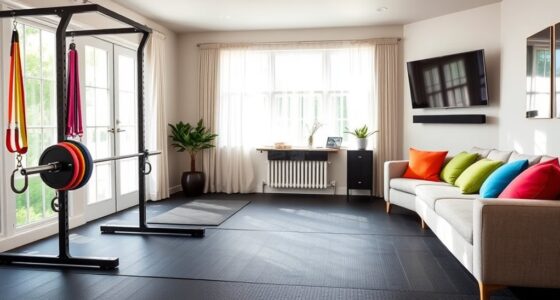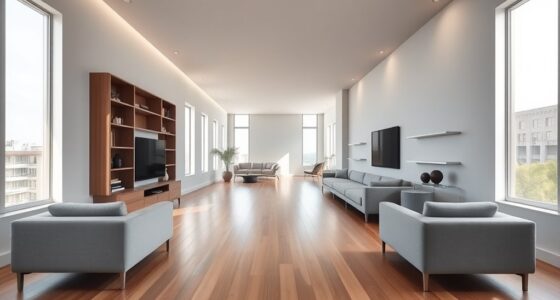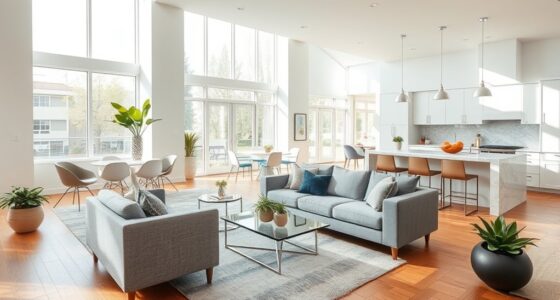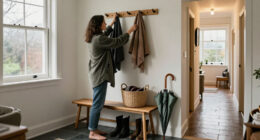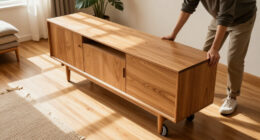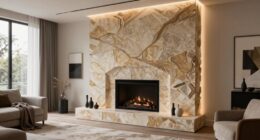
To create better visual balance in a furniture-heavy room, focus on strategic arrangements that promote flow and harmony. Use color coordination by adding contrast or complementary shades to add depth and prevent flatness. Incorporate layered lighting with lamps and accent lights to highlight features and soften heavy furniture. Balance large pieces with softer tones and lighter accessories, and adjust layout to improve openness. Keep exploring these tips to transform your space into a more inviting and balanced environment.

Get furniture and decor delivered free with Prime
- Fast, free delivery on millions of items
- Prime Video, Amazon Music and more included
- Member-only deals all year
Key Takeaways
- Use color contrast and complementary shades to add depth and prevent flatness in the room.
- Incorporate layered lighting, such as table and floor lamps, to create warmth and highlight space features.
- Arrange furniture thoughtfully to promote flow and avoid overcrowding, emphasizing openness.
- Balance bold furniture pieces with softer tones and accessories to reduce visual heaviness.
- Highlight key features with strategic lighting to enhance harmony and distract from clutter.
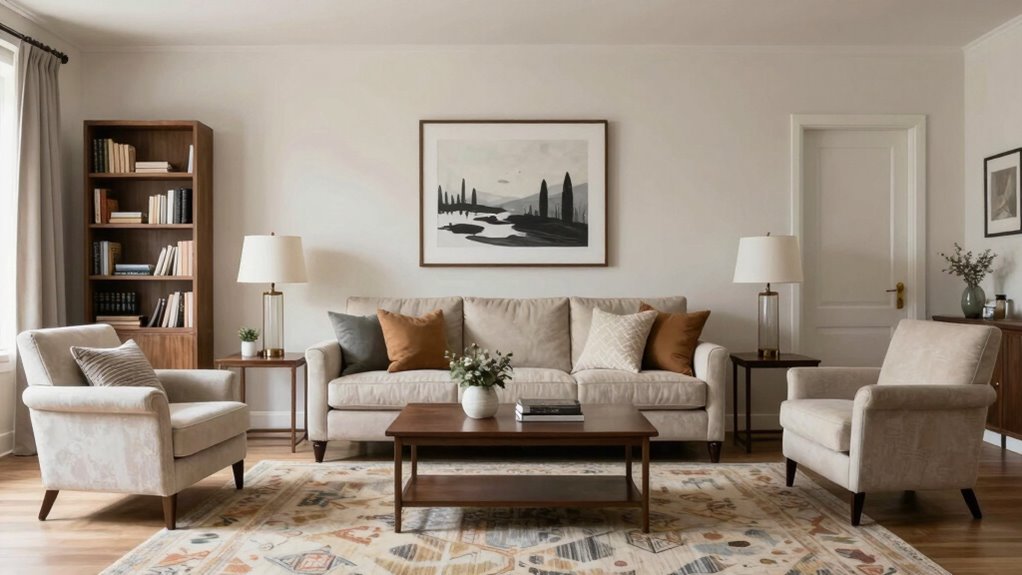
Have you ever felt that a room feels cluttered or unbalanced despite having stylish furniture? It’s a common issue, especially when you’ve filled a space with numerous pieces without considering how they work together visually. The key to creating better balance isn’t just about choosing the right furniture but also about how you arrange and complement those pieces through color coordination and lighting strategies. When you pay attention to these details, your room can feel more harmonious and inviting, even if it’s heavy on furniture.
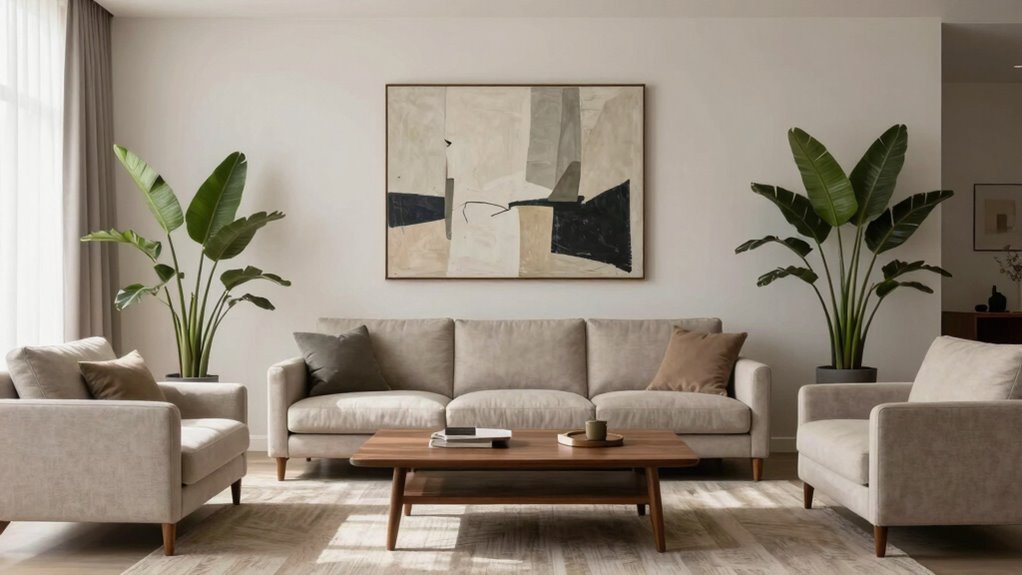
Start by examining your color palette. If your furniture is all in similar shades, it might make the room look flat or overwhelming. Instead, incorporate a variety of complementary or contrasting colors to add depth and visual interest. For example, if your furniture is predominantly dark, brighten the space with lighter accessories, rugs, or wall colors. Use color coordination intentionally; balance bold pieces with softer tones to prevent any one area from overpowering the room. This approach helps your eye move naturally around the space, reducing the feeling of clutter and creating a sense of order.
Varying colors and tones create depth, making spaces feel balanced and inviting rather than flat or cluttered.
Lighting strategies also play an essential role in achieving visual balance. Relying solely on overhead lighting can flatten the room and emphasize cluttered corners. Instead, layer your lighting with different sources—table lamps, floor lamps, and accent lights—to highlight specific areas and create warmth. Proper lighting can also help diminish visual weight, making heavy furniture feel less oppressive. For instance, placing a tall lamp beside a bulky armchair draws attention upward, balancing the visual mass and making the space feel more open. Additionally, understanding the importance of visual balance can help you make more deliberate design choices that enhance harmony. Incorporating lighting techniques, such as dimmers or warm bulbs, can further enhance the mood and visual harmony in your space. Paying attention to lighting placement can also help in emphasizing the room’s best features and distracting from any cluttered spots. To further improve the balance, consider how furniture arrangement influences the flow and openness of the space, ensuring it doesn’t feel cramped or disjointed. A well-thought-out layout can create a sense of spatial harmony, even in rooms filled with substantial furniture pieces.
layered floor lamps for living room
As an affiliate, we earn on qualifying purchases.
As an affiliate, we earn on qualifying purchases.
Frequently Asked Questions
How Does Lighting Affect Visual Balance in a Furniture-Heavy Room?
Lighting plays a key role in balancing a furniture-heavy room. Natural light brightens the space during the day, creating a sense of openness and reducing visual heaviness. Artificial illumination, such as lamps and overhead lights, adds layers of light that highlight furniture pieces and prevent shadows, ensuring the room feels balanced and welcoming. Combining both types of lighting helps to distribute visual weight evenly, making the space feel harmonious and well-designed.
Can Color Schemes Improve Balance in Cluttered Spaces?
Color schemes can definitely improve balance in cluttered spaces. By choosing colors rooted in color psychology, you can influence mood and create harmony. Soft, cohesive hues help hide clutter and foster a feeling of calm, while bold colors can highlight focal points without overwhelming. You’ll find that carefully selected shades work wonders in mood enhancement and visually balancing busy rooms, making everything feel more controlled and comfortable.
What Role Do Rugs Play in Balancing Furniture-Heavy Rooms?
Rugs play a vital role in balancing furniture-heavy rooms by anchoring the space through strategic rug placement. Position your rug to frame key furniture pieces, creating visual harmony. Incorporate texture contrast with the rug to break up the heaviness of furniture, adding depth and interest. This combination helps distribute visual weight evenly, making the room feel more balanced, inviting, and cohesive.
How Can Artwork Contribute to Visual Harmony?
Artwork contributes to visual harmony by guiding your eye and creating focal points. You can achieve this through strategic artwork placement, such as above furniture or on empty walls, ensuring balance. Color coordination also plays a key role; choose artwork with hues that complement your furniture and room palette. This coordination unifies the space, making it feel cohesive and well-balanced, even in a furniture-heavy room.
Are There Specific Furniture Arrangements That Enhance Balance?
Think of your room as a dance floor—you want the furniture to move in harmony. A symmetrical layout, with matching pieces on either side, creates a balanced visual rhythm. Position a central focal point, like a sofa or fireplace, and arrange other furniture around it evenly. This setup guides the eye smoothly through the space, making it feel inviting and well-composed without overwhelming any one area.
Conclusion
Achieving visual balance in a furniture-heavy room transforms it from cluttered to inviting. Remember, studies show that balanced spaces can reduce stress levels by up to 20%, making your home not just stylish but also more calming. By thoughtfully arranging furniture, incorporating varied heights, and adding accessories, you create harmony that feels natural and welcoming. Keep experimenting with placement until your space feels just right—your perfect balance is worth the effort!
Fall Picks
fall essentials
As an affiliate, we earn on qualifying purchases.