
TL;DR
YouTube creator Liz Fenwick DIY demonstrates making decorative bathroom hooks with Quikrete Quick-Setting Cement, square silicone molds and metal hooks. The project is a DIY idea, not a tested product recommendation: cement strength, finished-hook weight and mounting suitability depend on the materials and installation.
YouTube creator Liz Fenwick DIY demonstrates making decorative bathroom towel hooks by embedding metal hooks in Quikrete Quick-Setting Cement poured into silicone molds. The project offers a way to turn basic hardware into a custom bathroom accessory, but the video’s suggested consistency and mounting options require care: extra water can weaken cement, and adhesive strips must be rated for the finished load and wall surface.

Get furniture and decor delivered free with Prime
- Fast, free delivery on millions of items
- Prime Video, Amazon Music and more included
- Member-only deals all year
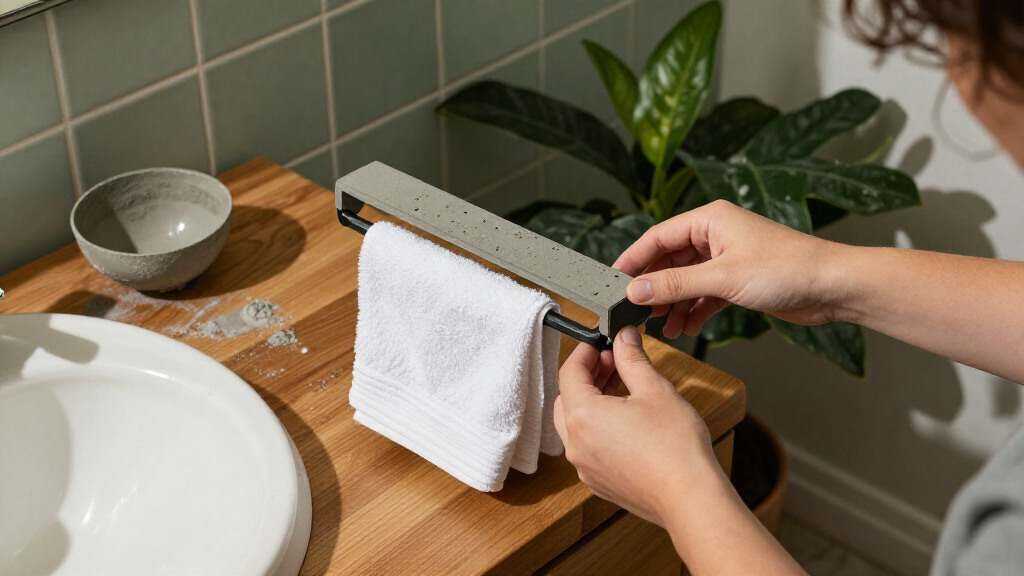
In a segment of her bathroom DIY video, Fenwick uses square silicone molds and mixes the cement in paper bowls, adding water in small amounts. She describes the mixture as having a “pudding consistency” and says a thinner mix is easier to handle. The cement is spooned into the molds, with more added over the hook’s base until it is covered.
The hook must stay upright while the cement sets. Fenwick balances hers on paint bottles; a brick, wooden block or stack of books could also act as a support. The choice of mold and hardware affects the final look: the demonstration uses simple metal hooks, while cast-iron hardware or a different mold shape could create a more industrial or distinctive result. Any mold needs a flat side and enough depth to cover the hook base.
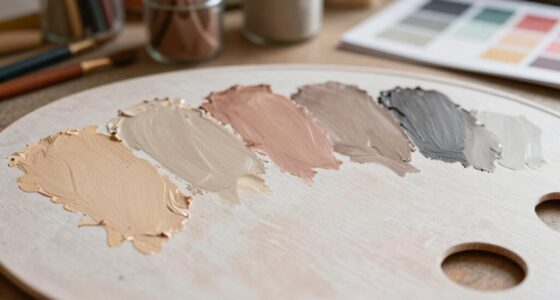
Fenwick adds acrylic paint to tint her mixture. The project description says Quikrete liquid cement color is another option, with the additive blended into the water before the dry mix is added, following the manufacturer’s directions. The manufacturer recommends a thick oatmeal consistency, rather than the thinner texture Fenwick describes; adding too much water can reduce concrete strength.
Cast a custom towel hook with cement
Liz Fenwick DIY demonstrates embedding metal hooks in Quikrete Quick-Setting Cement using silicone molds. The result is a craft project, not a load-tested product.
How the hook is made
The demonstration combines cement, a mold and hardware in a few simple steps.
Add water in small amounts and follow the manufacturer’s mixing directions.
Spoon cement into a square silicone mold, cover the hook base and keep the hook upright as it sets.
Fenwick uses acrylic paint; the project description also mentions liquid cement color mixed into the water as directed.
Customize the look
The mold and hardware shape the finished accessory.
Pick a suitable mold
Use a flat-sided mold deep enough to cover the hook base.
Change the style
Simple metal hooks are shown; cast-iron hardware could create a more industrial look.
Mounting needs care
A decorative finish does not establish how much weight a hook can hold.
- Compare the hook’s weight and intended load with the mounting product’s rating.
- Confirm the product suits the wall surface and bathroom conditions.
- Consider that adhesive removal could damage a renter’s finish.
- No tested load rating or long-term bathroom performance is provided.
- Too much water can weaken cement; the manufacturer recommends a thicker mix than the video describes.
- An over-the-door hook is mentioned as an alternative for renters.
A Custom Hook With Load Limits
The appeal is a personalized accessory made from readily available materials, rather than a standard wall hook. A maker can vary the mold, cement color and hardware to fit a bathroom’s decor. That flexibility may make the project useful for people looking for a small-scale craft, but the finished object still needs to function as a secure towel holder.
That distinction matters because the recipe is not presented with a tested load rating. Large, wet towels weigh more than a lightweight hand towel, and the hook’s cement base, attachment method and wall surface all affect whether it stays in place. The video demonstrates a craft technique; it does not establish how much weight any version can safely hold or how it performs over time in a humid bathroom.
Adhesive mounting can avoid drilling, but it is not automatically suitable. The project description suggests water-resistant Command strips only when they are compatible with the wall and rated for the combined weight of the hook and what it will hold. Renters should also weigh the risk that adhesive removal could damage a finish or affect a security deposit.
Products Worth Considering

Samsung 55-Inch M70H Series 4K HDR Mini-LED Smart TV with HDMI Cable and 12-Month CPS Warranty

Sony BRAVIA XR8B 65-Inch OLED 4K HDR Smart Google TV (K-65XR8B)

Dyson V9 Motorbar Cordless Vacuum
As an affiliate, we earn on qualifying purchases.
From Silicone Mold to Wall
The idea combines two common craft approaches: casting a shape in a reusable silicone mold and embedding hardware before the material hardens. Here, the cement becomes a decorative base around a metal hook. Fenwick’s demonstration uses Quikrete Quick-Setting Cement sold at Home Depot; the description does not establish that Home Depot developed or specifically recommends the towel-hook project.
Fenwick’s process is simple in outline, but details affect the result. The dry mix is combined with water, placed in a mold, and held around the hook while it sets. A support keeps the hook aligned. The finished piece then needs to be attached to the wall using a method suitable for its weight and the surface. The project description mentions water-resistant adhesive strips and over-the-door hooks as alternatives to wall-mounted adhesive, particularly for renters concerned about damage during removal.
For coloring, the demonstration uses acrylic paint mixed into the cement. The description also points to liquid cement color and specifies that it should be mixed into the water first according to the product maker’s directions. These are options described for the project, not a guarantee of a particular color or finish; results may depend on the mold, mix and product used.
““pudding consistency””
— Liz Fenwick DIY
Strength and Mounting Still Vary
The demonstration does not state a tested weight limit for the finished hooks, identify how long they should cure before use, or report how they hold up to repeated use in a bathroom. It also does not establish whether a particular mold, cement colorant or hook is suitable for every version of the project.
Mounting performance remains dependent on the finished hook’s weight, wall material and adhesive rating. The description does not name a specific Command strip model or give a load calculation. Water resistance alone does not confirm that a strip can support a cement object and a wet towel on a particular surface. Renters also cannot assume that adhesive will come away without damage.
The instructions describe adding extra water to make the mix easier to work with, but note that too much can weaken cement and that the manufacturer recommends a thicker mixture. Anyone adapting the recipe should follow the cement and colorant labels. The available details do not say whether Fenwick tested the hooks with heavy towels or over an extended period.
Check Products Before Installing
Anyone trying the project should first check the cement maker’s mixing and handling instructions, including its recommended water ratio and color-additive directions. Use a mold large enough for the hardware, keep the hook supported as the cement sets, and avoid assuming that a thinner mix or a particular curing time will produce a strong finished piece.
Before hanging anything, compare the finished hook’s weight and intended load with the mounting product’s rating and confirm that it is approved for the wall surface and bathroom conditions. If the wall attachment is uncertain, or if the hook will carry heavier items, choose a more suitable mounting method rather than relying on an unverified adhesive setup. Renters should consider removal risks before applying strips; an over-the-door hook is one alternative mentioned in the project description.
The next step for readers is practical rather than a scheduled product release: inspect the materials and mounting instructions, then decide whether the cast hook suits the intended towel and wall. No follow-up testing, formal load rating or update to the demonstration is specified.
Key Questions
What materials does the towel-hook project use?
The demonstration uses Quikrete Quick-Setting Cement, square silicone molds and metal hooks. Fenwick mixes the cement in paper bowls and uses paint bottles to keep the hooks upright while the mixture sets.
Can the cement be tinted?
The project description says Fenwick mixes in acrylic paint and also mentions liquid cement color as an option. It advises blending the color additive into the water before adding dry cement, following the manufacturer’s directions.
Can adhesive strips hold the finished hook?
Possibly, but suitability depends on the specific strip, wall surface and combined weight of the cement hook and anything hung on it. The description does not provide a tested load rating for the finished project.
Is the thinner cement mixture recommended?
Fenwick says a thinner mixture is easier to work with, but adding extra water can weaken cement. The project description says the manufacturer recommends a thick oatmeal consistency, so follow the product instructions rather than treating the video’s texture as a universal specification.
What can renters use instead of wall-mounted adhesive?
The project description mentions over-the-door hooks as a possible alternative for renters concerned about adhesive damaging a surface during removal.
Source: hunker.com