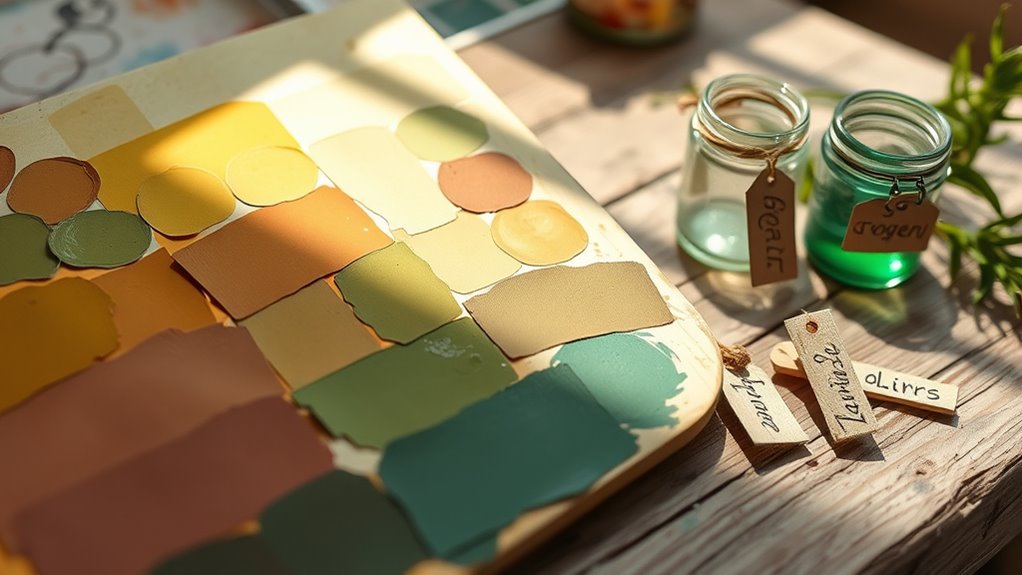

When choosing eco-friendly paints, look for options labeled low or zero VOC to reduce harmful chemical emissions and improve indoor air quality. Opt for natural pigments made from minerals, plants, or renewable resources, which are safer and more sustainable. Water-based formulas often emit fewer pollutants and are easier to clean up. By selecting these options, you support healthier living spaces and protect the environment—discover more ways to make smart, eco-conscious choices.
Key Takeaways
- Choose paints labeled as low or zero-VOC to minimize harmful chemical emissions and improve indoor air quality.
- Opt for natural pigments derived from minerals, plants, and renewable resources to ensure safer, eco-friendly colors.
- Look for certifications like Green Seal or EPA Safer Choice to verify environmental and health standards.
- Prefer water-based formulations for easier cleanup, less odor, and reduced VOC emissions during application.
- Consider transparency in ingredients and sustainable manufacturing practices to support eco-conscious choices.

Are you looking for a way to refresh your space without harming the environment? If so, choosing eco-friendly paints is a smart move. Traditional paints often contain volatile organic compounds (VOCs), which can off-gas harmful chemicals into your home and the atmosphere. These VOCs contribute to indoor air pollution and can cause health issues over time. To combat this, many manufacturers now focus on VOC reduction, offering paints that emit fewer of these harmful substances. By selecting low-VOC or zero-VOC paints, you’re making a conscious choice to improve indoor air quality and reduce your environmental impact. These paints often contain fewer solvents and hazardous chemicals, making your living space safer for everyone, especially children and pets.
Choosing low or zero-VOC paints improves indoor air quality and protects your family’s health.
Beyond VOC reduction, natural pigment sources play a significant role in eco-friendly painting. Instead of synthetic dyes, these paints use pigments derived from natural materials like minerals, plant extracts, and other renewable resources. For example, pigments from clay, charcoal, or crushed minerals can produce vibrant, lasting colors without relying on synthetic chemicals. Using natural pigment sources not only minimizes chemical exposure but also supports sustainable practices, as these materials are often locally sourced and biodegradable. When you opt for paints with natural pigments, you’re embracing a more eco-conscious approach that aligns with your values of sustainability and health. Additionally, choosing paints made from water-based formulations can further reduce VOC emissions and improve indoor air quality.
Choosing eco-friendly paints also means paying attention to the ingredients list and manufacturing practices. Many brands now emphasize transparency, providing detailed information about the natural origins of their pigments and the steps they take to minimize VOC emissions during production. Look for certifications or labels indicating eco-friendliness, such as Green Seal or EPA Safer Choice, which can guide you toward safer, more sustainable options. Additionally, consider paints made from water-based formulations, which tend to have lower VOC levels compared to solvent-based alternatives. These paints are easier to clean up and generally have less odor, making your painting experience more pleasant.
In the end, your decision to pick eco-friendly paints reflects a commitment to healthier indoor environments and a healthier planet. By prioritizing VOC reduction and natural pigment sources, you’re reducing exposure to harmful chemicals while supporting sustainable resources. Whether you’re updating a single room or undertaking a full renovation, choosing these paints makes a tangible difference. You get a beautiful, vibrant space that’s safe for your family and gentle on the environment. It’s a simple change that aligns your home improvement goals with your values of sustainability and health, proving that you don’t have to compromise style for eco-consciousness.
Frequently Asked Questions
Are Eco-Friendly Paints as Durable as Traditional Paints?
Yes, eco-friendly paints are generally as durable as traditional paints. They use natural ingredients and have a different chemical composition, often avoiding harsh chemicals that can weaken finishes over time. Plus, they minimize environmental impact, making them a smart choice for long-term use. With proper application, you’ll find that low VOC and natural paints provide lasting protection and beauty, matching or even surpassing the durability of conventional options.
How Can I Tell if a Paint Is Truly Low VOC?
Think of low VOC paint labels like a clear window—you want it to be transparent. To tell if a paint truly is low VOC, check the chemical labels for specific VOC content info, and look for certification standards like Green Seal or GREENGUARD. These mark genuine low-emission products. If the labels are vague or missing, it’s like foggy glass—you can’t see the true quality. Always verify before you buy.
Do Natural Paints Require Special Application Techniques?
Natural paints may require a slightly different application process, so you should pay attention to surface preparation. Make sure the surface is clean, dry, and smooth before you start. Use a high-quality brush or roller for even coverage, and apply thin coats to avoid streaks or uneven drying. Follow the manufacturer’s instructions carefully, as some natural paints might need more time to cure or specific conditions for ideal results.
Are Eco-Friendly Paints More Expensive Than Conventional Options?
Eco-friendly paints are often more expensive than conventional options, mainly due to the cost comparison of natural ingredients and sustainable manufacturing processes. However, you should consider their environmental impact, which is considerably lower because they emit fewer VOCs and toxins. While the initial cost might be higher, investing in eco-friendly paints benefits your health and the planet. Over time, you may also save by reducing the need for repainting or ventilation costs.
How Long Do Natural Paints Typically Last on Walls?
Natural paints typically last around 5 to 10 years on walls, depending on factors like paint longevity and wall maintenance. You can expect them to hold up well if you keep up with regular cleaning and minor touch-ups. Proper surface preparation and choosing high-quality natural paint help extend their lifespan. Although they might need more frequent reapplication than conventional paints, their eco benefits often outweigh the need for occasional repainting.
Conclusion
Choosing eco-friendly paints isn’t just a smart decision—it’s a sustainable one. By selecting low-VOC and natural options, you contribute to cleaner air, healthier homes, and a happier planet. Make mindful modifications, minimize harmful emissions, and master your environment responsibly. Remember, every eco-conscious choice counts; your paint preference can promote purity, protect our planet, and pave the path toward a greener, greater future. So, step confidently into sustainable solutions and paint a positive, planet-loving picture!