Properly sizing your tankless water heater based on flow rate guarantees you get reliable hot water without wasting energy. Focus on your household’s peak demand by calculating fixture flow rates like showers and sinks, then choose a unit that can handle that combined flow. Climate and pipe size also impact sizing. If you keep these factors in mind, you’ll avoid cold showers and high energy bills—discover more tips to optimize your system.
Key Takeaways
- Determine household peak hot water demand by summing fixture flow rates during simultaneous use.
- Use manufacturer flow rate charts at specific temperature rises to select a model that matches your needs.
- Match the tankless heater’s flow rate capacity (GPM) to the combined demand to avoid cold water shortages.
- Consider climate and inlet water temperature, which affect heater sizing and performance requirements.
- Proper sizing based on flow rate prevents energy waste, enhances efficiency, and extends system lifespan.

Chronomite SR-20L/208 HTR 208-Volt 20-Amp SR Series Instant-Flow Low Flow Tankless Water Heater by Chronomite
As an affiliate, we earn on qualifying purchases.
As an affiliate, we earn on qualifying purchases.
Why Proper Sizing Ensures Reliable Hot Water and Efficiency
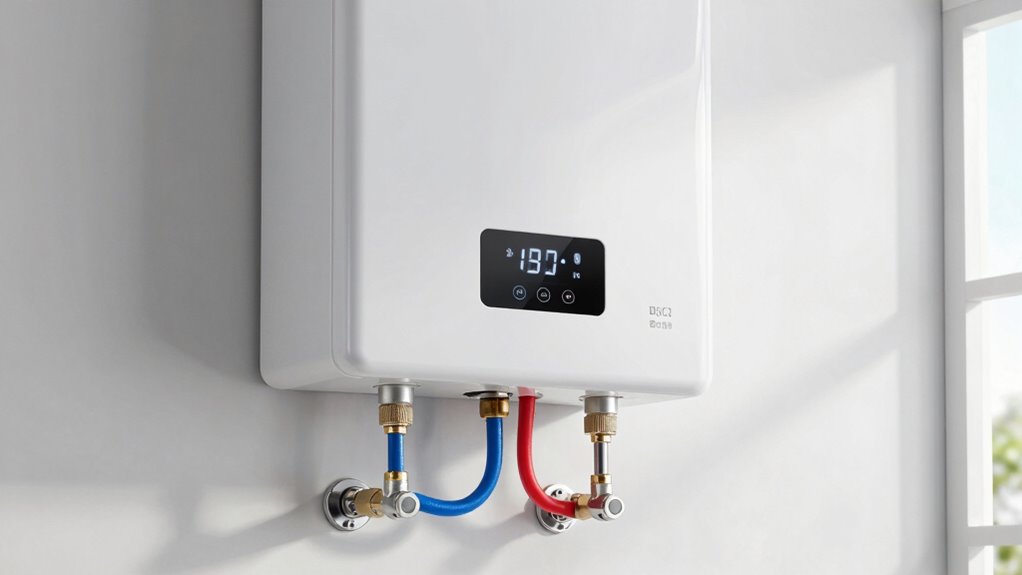
Choosing the right tankless water heater size is essential because an undersized unit can’t meet your household’s hot water needs, leading to cold showers and frustration. When you select a properly sized heater, you ensure reliable hot water supply for your daily routines. This accurate sizing also promotes water conservation, as you won’t need to run multiple fixtures longer to get hot water. Plus, it maximizes energy savings by avoiding unnecessary energy use from overpowered units. An appropriately sized heater heats water efficiently, reducing waste and lowering your utility bills. Proper sizing helps balance demand and capacity, so you enjoy consistent hot water without overworking your system. Additionally, understanding flow rate is key to selecting the correct size, ensuring the unit can handle your household’s peak hot water demand comfortably. Ultimately, it’s about achieving a reliable, efficient system that conserves resources and keeps your household comfortable. Proper sizing also involves considering system capacity to match your household’s specific hot water needs.
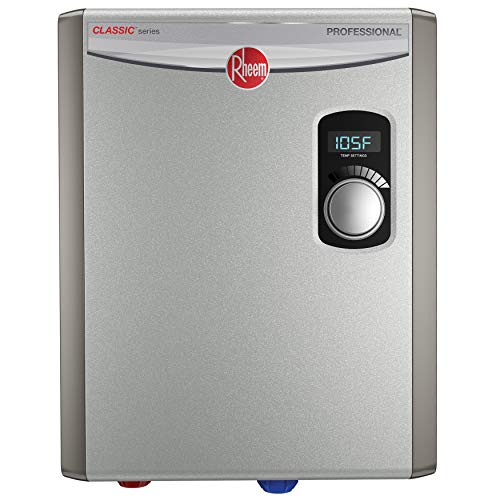
Rheem 18kW 240V Tankless Electric Water Heater, Gray
External digital thermostatic control with LED display (+/1 degree accuracy)
As an affiliate, we earn on qualifying purchases.
As an affiliate, we earn on qualifying purchases.
What Is Flow Rate and Why It Matters for Your Water Heater
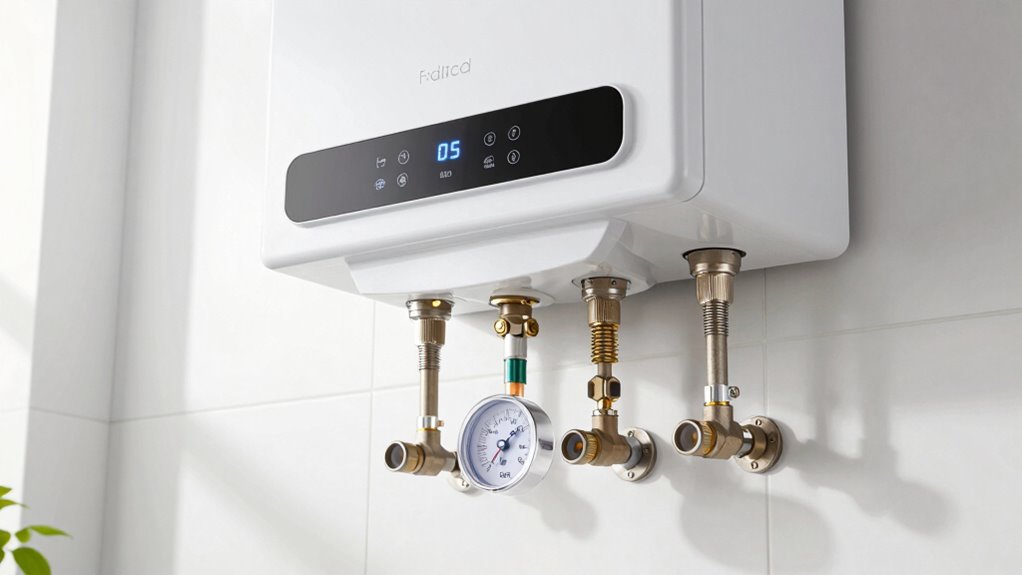
Flow rate measures how much water your heater provides over time, usually in gallons per minute. Knowing this helps you match your heater’s capacity to your household’s needs. If the flow rate isn’t right, you might experience cold showers or insufficient hot water. Using an online tool to detect passive voice can help improve your writing clarity. Additionally, understanding flow rate calculations assists in selecting the proper heater size for your home. Proper sizing also reduces energy waste and ensures consistent hot water supply. To determine your household’s typical water usage, consider peak flow rate during busy times, which is crucial for accurate sizing. Being aware of your hot water demand ensures you choose a heater that meets your household’s needs without overpaying.
Understanding Flow Rate Metrics
Understanding flow rate metrics is essential because they determine how well your tankless water heater can meet your household’s hot water demands. Flow rate measures how much water passes through your fixtures, usually in gallons per minute (GPM). Accurate flow rate calibration guarantees your water heater is sized correctly for fixture compatibility, preventing inadequate hot water supply or energy waste. To grasp this, consider how multiple fixtures—like showers and sinks—combine their flow rates. Here’s a quick comparison:
| Fixture Type | Typical Flow Rate (GPM) |
|---|---|
| Shower | 2.0 – 2.5 |
| Kitchen Sink | 1.5 – 2.2 |
| Bathroom Sink | 0.5 – 1.0 |
| Dishwasher | 1.0 – 2.0 |
| Washing Machine | 2.0 – 4.0 |
Knowing these metrics helps you select a water heater with appropriate capacity, ensuring fixture compatibility and reliable hot water. Understanding flow rate calculation also plays a crucial role in proper sizing and overall system efficiency. Additionally, considering peak flow rates during simultaneous fixture use can help optimize your system’s performance.
Impact on Water Heating
The flow rate directly impacts how efficiently your tankless water heater can deliver hot water when you need it. If the flow rate is too high, your heater may struggle to keep up, leading to inconsistent hot water or longer wait times. Conversely, a properly sized flow rate ensures you get reliable hot water while conserving energy. When you select the right flow rate, you promote water conservation by avoiding unnecessary heating of excess water. This also boosts energy savings, since your heater operates only as much as needed for your household’s demand. Properly matching flow rate to your usage prevents overworking the system, reducing wear and tear and enhancing overall efficiency. Additionally, understanding your household’s typical water demand can further optimize your system’s performance and longevity. Recognizing sector performance metrics and how they relate to household water use can help in making more informed decisions about system sizing and efficiency. Being aware of flow rate calculations can also aid in accurately assessing your household’s specific hot water needs. Knowing these factors allows you to fine-tune your system for maximum efficiency and durability. For example, considering peak demand periods can help prevent shortages during high usage times.

EcoSmart ECO 11 Electric Tankless Water Heater, 13KW at 240 Volts with Patented Self Modulating Technology
Endless On-Demand Hot Water; Consistent hot water when you need it that never runs out; Continuously monitored water…
As an affiliate, we earn on qualifying purchases.
As an affiliate, we earn on qualifying purchases.
How to Calculate Your Household’s Hot Water Needs
To determine your hot water needs, start by identifying when your household uses the most water. Make a list of fixtures and devices, like showers, sinks, and appliances, that require hot water. Then, add up their flow rates to find your total hot water demand. Understanding your household’s typical water usage patterns can help ensure your tankless heater is properly sized for your needs. Additionally, considering flow rate calculations and other local amenities can be useful if you’re planning renovations or upgrades to your home’s water systems in the area.
Identify Peak Usage Times
Have you ever wondered when your household uses the most hot water? Identifying peak usage times helps you plan your water heater size effectively. Start with a simple occupancy analysis to understand your household’s usage patterns. Here are four steps to pinpoint those times:
- Track your hot water use over a week to spot trends.
- Note times of day when multiple fixtures run simultaneously.
- Identify weekends or mornings when demand spikes.
- Record the duration of these high-usage periods.
Additionally, understanding water demand patterns and family routines can help anticipate seasonal or lifestyle changes that affect hot water demand. Recognizing knives and cutting techniques in your routine can also streamline your cooking process, making it more efficient and enjoyable. Being aware of precious metals investment options available in the market can guide you in diversifying your savings if you’re considering financial planning alongside your household management.
List Household Fixtures and Devices
Understanding your household’s hot water needs starts with listing all fixtures and devices that use hot water. Make a thorough list of sinks, showers, bathtubs, dishwashers, and washing machines. Consider how often each is used daily. Fixture upgrades, like low-flow showerheads and faucet aerators, can reduce hot water consumption and improve water conservation efforts. This not only lowers your overall demand but can help you select a more appropriately sized tankless water heater. Be sure to include any outdoor spigots or specialty appliances that require hot water. By accurately listing and evaluating these fixtures, you’ll gain a clear picture of your household’s hot water needs. This step ensures you choose a system that efficiently meets your demands without over- or under-sizing.
Calculate Total Flow Rate
How do you determine the right size for your tankless water heater? You need to perform a flow rate calculation that accounts for your household’s peak demand. To do this, follow these steps:
- List all fixtures and appliances that may run simultaneously.
- Find their flow rates (gallons per minute) from manufacturer specs.
- Add the flow rates of fixtures likely used together during peak demand.
- Use this total to select a unit that can handle your maximum flow rate.
This calculation guarantees your heater can supply enough hot water without guesswork. By understanding your household’s peak demand, you prevent cold surprises and choose a system that perfectly matches your needs. Accurate flow rate calculation is essential for efficient, reliable hot water supply.

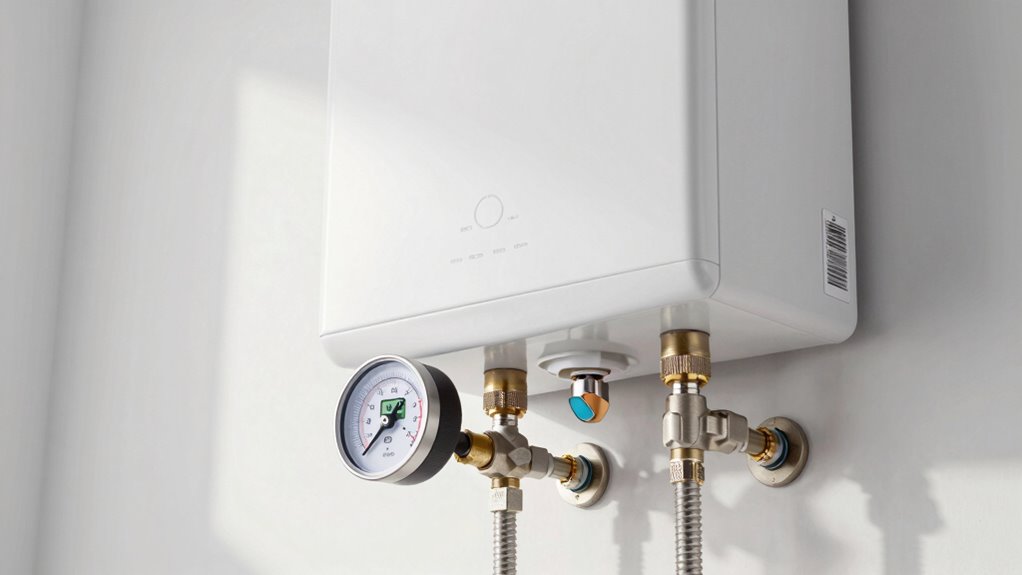
HYDRO MASTER Tankless Water Heater Service Valve Kit with Pressure Relief Valve 3/4-Inch IPS Isolator Clean Brass
Durable Construction: Made from thick, forged Lead Free brass for strength and leak prevention. Each valve set is…
As an affiliate, we earn on qualifying purchases.
As an affiliate, we earn on qualifying purchases.
How Climate Affects Your Tankless Water Heater Sizing

Climate plays a significant role in determining the size of your tankless water heater, especially if you live in an area with cold winters. In colder climate zones, your incoming water temperature drops, meaning your heater must work harder to reach desired hot water temps. This often requires a larger unit to compensate for low inlet temperatures. Outdoor insulation can help retain heat and improve efficiency, especially in exposed installations. If your area experiences freezing temperatures, consider models with freeze protection or outdoor-rated units designed to withstand the elements. Understanding your climate zone ensures you select a heater that can reliably meet your hot water demands year-round. Proper sizing considering climate factors prevents shortages and reduces energy costs, making your system more efficient and dependable.
Finding the Right Flow Rate for Your Fixtures
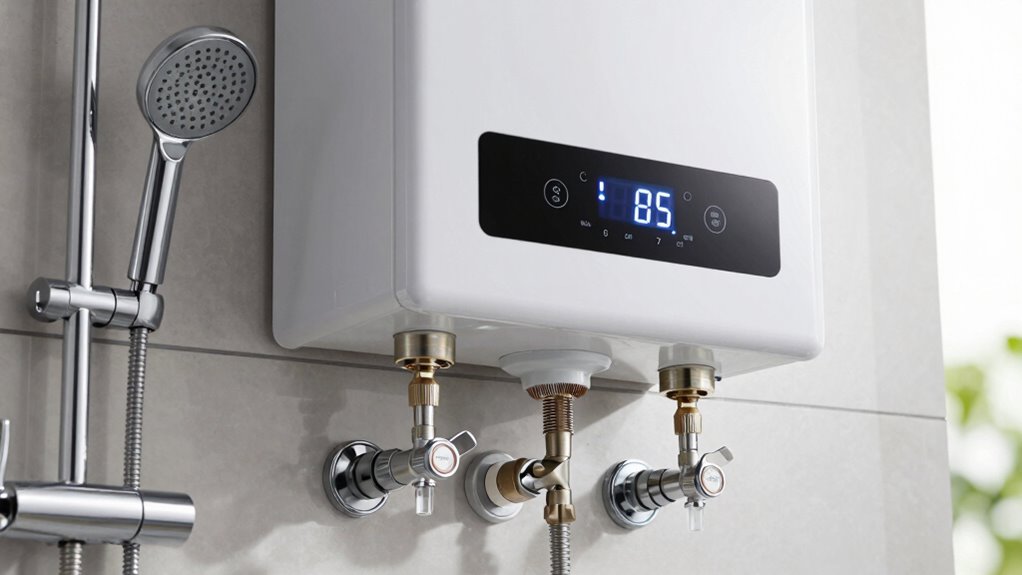
To guarantee your tankless water heater provides enough hot water for all your fixtures, you need to determine their combined flow rate. Fixture flow depends on how much water each fixture uses at peak demand. To do this effectively:
- List all fixtures you’ll use simultaneously.
- Find each fixture’s flow rate in gallons per minute (GPM).
- Sum these flow rates to get your total required flow.
- Consider pipe diameter, as larger pipes (¾ inch or more) support higher fixture flow rates without pressure drops.
Understanding fixture flow helps you avoid undersizing or oversizing your heater. Pipe diameter influences flow capacity, so ensure your plumbing can handle the combined flow rate. This precise approach guarantees your tankless system supplies hot water efficiently during peak use without guesswork.
How to Use Charts and Specs to Pick the Correct Water Heater
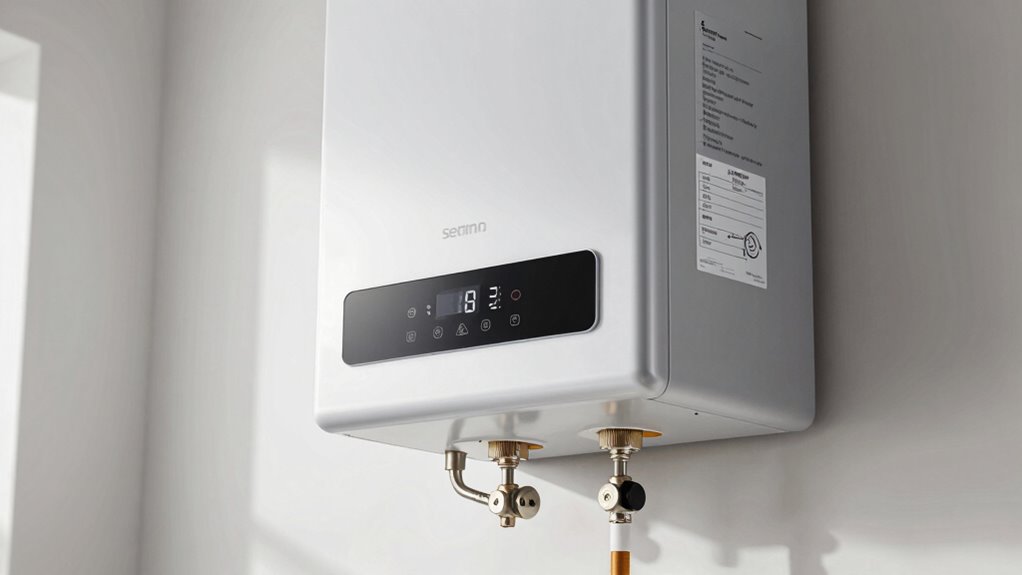
Choosing the right tankless water heater becomes easier when you know how to interpret manufacturer charts and specifications. These charts show flow rate capacities at specific temperature rises, guiding your selection. Look for models that meet your household’s hot water needs while maximizing energy efficiency. Use the chart below to compare options:
| Model | Max Flow Rate (GPM) | Energy Efficiency (EF) |
|---|---|---|
| Model A | 3.5 GPM | 0.92 |
| Model B | 5.0 GPM | 0.95 |
| Model C | 6.5 GPM | 0.93 |
| Model D | 8.0 GPM | 0.96 |
Ensure your water heater installation accommodates your household’s demand, avoiding underperformance or excessive energy use.
Tips to Handle Peak Hot Water Demand
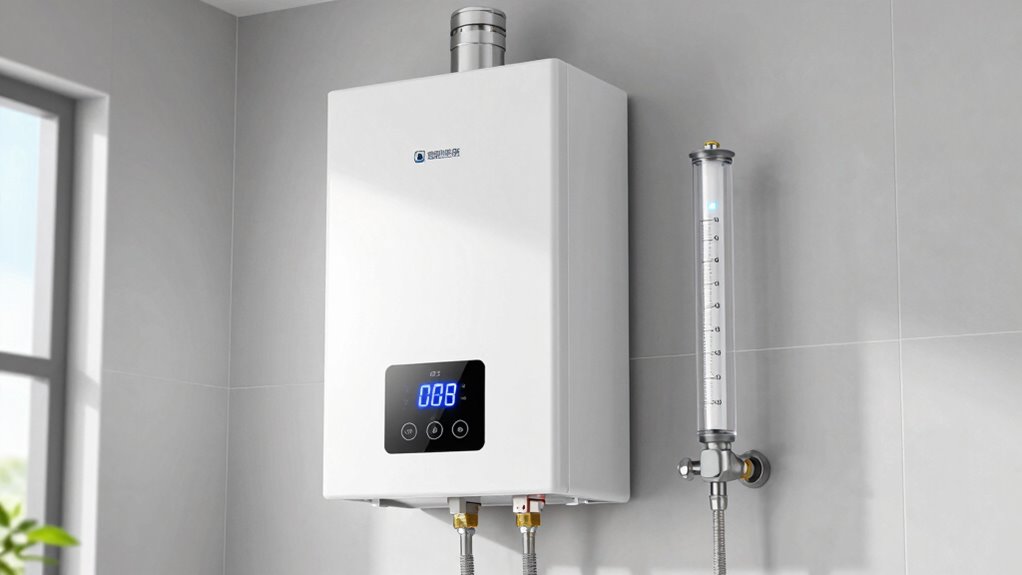
During peak hot water demand times, your tankless water heater may struggle to keep up, leading to cold showers or delays. To handle this, consider these tips:
- Upgrade your unit if it’s undersized, making sure your water heater’s flow rate matches your household needs.
- Schedule regular maintenance to keep your unit operating efficiently, which is vital for honoring water heater warranties.
- Install a buffer tank to supplement hot water supply during busy periods, reducing strain on the heater.
- Review installation regulations to make certain your setup meets local codes, preventing issues that could compromise performance or warranties. Being proactive helps avoid shortages and keeps your hot water flowing smoothly during peak times.
Common Sizing Mistakes That Lead to Shortages
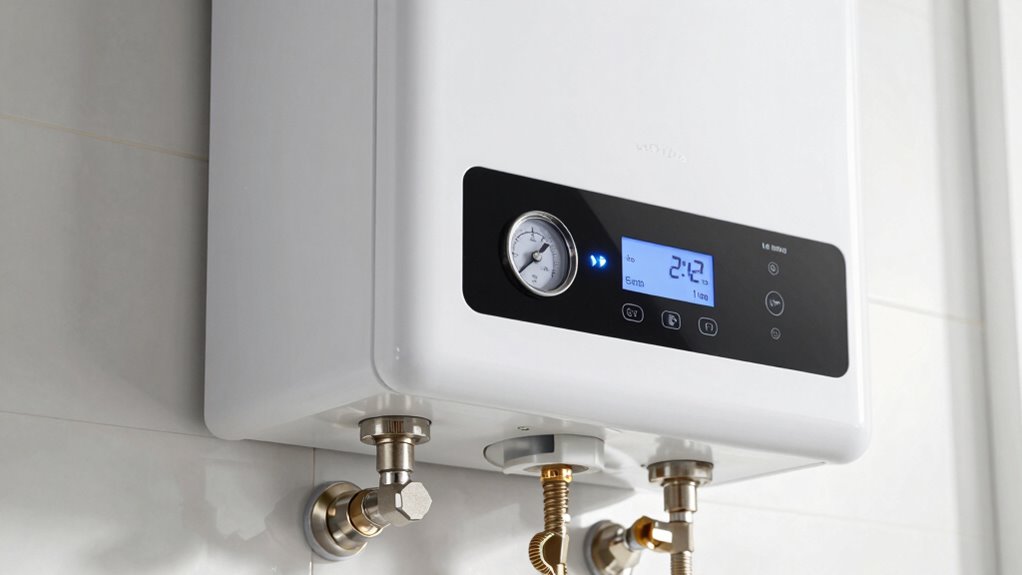
One common mistake that leads to hot water shortages is selecting a tankless water heater that’s too small for your household’s needs. When you underestimate your flow rate requirements, you risk running out of hot water during peak usage. This not only causes inconvenience but may also lead to increased tankless maintenance if you try to compensate by overworking the unit. Conversely, choosing a unit that’s too large can waste energy and reduce energy savings. Proper sizing based on your household’s actual hot water demand ensures you get reliable hot water without unnecessary energy consumption. Understanding your flow rate needs helps optimize the unit’s performance, prolongs its lifespan, and maintains efficient energy savings over time. Accurate sizing is key to avoiding shortages and maximizing your investment.
When to Consult a Professional for Proper Sizing
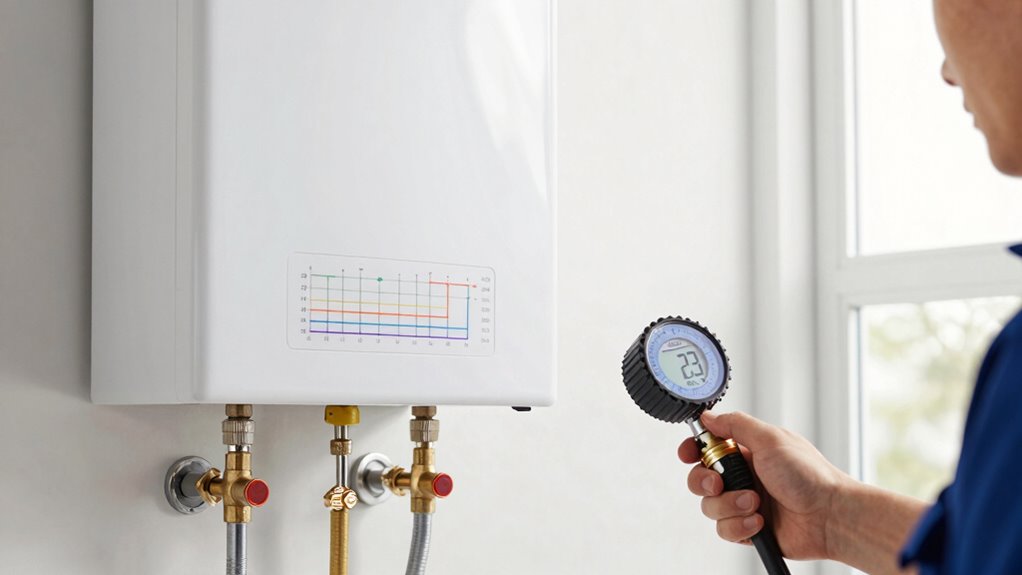
Even if you have a basic understanding of your household’s hot water needs, consulting a professional can guarantee you select the right size tankless water heater. You should seek expert advice when:
Consult a professional to ensure proper hot water needs assessment and optimal tankless water heater sizing.
- You’re unsure about installation considerations that could affect performance or safety.
- Your household’s water usage varies considerably throughout the day.
- You want to ensure proper sizing for multiple fixtures running simultaneously.
- You’re concerned about warranty coverage and long-term dependability.
A professional can evaluate your home’s plumbing, electrical capacity, and hot water demand accurately. They’ll also help you avoid costly mistakes that could lead to inadequate hot water or voided warranties. When in doubt, a consultation ensures ideal performance and peace of mind.
Frequently Asked Questions
How Does Water Pressure Impact Tankless Water Heater Flow Rate?
Water pressure directly affects your tankless water heater’s flow rate. When water pressure is high, the flow rate increases, ensuring hot water reaches your fixtures quickly. Conversely, low water pressure reduces flow rate, meaning less hot water and longer wait times. To optimize performance, make sure your home’s water pressure stays within the recommended range, typically 40-80 psi, so your heater can operate efficiently and meet your hot water needs.
Can Multiple Fixtures Be Used Simultaneously Without Affecting Performance?
While your setup can handle multiple fixtures, it’s best to ensure fixture compatibility to prevent performance dips during simultaneous usage. If you choose a tankless heater with a higher flow rate, you’ll enjoy smoother operation when several fixtures run at once. Keep in mind, pushing the limits may cause slight temperature fluctuations, so matching your heater’s capacity to your household’s needs ensures consistent comfort without overloading.
What Are the Signs of an Undersized or Oversized Tankless Water Heater?
You might notice capacity issues if your water doesn’t stay hot during simultaneous fixtures or if you experience inconsistent temperatures. Oversized units often lead to higher energy bills and unnecessary costs, while undersized systems struggle to meet demand. Installation errors can also cause these problems. To avoid this, verify your tankless water heater is properly sized for your household’s flow rate needs, preventing capacity issues and optimizing performance.
How Often Should I Flush or Maintain My Tankless Water Heater?
You should follow a regular maintenance schedule for your tankless water heater, typically flushing it once a year to prevent mineral buildup. If you notice reduced flow rate or strange noises, increase the flushing frequency to twice a year. Regular maintenance helps guarantee peak performance and longevity. Always consult your manufacturer’s guidelines for specific flushing intervals, especially if you have hard water, which may require more frequent upkeep.
Are There Specific Models Better Suited for High-Altitude Locations?
Certainly, select specific high-altitude models designed for demanding environments to guarantee ideal operation. High-altitude models handle the decreased oxygen levels and cooler air better, boosting performance considerations. You’ll want to look for heaters with enhanced combustion efficiency and capacity. By choosing the right model, you guarantee consistent hot water, reliable performance, and energy efficiency, even in high-altitude locations. Proper selection makes all the difference for dependable, durable water heating.
Conclusion
So, after all this talk about precise sizing, you’d think picking a water heater is a breeze, right? Turns out, guessing might still be tempting—until you run out of hot water during your morning shower. Ironically, ignoring flow rates could save you time, but it’ll cost you comfort. So, trust the numbers, not just your gut, and enjoy endless hot water without the surprise cold shock. After all, smarter choices make for happier mornings.